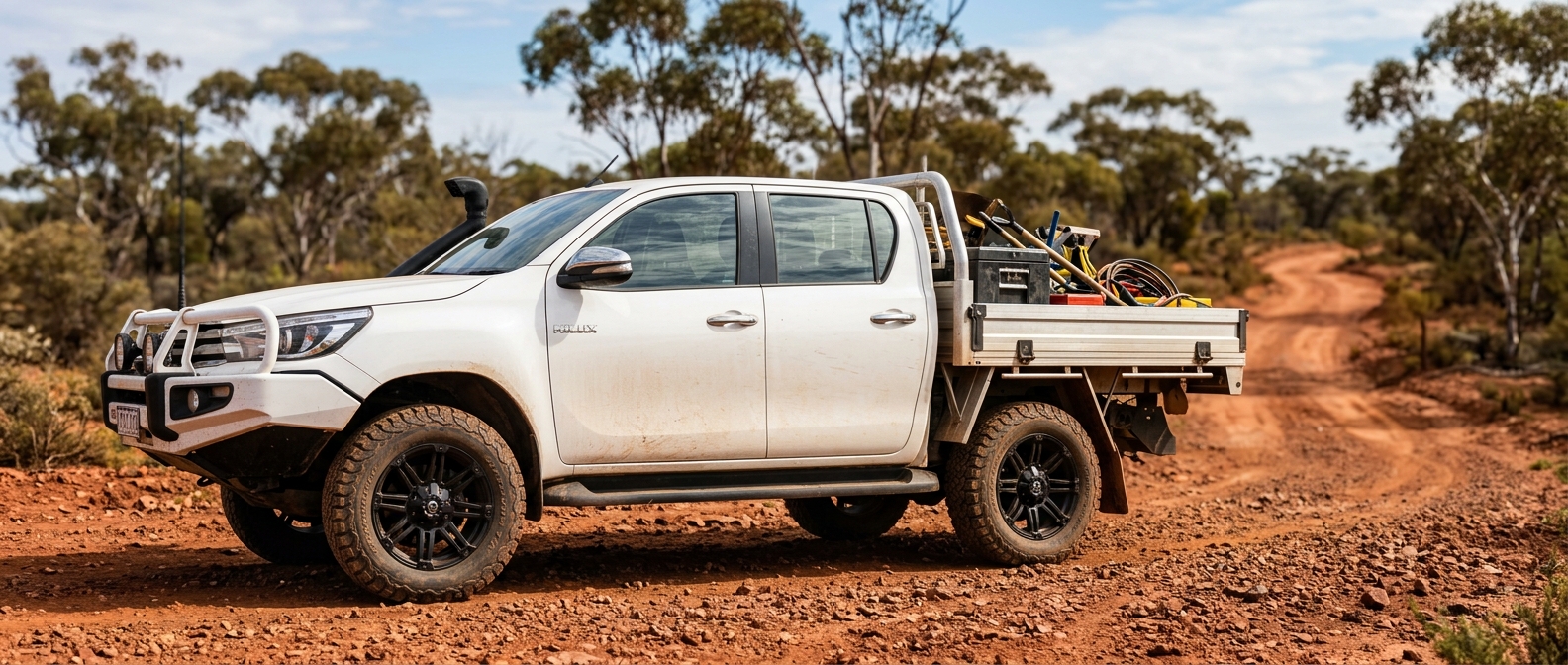
Why is plus-sizing a ute different from plus-sizing a car?
A dual-cab ute is a working vehicle. It carries a heavy payload in the tray, often tows a caravan or trailer, and many are registered as light commercials rather than passenger cars. That changes the priorities: on a hatch or sedan, plus-sizing is mostly about ride and looks. On a ute, the load rating comes first, every time. The same rules apply as with a medium SUV — keep the rolling diameter near standard by dropping the aspect ratio as the rim grows — but the consequences of getting the tyre spec wrong are far more serious when the vehicle is loaded.
What is the load rating trap, exactly?
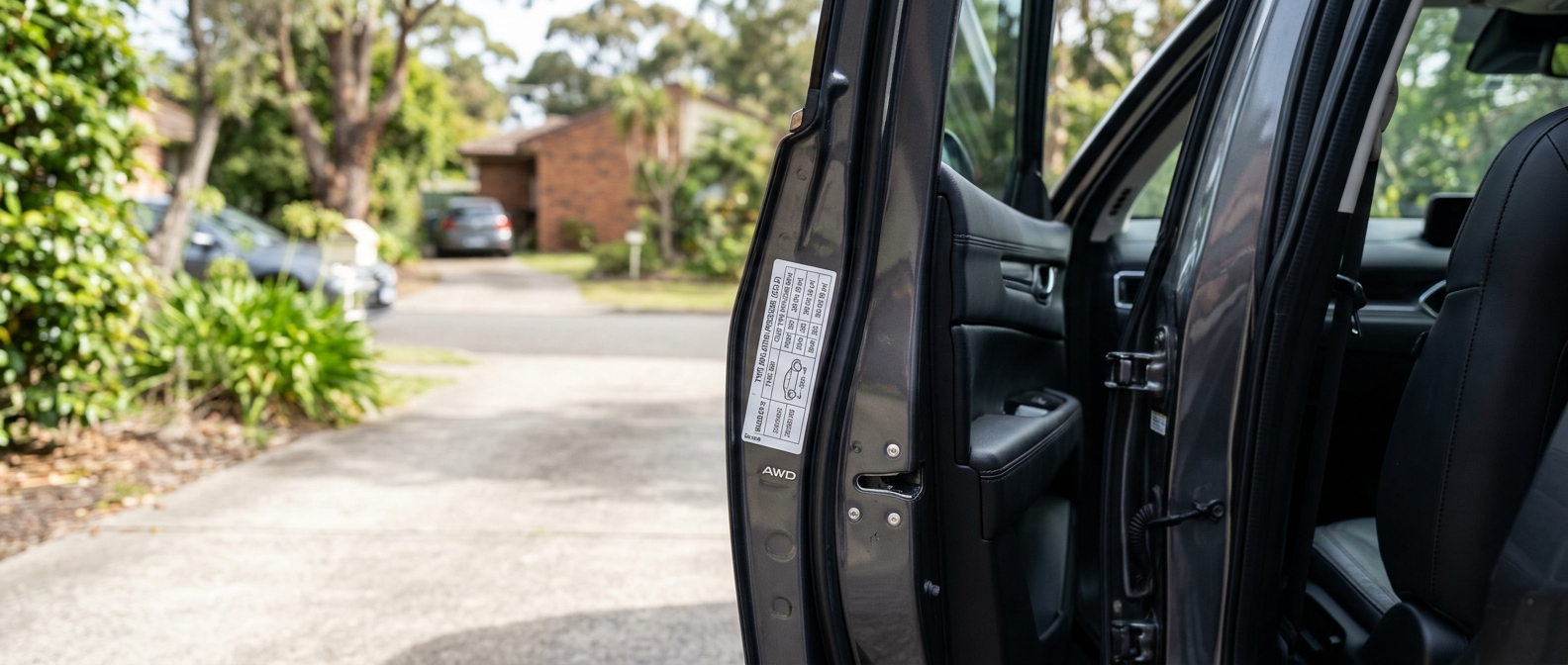
Here is the trap owners fall into. You upgrade from, say, 17-inch factory wheels to a 20-inch alloy with a low-profile tyre for the look. The wheel-and-tyre package is sold as a fitment for your ute, but the low-profile passenger tyre wrapped around it has a load index below the factory figure. Your ute’s placard might call for a load index of 112 — that’s 1,120kg per tyre, as fitted to a Ford Ranger XLT — but the pretty new tyre is rated for less. That single number is the difference between a legal, safe ute and one that can be defected, refused an insurance claim, or blow a tyre under load.
The rule is simple and non-negotiable: your replacement tyres must have a load index that meets or exceeds the figure on your tyre placard. Fitting a lower rating is illegal and dangerous — the overloaded casing overheats, flexes and can fail, exactly as we explain in what happens if you fit the wrong load rating tyres. As one Australian tradie guide puts it, tyres below the recommended rating can lead to impoundment, insurance rejection and legal liability for damage or injury.
LT vs passenger: the construction that carries the weight
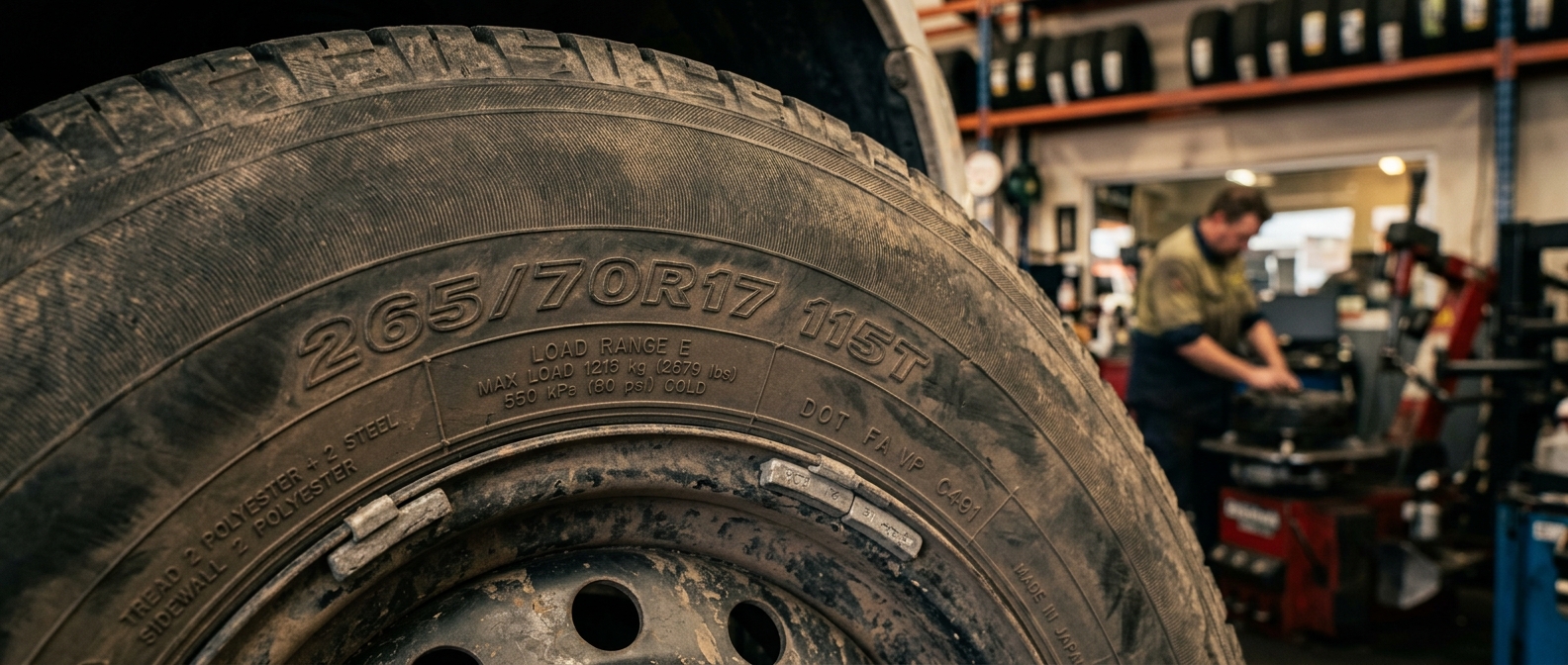
Many dual-cabs leave the factory on LT (Light Truck) construction tyres, built with stronger casings and higher pressures to carry commercial loads. A lot of aftermarket plus-size packages, by contrast, come with passenger-construction (P-metric or Euro-metric) tyres that look identical but are engineered for lighter cars. Downgrading LT to passenger construction on a working ute is a classic mistake: even if the printed load index looks close, the tyre isn’t built for the same abuse. Where your ute came on LT tyres — or where you carry serious weight or tow — stay with LT, or step up to an XL (reinforced) tyre that restores the capacity.

How does towing and GVM change the maths?
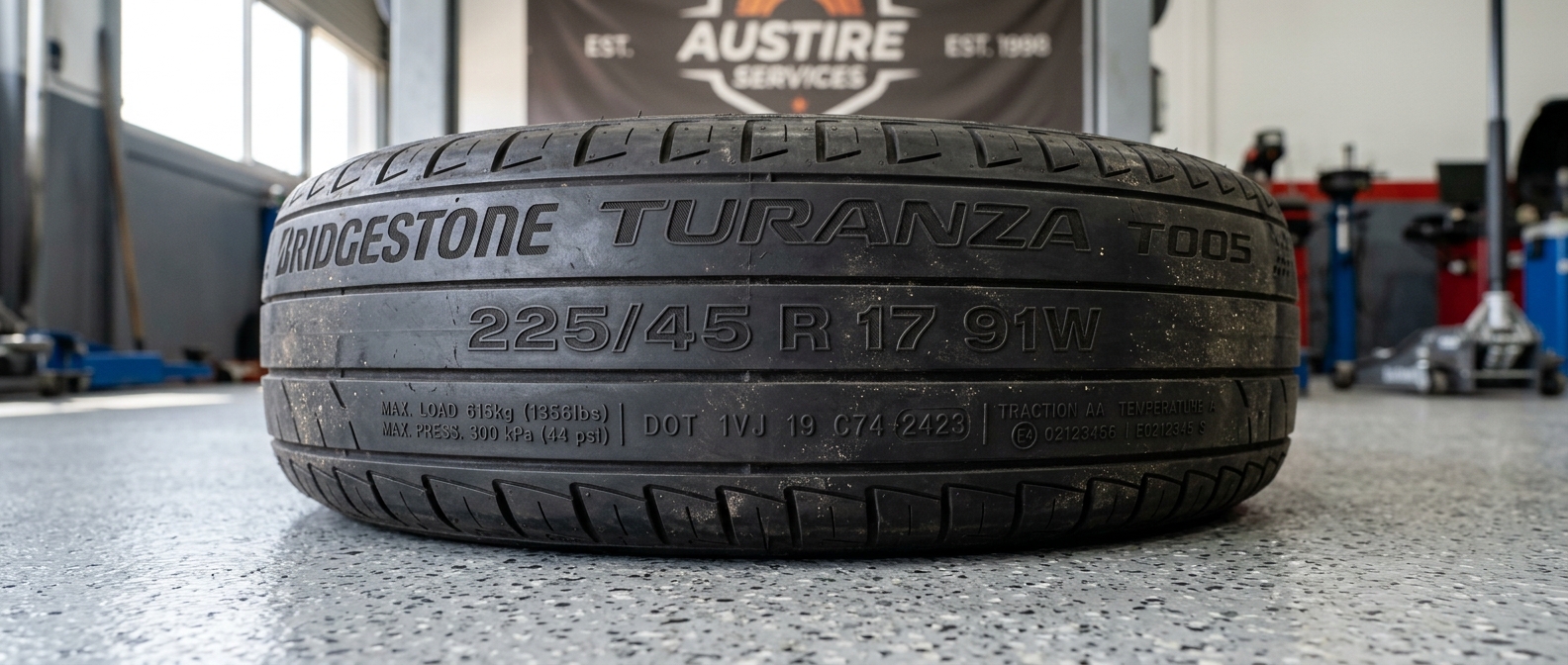
Load capacity has to cover the worst case, not the empty ute. Combined, your rear tyres must carry the loaded rear axle weight; when you add a caravan or trailer, ball weight lands on that rear axle too. If you have fitted a GVM upgrade, the tyres must be capable of carrying the revised weights, both in total and across each axle — see load ratings after a GVM upgrade and our tyre rules for towing. This is why load index, not appearance, drives the tyre choice on a ute. Two tyres of the same size can have very different load indices; always read the number on the sidewall against your placard.
How much bigger can I go on a dual-cab?
Because many dual-cabs are recognised as off-road-capable, they often enjoy a more generous overall-diameter allowance than a passenger car — as a guide, up to +50mm of tyre diameter versus roughly +15mm for a passenger vehicle under VSB 14. But that headroom is for a taller overall tyre (the 4WD lift-and-larger-tyre path), which is a different project from plus-sizing. True plus-sizing keeps the diameter near standard and just changes the rim-to-sidewall balance. If you do increase overall diameter, remember it feeds into the combined lift limit and can require certification. These figures vary by state and by whether your ute is classed as a passenger 4WD, so confirm with your state road authority and a signatory engineer.
| Priority when plus-sizing a ute | What to check |
|---|---|
| Load index | New tyre index ≥ placard index (e.g. 112 = 1,120kg) |
| Construction | Keep LT if factory-fitted; don’t downgrade to passenger |
| Speed rating | Match or beat placard rating |
| Rolling diameter | Keep near standard for speedo and gearing |
| Clearance & offset | Clear guards, arches and suspension at full lock/compression |
Will bigger wheels throw out my speedo?
Only if the rolling diameter changes. Australian Design Rule 18/03 says the speedo must never read below true speed and may over-read by up to 10% plus 4km/h. Keep the diameter constant when plus-sizing and the speedo stays accurate. Go taller overall and it under-reads — you are speeding without knowing it. Work out the change with our speedo error after upsizing guide and confirm on GPS.
Fitment details that bite on a ute
Wide low-profile tyres need the right rim width, and a ute’s offset and backspacing matter for both clearance and steering. Pushing the track too wide can foul the guards, load the wheel bearings and, past a limit, require engineering. If you are only chasing a wider look, read can you fit wider tyres on the same rim first. And because any wheel or tyre change is a modification, tell your insurer — undeclared changes can void a claim, as covered in does changing wheel size void your insurance. Significant changes may need an engineer’s certificate. The national VSB 14 and your state road authority set the detail.
Bottom line
Plus-size a dual-cab ute for the load rating first and the looks second. Match or beat the placard load index, keep LT construction where it was fitted, hold the rolling diameter near standard, and make sure the tyres can carry your loaded and towing weights. A cheap low-profile package that drops below your ute’s load rating isn’t a bargain — it’s a defect notice and a safety risk. Confirm the details with your state road authority.
Frequently asked questions
What load rating do I need for a dual-cab ute?
At least the load index printed on your tyre placard. Many dual-cabs specify around 112 (1,120kg per tyre) or higher. Your replacement tyres must meet or exceed that figure — never go lower.
Can I fit passenger tyres to a ute that came with LT tyres?
It’s strongly discouraged. LT tyres have stronger casings for commercial loads. Swapping to passenger construction can leave the tyre unable to handle your payload or towing weight safely, even if the size matches.
Do bigger wheels reduce my ute’s payload?
The wheels themselves don’t change the vehicle’s rated payload, but fitting tyres with a lower load index than the placard effectively reduces what you can safely and legally carry. Always keep the load index at or above factory.
Will plus-sizing affect towing?
It can. Towing adds ball weight to the rear axle, so your tyres must carry the loaded rear axle plus the ball weight. Under-rated tyres are a serious risk when towing. Check load index and your towing limits.
Is a 20-inch wheel too big for a work ute?
Not automatically, but low-profile 20s often come with tyres less suited to heavy work and are more prone to kerb and pothole damage. Many owners who tow or carry loads prefer to stay on 17s or 18s with a higher-profile, higher-load tyre.

0 Comments