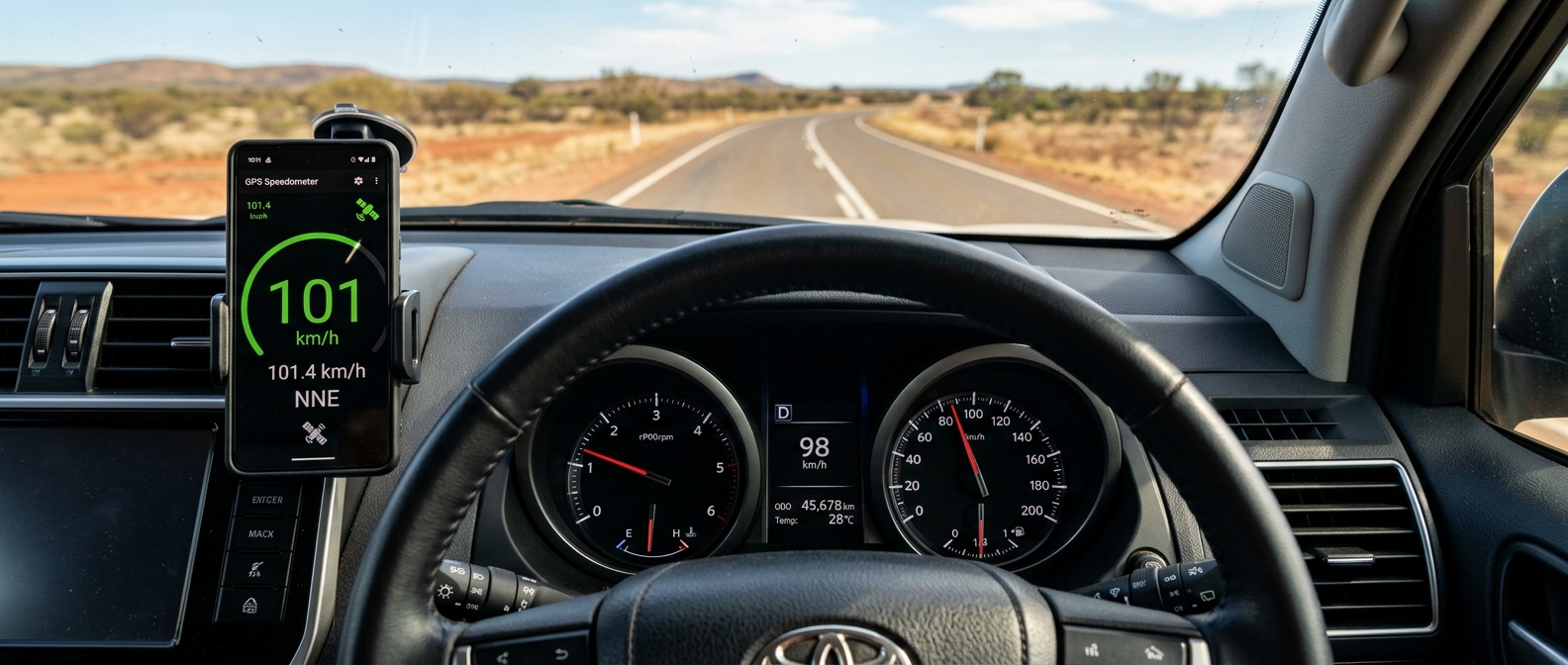
Quick answer (TL;DR): Fitting a larger overall tyre diameter makes your speedometer read slower than you’re actually travelling, which can put you over the limit without knowing. As a guide, keep the overall diameter change under about 2–3% to stay within legal tolerances and keep speedo error small. In Australia, passenger cars are generally limited to +15mm overall diameter over the placard; 4WDs up to +50mm.
How does upsizing change your speedo reading?
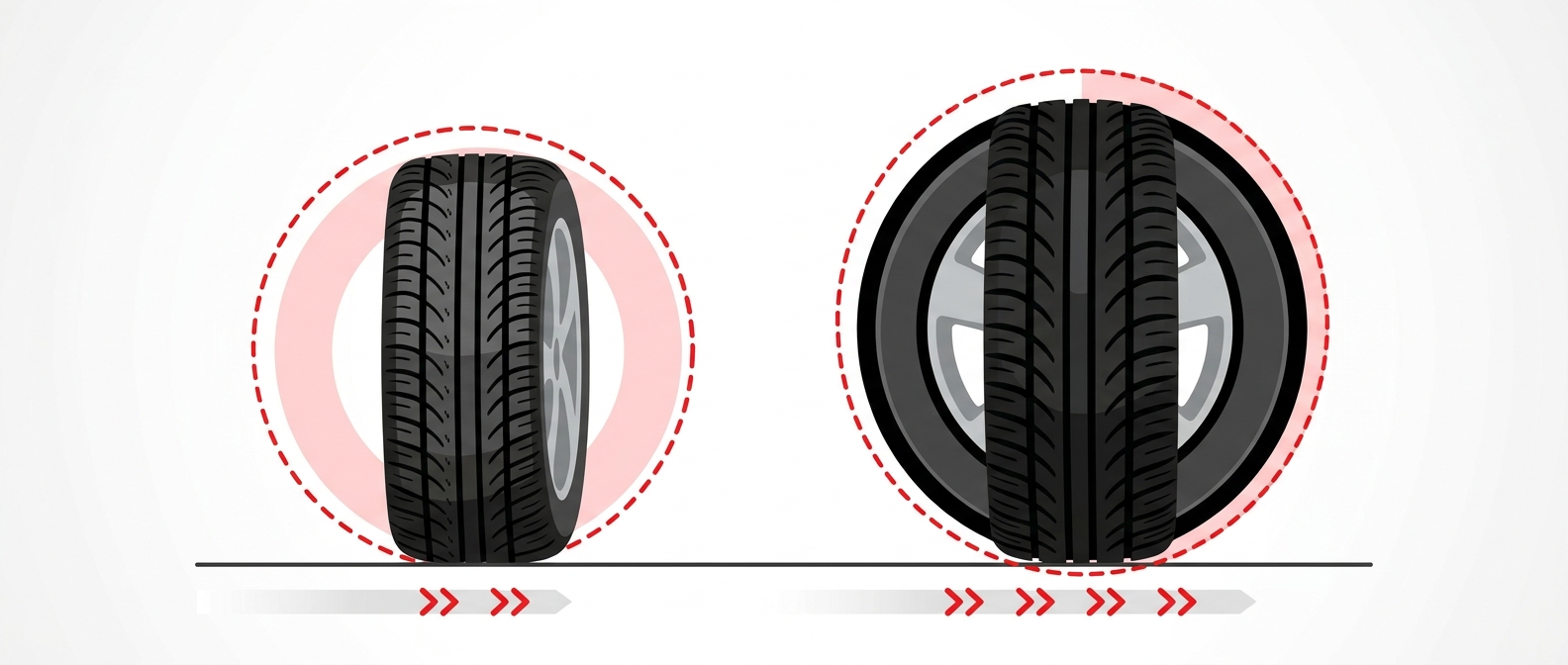
Your speedometer doesn’t measure road speed directly. It counts how fast the wheels turn and multiplies by an assumed rolling circumference set at the factory. Fit a tyre with a bigger rolling diameter and each wheel revolution now covers more ground, but the speedo still assumes the original circumference. The result: the dial reads low, and you’re travelling faster than it shows.
The direction of the error is what makes this dangerous. A taller tyre makes the speedo optimistic (reads slow, you’re speeding). A shorter tyre makes it pessimistic (reads fast, you’re actually going slower) — annoying, but not a fine. This is the flip side of the topic we cover in how tyre size affects your speedometer accuracy.
Why a little speedo error is normal — and why upsizing eats the buffer
Under Australian Design Rule (ADR) 18/03, a car’s speedo must never read lower than the true speed, and may read up to 10% + 4 km/h higher. So at a true 100 km/h, a compliant factory speedo can legally display anywhere from 100 to 114 km/h. Most manufacturers deliberately set the speedo to read a few per cent high, which is why your GPS often shows you slower than the dash.
That built-in “over-read” is a safety buffer — and upsizing spends it. If your speedo normally reads about 4% high, fitting tyres that are 4% taller cancels the buffer out and the speedo now reads roughly true. Go bigger again and the speedo can start reading below your real speed, which is both illegal under ADR 18/03 and a genuine speeding trap.
How do you calculate speedo error from a tyre change?
The percentage error is simply the percentage change in overall diameter:
Speedo error (%) ≈ (new overall diameter − old overall diameter) ÷ old overall diameter × 100
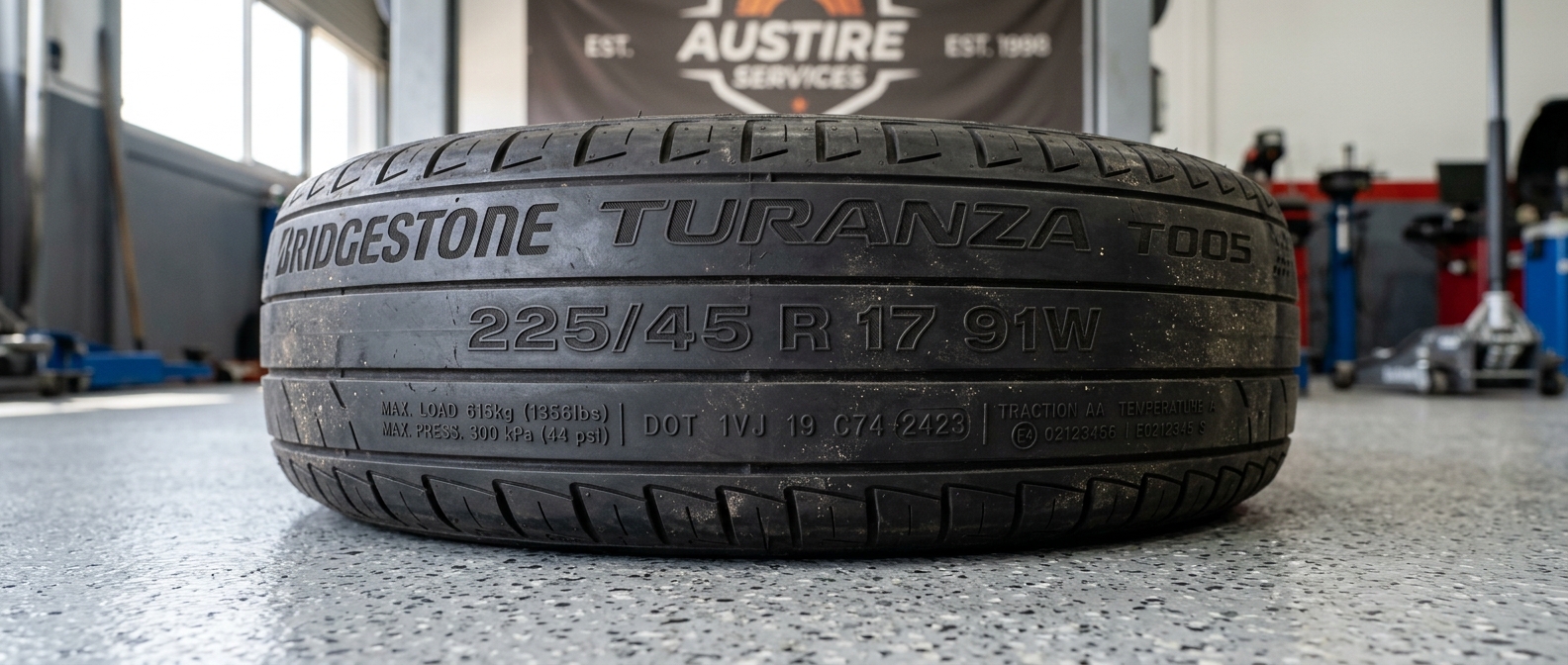
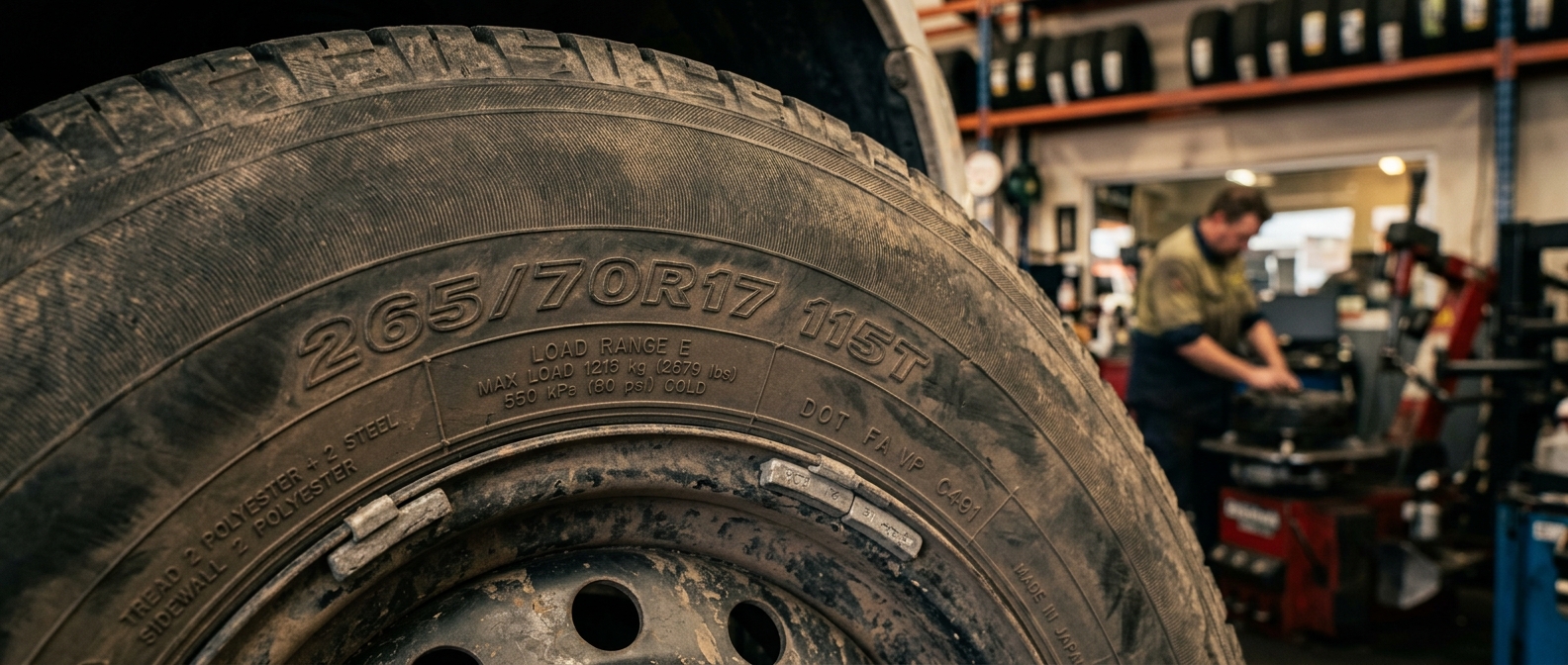
Work out overall diameter from the tyre size. For a 225/65R17: sidewall height = 225 × 0.65 = 146.25mm, times two sidewalls = 292.5mm, plus the rim (17 inch × 25.4 = 431.8mm) = about 724mm. Do the same for the new size and compare. A free online tyre-size calculator does this in seconds — always cross-check against your tyre placard and the sidewall markings.
Worked example
Say the factory size is 265/65R17 (about 776mm) and you move to 265/70R17 (about 802mm). That’s +26mm, or +3.4%. At an indicated 100 km/h you’d actually be doing roughly 103–104 km/h — enough to lose the over-read margin and creep into “speeding while the dash says you’re fine” territory.
How much upsizing is too much?
There are two ceilings, and the lower one wins.
1. The legal diameter tolerance
Australia’s National Code of Practice (VSB 14) sets how far you can change overall diameter without certification. As a guide:
| Vehicle type | Overall diameter change (guide) | Approx. speedo error |
|---|---|---|
| Passenger car / SUV | Up to +15mm over largest placard size | ~2% or less on most cars |
| Off-road 4WD | Up to +50mm over placard | Can approach 6–7% — recalibration territory |
Go beyond these and you generally need an engineer’s assessment — see do you need an engineer’s certificate for bigger wheels and the broader ADR requirements for tyres and wheels. State road authorities apply these limits, so confirm the exact figure for your state before buying.
2. The speedo-accuracy ceiling
Even within the legal diameter tolerance, watch the speedo. A safe target is to keep true speed within a few per cent of indicated. On a passenger car staying inside +15mm, you’ll almost always be fine. On a 4WD running the full +50mm — such as a move to 33-inch tyres — the error is large enough that recalibration is strongly recommended, which is exactly why 4WD owners recalibrate their speedo after upsizing.
Can you fix speedo error after upsizing?
Yes. Options, roughly cheapest to dearest:
- GPS check first: Compare your dash against a phone GPS or a GPS speedo app at a steady 100 km/h to measure the real error before spending anything.
- Recalibration: An auto electrician or instrument specialist can recalibrate most modern cars, typically around $100–$300. Many vehicles can be corrected through the ECU with a scan tool or tune.
- Corrector modules: Aftermarket devices adjust the signal, but need correct installation and setup.
Recalibration also keeps your odometer honest, which matters for warranty, servicing intervals and resale.
What about going the other way?
Downsizing to a smaller diameter (for example, when plus-sizing a hatchback where people sometimes end up with a shorter overall diameter) makes the speedo read high. You won’t get a speeding fine from it, but your odometer over-reads and it can affect ABS and stability-control calibration. Keeping overall diameter close to standard — the principle behind matching aspect ratio to rim size when plus-sizing — remains the goal in both directions.
Does the same rule apply to an AWD?
Speedo error is only part of the story on all-wheel drive. Because upsizing usually means changing all four tyres together, the speedo maths is the same — but you must never end up with different diameters front to rear. That’s a driveline issue covered in can you mix tyre sizes front and rear on an AWD.
Bottom line: A taller tyre makes your speedo read low, so upsizing quietly turns you into a speeder. Keep overall diameter change within about 2–3% (and inside +15mm for cars, +50mm for 4WDs), do a GPS check, and recalibrate if the error is more than a few per cent.
Frequently asked questions
Will bigger tyres make me speed without knowing?
Yes. A larger overall diameter makes the speedo read slower than your true speed, so you can be over the limit while the dash still shows the correct number. This is why upsizing warrants a GPS speed check.
How much bigger can I go before it’s illegal in Australia?
As a guide, passenger cars are limited to about +15mm overall diameter over the largest placard size, and off-road 4WDs to about +50mm, before you need certification. State road authorities set the exact rules, so confirm locally.
How much speedo error does a 3% bigger tyre cause?
Roughly 3%. At an indicated 100 km/h you’d be doing about 103 km/h. Because factory speedos already read a few per cent high, this often cancels the buffer and puts the dash near your true speed.
Do I legally have to recalibrate my speedo after upsizing?
Your speedo must still meet ADR 18/03 — it must not read below true speed. If upsizing pushes it into under-reading, recalibration is needed to stay compliant. Small changes within tolerance usually keep the speedo legal.
How do I know my exact speedo error?
Compare your dash to a GPS at a steady speed, or use an online tyre-size calculator to compare old and new overall diameters. The percentage change in diameter is your approximate speedo error.
Suggested schema: Article + FAQPage.

0 Comments