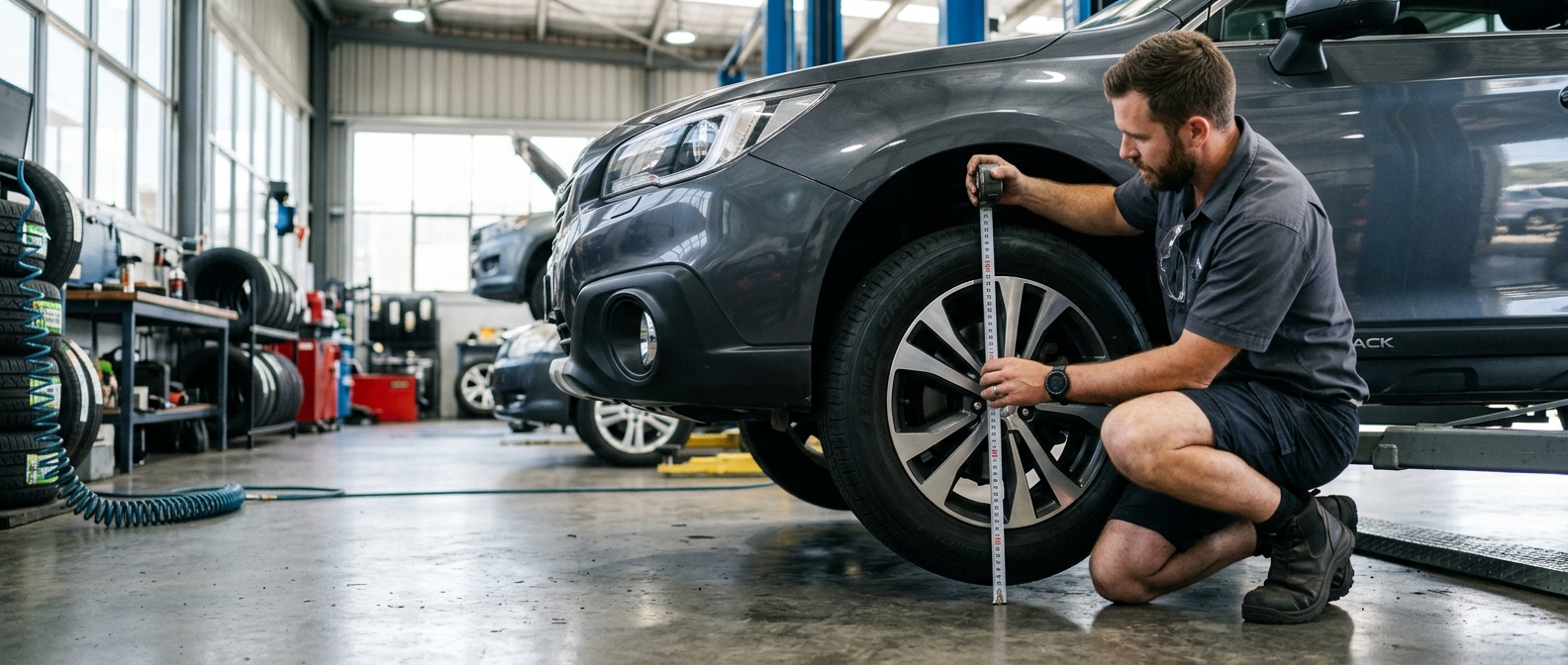
TL;DR: Rolling diameter is the effective distance your tyre travels in one full revolution. It decides whether a new tyre size is legal in Australia, because Vehicle Standards Bulletin 14 (VSB 14) allows a replacement passenger-car tyre to sit no more than 15 mm larger or 26 mm smaller in overall diameter than a size the manufacturer specified. Stay inside that band and your speedo, ABS and transmission stay honest.
If you have ever stared at a tyre-size calculator wondering why one size is "fine" and the next one up is "not road legal", the answer is almost always rolling diameter. It is the single number that quietly governs your speedometer reading, your odometer, your traction control, and whether your fitter can legally bolt a set of tyres to your car. This guide explains what rolling diameter is, how to work yours out, and the exact Australian tolerance that keeps a tyre change legal.
What is rolling diameter on a tyre?
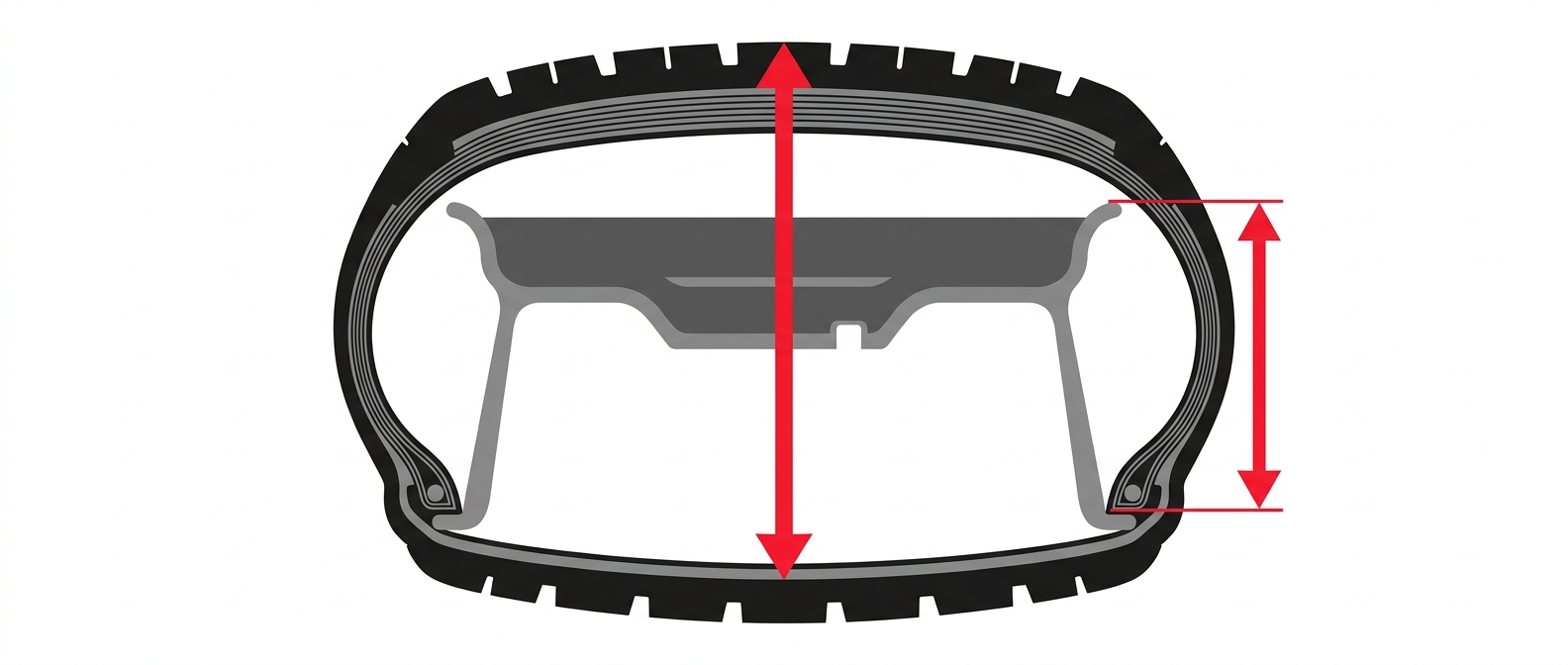
Rolling diameter is the effective diameter of the tyre as it rolls along the road, which determines how far the car travels per wheel revolution. In everyday conversation it is used interchangeably with overall diameter (the full, unloaded height of the tyre measured top to bottom), and tyre-size calculators use overall diameter to compare fitments. Strictly speaking there is a small difference: a loaded tyre squashes slightly at the contact patch, so the effective rolling radius is a touch smaller than the free-standing radius. Tyre pressure, load and wear all nudge it. For sizing and legality, though, the figure everyone works from is overall diameter.
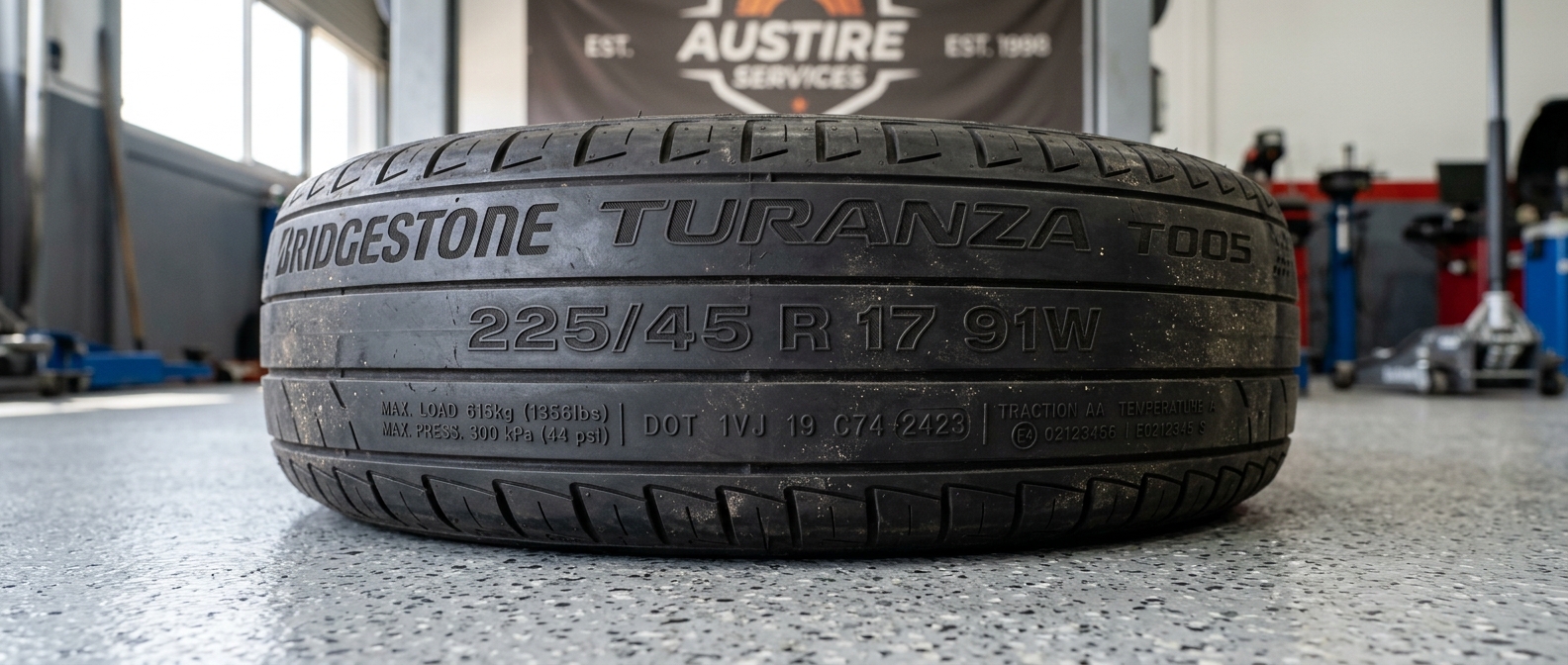
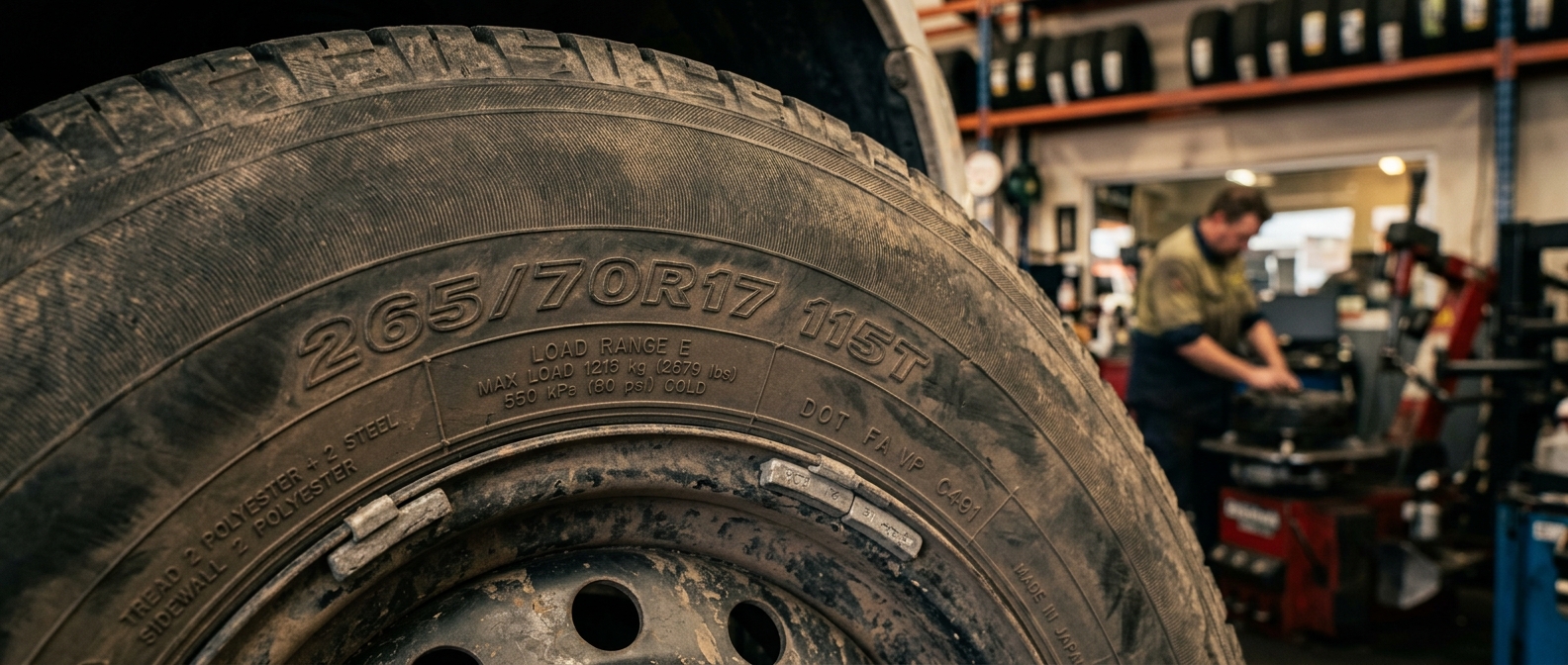
The reason it matters so much is that your car was calibrated around one number. The speedometer, odometer, ABS, stability control and (on many vehicles) the automatic transmission all assume a specific distance per revolution. Change the rolling diameter and you change every one of those readings at once. That is why understanding how to read a tyre sidewall is the starting point for any size change.
How do you calculate rolling diameter from a tyre size?
You can work out overall diameter from the size printed on the sidewall using three numbers: section width, aspect ratio and rim diameter. Take a common size, 205/55R16:
- Section width: 205 mm.
- Sidewall height: 205 × 55% = 112.75 mm (one sidewall).
- Rim diameter: 16 inches = 406.4 mm.
- Overall diameter: 406.4 + (2 × 112.75) = 631.9 mm (about 632 mm).
To get circumference (the actual distance per revolution), multiply diameter by π: 632 mm × 3.1416 ≈ 1,985 mm, or close to two metres per turn of the wheel. The aspect ratio (the middle number) is doing a lot of work here: drop the profile and you shrink the diameter unless you add rim size to compensate. That swap is the whole principle behind plus-sizing.
What is the legal rolling diameter tolerance in Australia?
This is the part that trips people up. Australia does not let you fit any tyre you like just because it physically bolts on. Under Vehicle Standards Bulletin 14 (VSB 14) — the National Code of Practice for Light Vehicle Construction and Modification, the overall diameter of a replacement tyre must stay within a defined band of a size the vehicle manufacturer originally specified:
| Vehicle type | Maximum larger | Maximum smaller |
|---|---|---|
| Passenger car | +15 mm | −26 mm |
| Off-road passenger vehicle / certain goods vehicles | up to +50 mm | −26 mm |
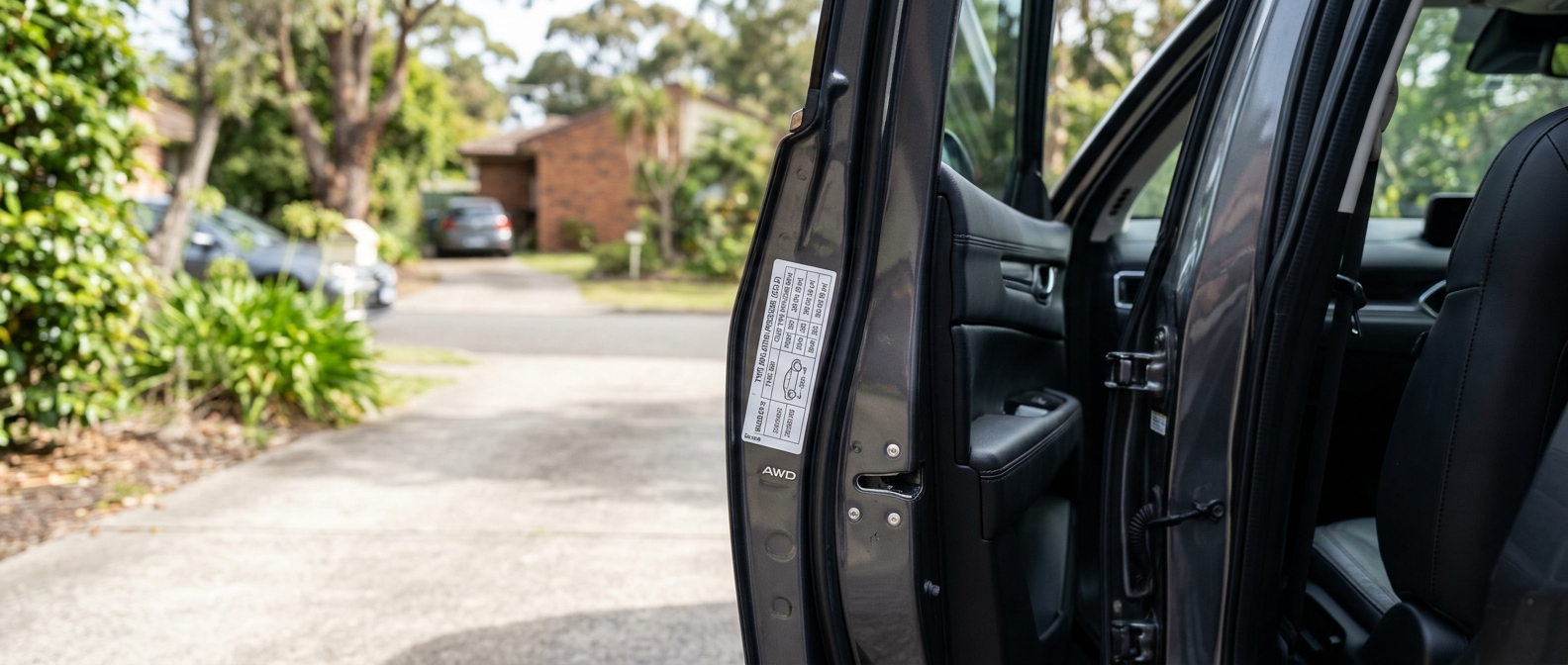
Two traps catch people out. First, the comparison is against a tyre the manufacturer designated for the vehicle — which can include optional sizes listed on the placard or in the owner's manual, not only the exact set that came fitted. Second, many AWD SUVs and soft-roaders are classified as passenger cars, so they get the stricter +15 mm rule, not the +50 mm off-road allowance that owners often assume applies. If you are unsure which category your vehicle sits in, that is exactly the kind of question a licensed engineer or your state road authority can settle — and a bigger jump may require an engineer's certificate.
Road rules are administered by each state and territory, so confirm the current position with your transport authority (for example Transport for NSW, VicRoads/Department of Transport and Planning, or Queensland's TMR) before committing to a fitment. VSB 14 is the national baseline most of them reference.
How does rolling diameter affect your speedometer?
A bigger rolling diameter means the wheel turns fewer times to cover the same ground, so the car thinks you are going slower than you really are — your speedo under-reads. A smaller diameter does the opposite and makes the speedo over-read. The percentage change in diameter is roughly the percentage error in your speed reading.
This is not just an accuracy nicety — it is a legal requirement. Under ADR 18, an Australian speedometer must never indicate a speed lower than your true speed, and may read no more than 110% of true speed plus 4 km/h. At a true 100 km/h, the indicated speed must land between 100 and 114 km/h. A fitment that makes your speedo under-read can push it outside that legal window — and quietly raise your risk of a speeding fine, because you will be travelling faster than the dash suggests. We cover the maths in depth in how tyre size affects your speedometer accuracy and speedo error after upsizing.
What else changes when rolling diameter changes?
- Odometer and service intervals: a bigger tyre records fewer kilometres than you actually drive, so servicing and warranty distances drift.
- ABS and stability control: these systems compare wheel speeds. A mismatched diameter (especially across an axle) can confuse them.
- Gearing and economy: taller tyres effectively raise your final drive ratio — lower revs at a given speed, but more strain on acceleration and, on 4WDs, a noticeable fuel and performance cost.
- Clearance: a larger diameter can foul guards, suspension or brake components at full lock or compression.
This is why you can usually change width, profile and rim size together and still stay legal — as long as the final overall diameter lands within tolerance. Want to go wider without changing diameter? See can you fit wider tyres on the same rim, and for a worked example on a specific body style, plus-sizing a medium SUV.
A worked plus-size example
Say your car came on 205/55R16 (632 mm) and you want 17-inch wheels. A popular plus-size is 225/45R17:
- Sidewall: 225 × 45% = 101.25 mm.
- Rim: 17 in = 431.8 mm.
- Overall diameter: 431.8 + (2 × 101.25) = 634.3 mm.
That is just +2.4 mm versus the original — comfortably inside the +15 mm passenger-car limit. The tyre is wider and lower, the rim is bigger, but because the rolling diameter barely moved, the speedo stays accurate and the fitment is legal. Jump to a much taller 4WD tyre and the sums can quickly run past the line. When in doubt, run the exact figures or ask a fitter to check against Tyre and Rim Association of Australia standards (the TRAA publishes the official fitment data in its Standards Manual).
Bottom line: Rolling diameter, not width or rim size, is what decides whether a tyre change is legal in Australia. Keep a passenger car's overall diameter within +15 mm / −26 mm of a factory-specified size (up to +50 mm larger for eligible off-road vehicles), run the numbers before you buy, and confirm your vehicle category and state rules if you are anywhere near the limit.
Frequently asked questions
Is rolling diameter the same as overall diameter?
Almost. Overall diameter is the tyre's full unloaded height; rolling diameter is the effective diameter as it rolls under load, which is marginally smaller because the contact patch flattens. Sizing calculators and the legal limits use overall diameter, and the two are close enough that the terms are used interchangeably day to day.
How much bigger can my tyres legally be in Australia?
For a passenger car, the replacement tyre's overall diameter must be no more than 15 mm larger or 26 mm smaller than a size the manufacturer specified, under VSB 14. Eligible off-road passenger vehicles and some goods vehicles may go up to 50 mm larger. State rules apply, so confirm with your transport authority.
Will bigger tyres fail a roadworthy inspection?
They can, if the overall diameter falls outside the VSB 14 band, the tyres foul the bodywork, or the speedo no longer meets ADR 18. A fitment that stays within tolerance and clears the guards generally passes, but inspectors check the whole setup, not just the size stamp.
Does a bigger rolling diameter affect fuel economy?
It can go either way. A slightly taller tyre lowers engine revs at cruising speed, which can help highway economy, but heavier wheel-and-tyre packages and taller off-road tyres usually increase rolling resistance and hurt economy overall, especially around town.
Do I need to tell my insurer if I change tyre size?
If the change is a modification beyond factory-optional sizes, you generally should. Undisclosed modifications can affect a claim. See does changing wheel size void your car insurance for the detail.

0 Comments