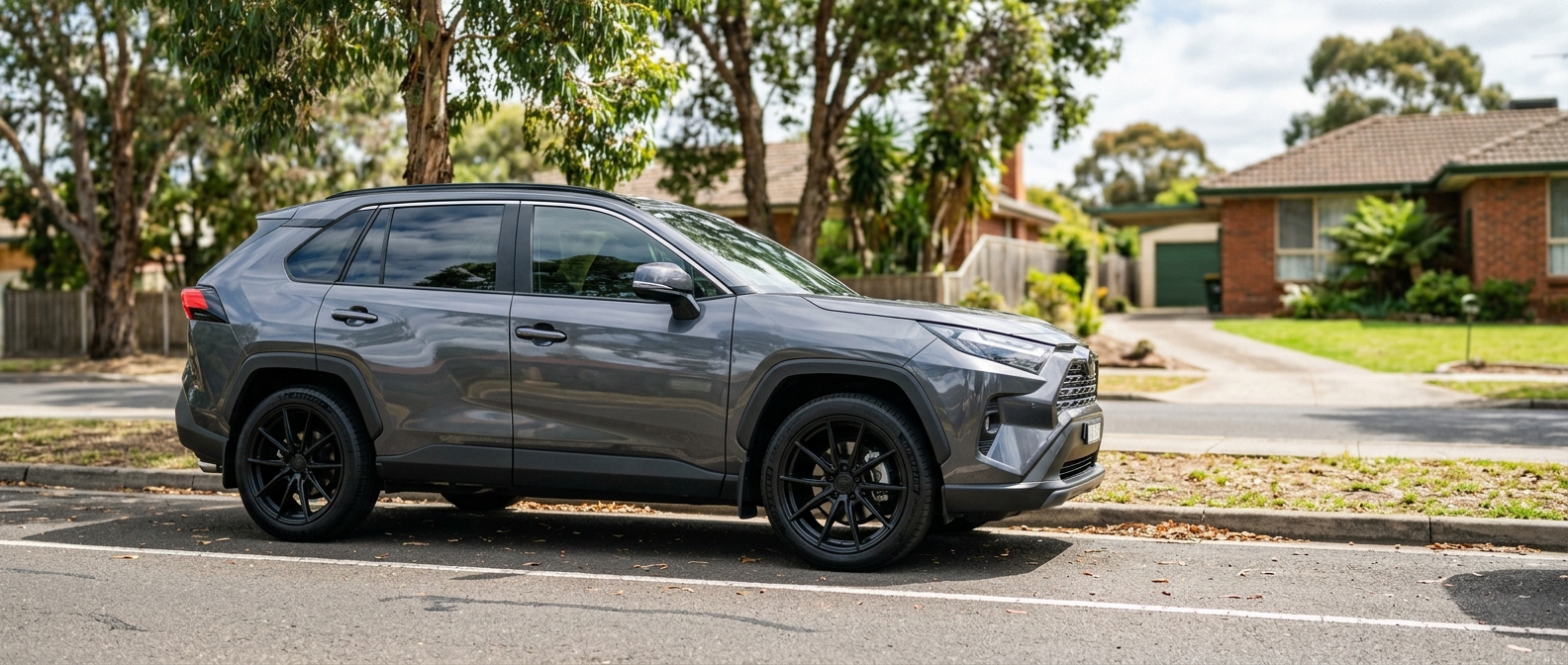
What does “plus-sizing” a medium SUV actually mean?
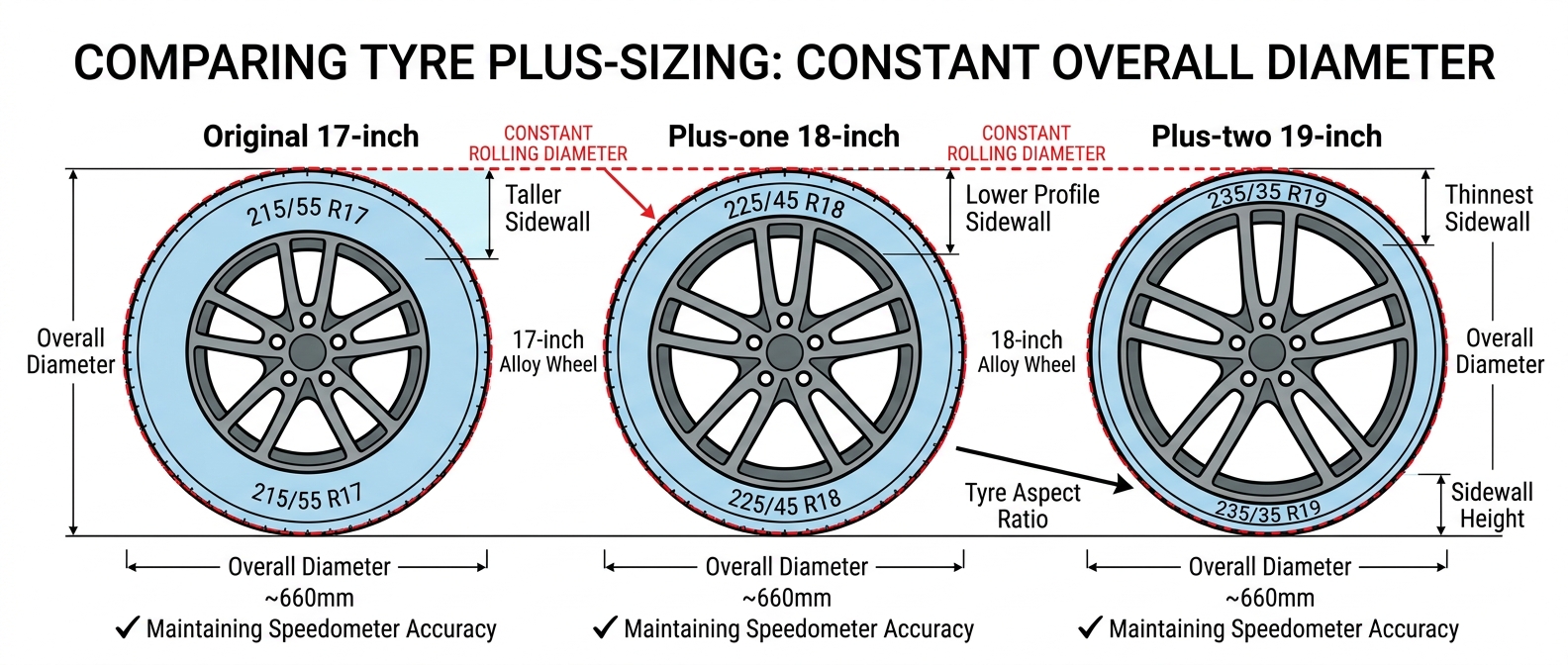
Plus-sizing means fitting a larger-diameter wheel while dropping the tyre’s aspect ratio so the overall rolling diameter stays close to the factory figure. A “plus-one” jump goes up one inch in rim size (say 17-inch to 18-inch); “plus-two” goes up two. The goal is a bigger, better-looking wheel and a shorter, stiffer sidewall without upsetting your speedo, gearing or clearances. It is the same principle whether you are plus-sizing a hatchback, a sedan, or a medium SUV — but the SUV adds weight, height and, often, a family-hauling role that changes the maths.
The number that ties it all together is rolling diameter. Keep it near standard and the car drives, reads and complies much as it did from the factory. Let it grow and you affect speedometer accuracy, braking calibration, guard clearance and — on a heavier SUV — load capacity.
Is my medium SUV a “passenger vehicle” or a “4WD”?
This is the single most misunderstood point, and it decides your legal headroom. Australia’s Vehicle Standards Bulletin 14 (VSB 14) allows a much larger diameter change on vehicles built for off-road use than on ordinary passenger cars. As a guide, off-road-classed 4WDs are commonly allowed up to a +50mm increase in overall tyre diameter, while passenger vehicles are held to roughly +15mm (with a small tolerance the other way).
The trap: most car-based medium SUVs — think RAV4, CX-5, Tucson, Outlander, Sportage — are classified as passenger vehicles, not off-road 4WDs, even with all-wheel drive. So the tighter +15mm allowance usually applies to them, not the generous 50mm figure that suits a ladder-frame wagon. Plus-sizing done properly (bigger rim, lower profile, same rolling diameter) keeps you inside that window comfortably; simply fitting taller tyres does not. These figures change between states and categories, so confirm your vehicle’s classification and the exact tolerance with your state road authority and a signatory engineer before you buy.
How far can I realistically go?
For a typical medium SUV on 17s or 18s, a plus-one is almost always straightforward and a plus-two is usually possible with the right offset. Keeping rolling diameter constant means each extra inch of rim is matched by a lower profile. A rough worked example on a common fitment:
| Step | Example size | Approx. overall diameter | Notes |
|---|---|---|---|
| Original | 225/65R17 | ~724mm | Factory reference |
| Plus-one | 235/60R18 | ~739mm | Wider, lower profile; check diameter creep |
| Plus-two | 245/50R19 | ~723mm | Near-identical diameter; sharper steering, firmer ride |
Sizes above are illustrative, not a specific model’s fitment. Always calculate against your own placard size and confirm clearance.
The practical limits are set by four things at once: guard and suspension clearance at full lock and full compression, the rim width to tyre width match, offset and backspacing, and the load rating. Run out of clearance and the tyre rubs; get the offset wrong and you push the track too wide or foul the strut.
What’s the load rating trap on an SUV?
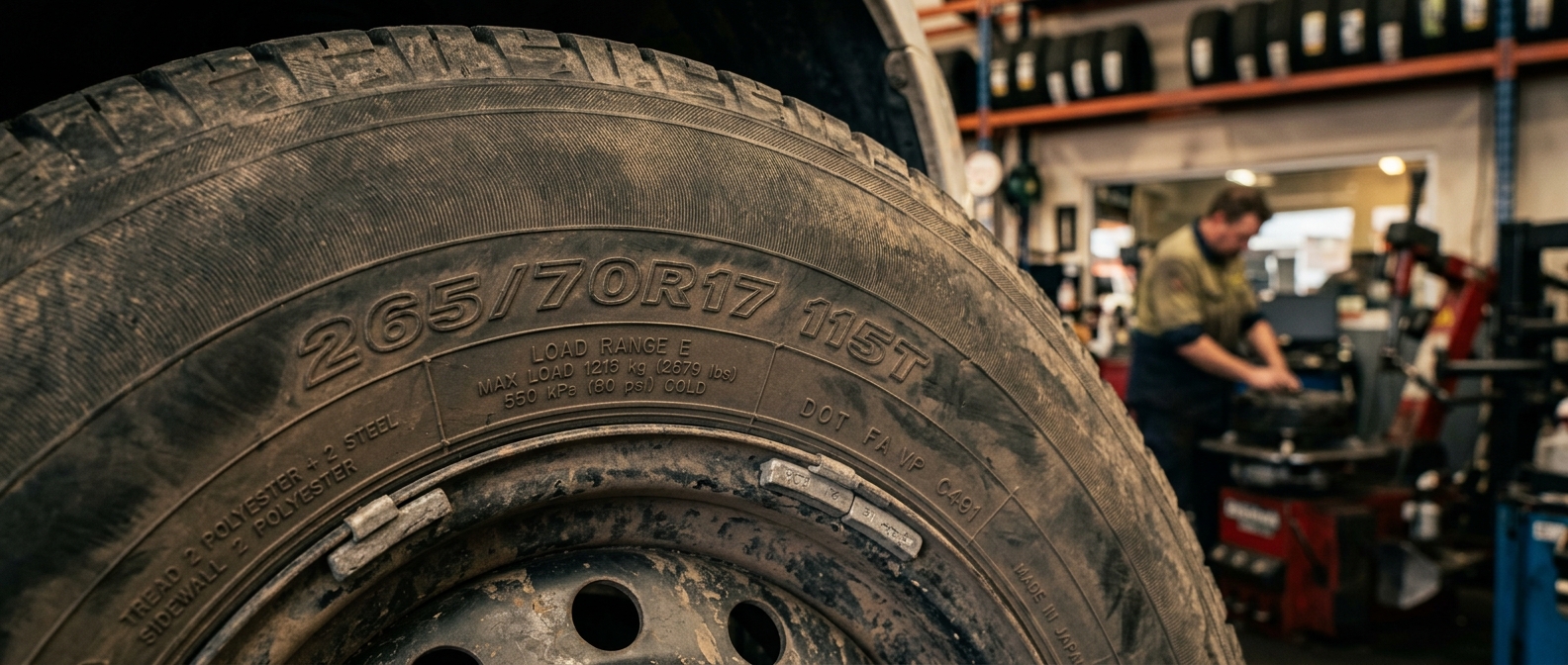
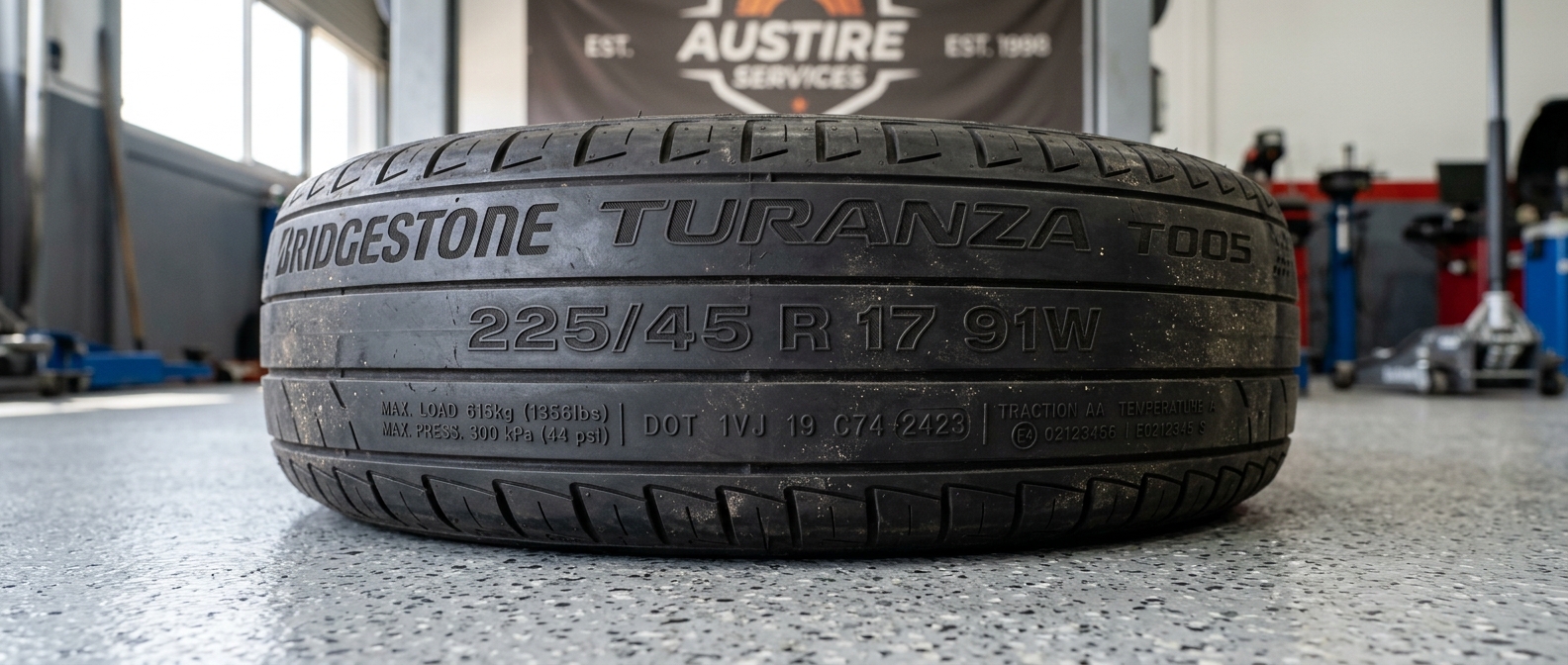
Medium SUVs are heavier than the hatch or sedan they share a platform with, and fully loaded with people and gear they sit near their rated axle loads. Your replacement tyres must carry at least as much as the originals: the load index on the sidewall must meet or exceed the figure on your placard. Fitting a lower-load-index tyre — easy to do when chasing a cheaper or better-looking size — is both unsafe and illegal, and it is exactly what happens when you fit the wrong load rating: the casing overheats, flexes and can fail.
Lower-profile plus-sized tyres sometimes carry a lower load index than the taller originals, so check the number, not just the width. Where a heavier SUV needs it, an XL (reinforced) tyre restores the capacity. Match or beat the placard load index and the placard speed rating and you are on safe ground.
Will plus-sizing throw out my speedo?
Only if you change the rolling diameter. Australian Design Rule 18/03 requires that a speedometer never reads lower than your true speed, and may over-read by no more than 10% plus 4km/h. A correctly plus-sized SUV keeps diameter constant, so the speedo stays accurate. Fit a taller overall tyre and the speedo reads low — you are travelling faster than it shows, a genuine speeding risk. Our guide to speedo error after upsizing shows how to work out the percentage, and a GPS check confirms it on the road.
Ride, noise and the things you actually feel
A shorter, stiffer sidewall sharpens turn-in and reduces roll, which suits an SUV that otherwise leans. The cost is ride comfort: less sidewall means more of every pothole and expansion joint reaches the cabin, and larger rims with thin rubber are more vulnerable to kerb and pothole damage. Bigger wheels are usually heavier, which can blunt acceleration and nudge fuel use up slightly. For a family SUV that spends its life on suburban roads and the odd rough car park, a plus-one is often the sweet spot; a plus-two looks sharpest but asks the most of your suspension and your patience with our roads.
Does it affect insurance or a roadworthy?
Aftermarket wheels and tyres are a modification, and undeclared modifications can reduce or void a claim. Tell your insurer about any change to wheel or tyre size — see whether changing wheel size voids your insurance. A fitment that stays within diameter tolerance, keeps the correct load and speed ratings and doesn’t foul the guards will generally pass a roadworthy; one that pokes outside the guards, over-reads the diameter limit or drops below the load rating can fail and may need an engineer’s certificate. Rules differ by state, so confirm locally with the likes of the state road authority and the national VSB 14 guidance.
Bottom line
A medium SUV takes well to a plus-one, and often a plus-two, provided you keep the rolling diameter close to standard, match or beat the placard load and speed ratings, and confirm the wheels clear the guards. Treat it as a passenger vehicle for diameter limits unless yours is a genuine off-road 4WD, declare the change to your insurer, and verify the specifics with your state road authority.
Frequently asked questions
Can I go up two inches on a medium SUV?
Often yes. A plus-two (for example 17-inch to 19-inch) is achievable on many medium SUVs if you drop the aspect ratio to hold the rolling diameter and choose the correct offset. Ride firms up and the tyres cost more, so many owners prefer a plus-one.
Do bigger wheels use more fuel on an SUV?
Usually a little. Larger wheels tend to be heavier and lower-profile tyres can add rolling resistance, so economy may dip slightly. Keeping the rolling diameter unchanged avoids any gearing penalty.
Will plus-sizing change my speedo reading?
Not if the rolling diameter stays the same. If the new setup is taller overall, the speedo will under-read and you will be going faster than it shows. Keep diameter constant and confirm with a GPS.
Is a lower-profile tyre more likely to damage my rim?
Yes. Less sidewall means less cushioning between the road and the rim, so kerbs and potholes are more likely to bend or crack an alloy. Careful parking and correct pressures help.
Do I need engineering approval to plus-size a medium SUV?
Usually not, if you stay within diameter and track limits and keep the correct ratings. Push beyond those — or widen the track significantly — and certification may be required. Check with your state road authority.

0 Comments