
Plus-sizing a hatchback means fitting a larger-diameter wheel with a lower-profile tyre, keeping the overall rolling diameter close to standard. Done right, it sharpens steering and looks. Done wrong, it wrecks ride comfort, throws out your speedo, and can leave your insurer with a reason to knock back a claim. Here is what actually changes.
TL;DR: Plus-sizing a hatchback swaps taller-sidewall tyres for a bigger wheel and a lower-profile tyre at roughly the same overall diameter. You gain sharper turn-in and kerb presence; you give up ride comfort, gain kerb and pothole risk, and pay more per tyre. Keep rolling diameter within about 15mm, keep the speedo legal, and tell your insurer.
What does plus-sizing a hatchback actually mean?
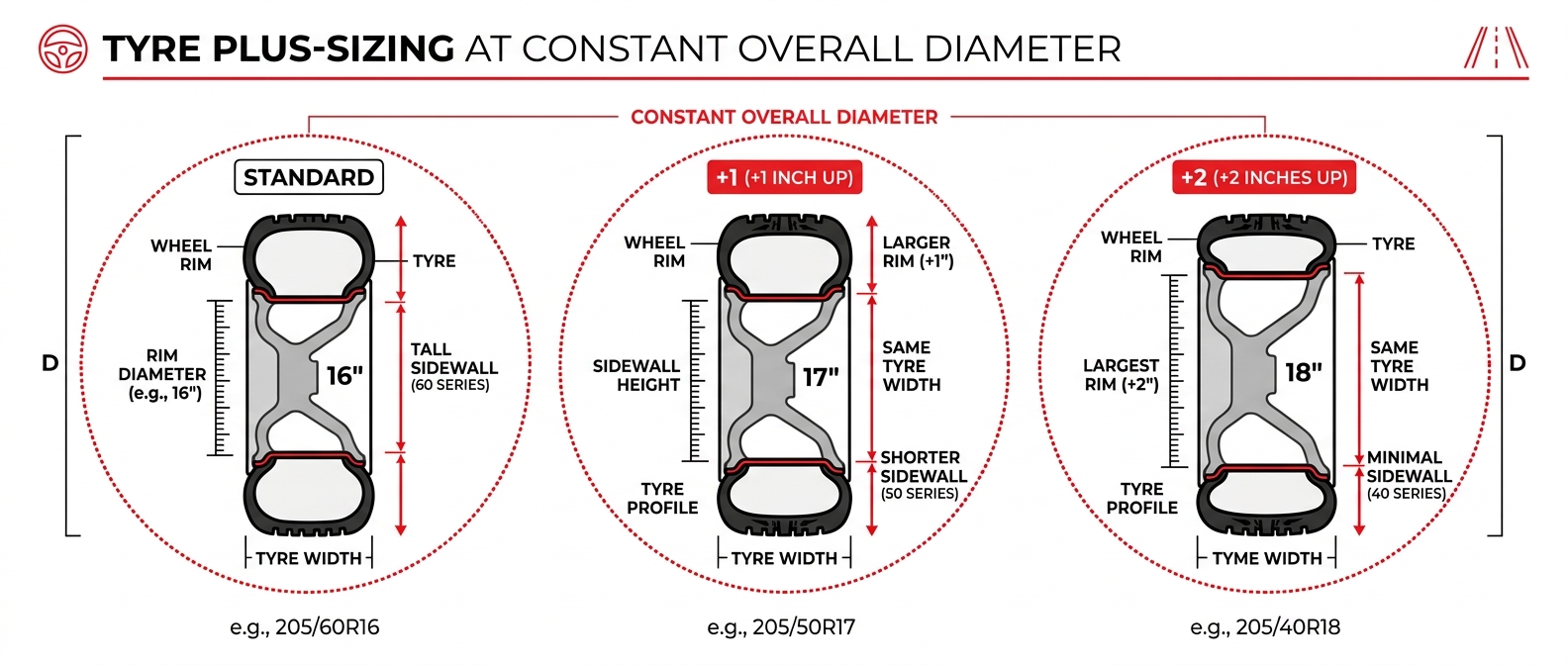
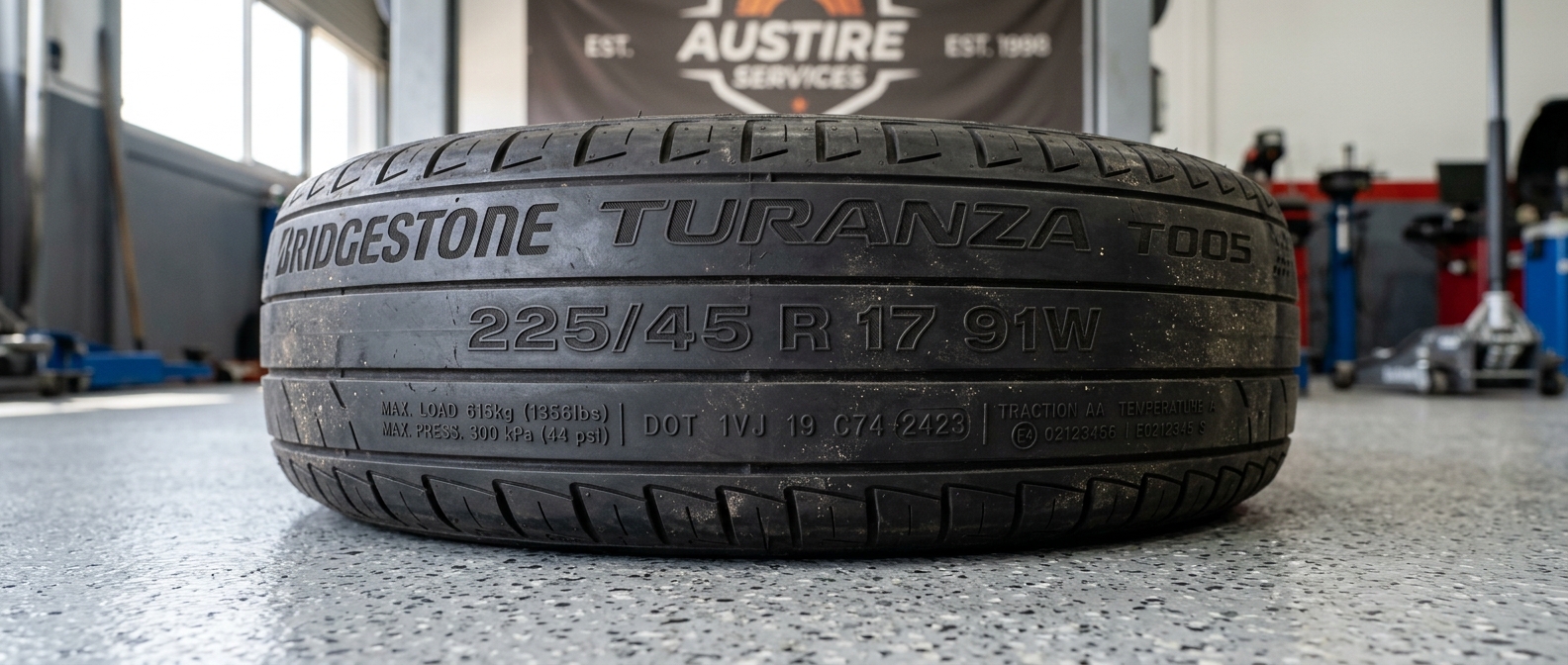
Plus-sizing (also called upsizing) is fitting a wheel one or two inches larger in diameter than standard, then dropping the tyre’s aspect ratio so the whole assembly stays close to the original rolling diameter. A “+1” fitment is one inch up on the rim; “+2” is two inches up. On a typical small hatchback that might mean going from a 15-inch wheel with a 185/65 R15 tyre to a 16-inch wheel with a 195/55 R16, or a 17-inch with a 205/45 R17.
The maths matters because the sidewall gets shorter every inch you add to the rim. On a small, light car with modest wheel arches, there is not much room to add width or diameter before something rubs or the ride turns to concrete. That is why hatchback plus-sizing is usually a +1 or +2 exercise, not the big jumps you see on utes and 4WDs. If you want the underlying geometry, our guide to rolling diameter and why it decides your legal tyre size explains the number you are trying to protect, and aspect ratio explained covers the profile drop.
What do you gain by plus-sizing a hatch?
The real wins are in steering feel and appearance. A shorter, stiffer sidewall flexes less when you turn in, so the car feels sharper and more direct — the change most owners notice first. A wider tyre puts more rubber on the road, which can help dry grip and braking bite. And bigger wheels with a lower-profile tyre simply fill the arches and look the part, which is why so many hatch owners do it.
Those gains are genuine but modest on a small car. A hot hatch on 17s or 18s benefits far more than a base-model runabout, because the suspension and brakes are built to use the extra grip. If you are chasing the look more than lap times, be honest with yourself about what you are paying for.
What do you give up? Ride comfort is the big one
The sidewall is your tyre’s suspension. Shorten it and you remove air and flex that used to soak up bumps, expansion joints and coarse-chip country roads. On a light hatchback with a short wheelbase, that harshness is felt more sharply than on a heavy sedan or SUV. Expect a firmer, busier ride and more road noise, especially on the patched-up back roads and chip-seal surfaces common across regional Australia.
You also raise the risk of expensive damage. A low-profile tyre gives the rim far less protection from kerbs and potholes. A pothole strike that a 65-profile tyre would have shrugged off can crack or buckle a low-profile wheel and split the tyre. If you go this way, read up on pothole damage to tyres and wheels and kerb damage and when to worry about structural harm before you commit.
Cost is the quiet consequence
Bigger, lower-profile tyres in less common sizes cost more to buy and are more likely to need special order in regional areas. A set that was $150 a corner in the standard size can jump well past $250 a corner once you move to a wider, larger-diameter performance tyre. Factor in fitting, balancing and a wheel alignment. Our breakdown of what it costs to fit bigger wheels and tyres has the full picture, and if you want to keep the standard size, see the best budget tyres for a hatchback.
Will plus-sizing throw out my speedometer?
Only if you change the rolling diameter. The speedo reads wheel rotations and assumes a fixed tyre circumference, so if your new wheel-and-tyre package has a larger overall diameter, the car travels further per rotation and the speedo reads lower than your true speed — which is the dangerous direction, because it lets you speed without knowing. A smaller overall diameter makes the speedo read high.
Under Australian Design Rule 18/03, a speedometer must never read lower than your true speed, and may not over-read by more than 10% of true speed plus 4km/h. Keep the new package’s overall diameter within roughly a few millimetres of standard and the speedo stays honest. Our guides on how tyre size affects speedometer accuracy and speedo error after upsizing: how much is too much show how to run the numbers.
What are the legal limits in Australia?
Plus-sizing done properly — keeping the rolling diameter close to standard — is legal in every state and territory, but there are limits set out in the National Code of Practice (VSB 14) and applied through your state road authority.
| Factor | Passenger-car guide | Why it matters |
|---|---|---|
| Overall (rolling) diameter | Typically within about +15mm / −26mm of the largest factory option | Protects speedo accuracy, ABS/ESC calibration and clearance |
| Track width increase | Up to about 25mm per side before certification is needed | Wider wheels/offset can push the tyre past the guard |
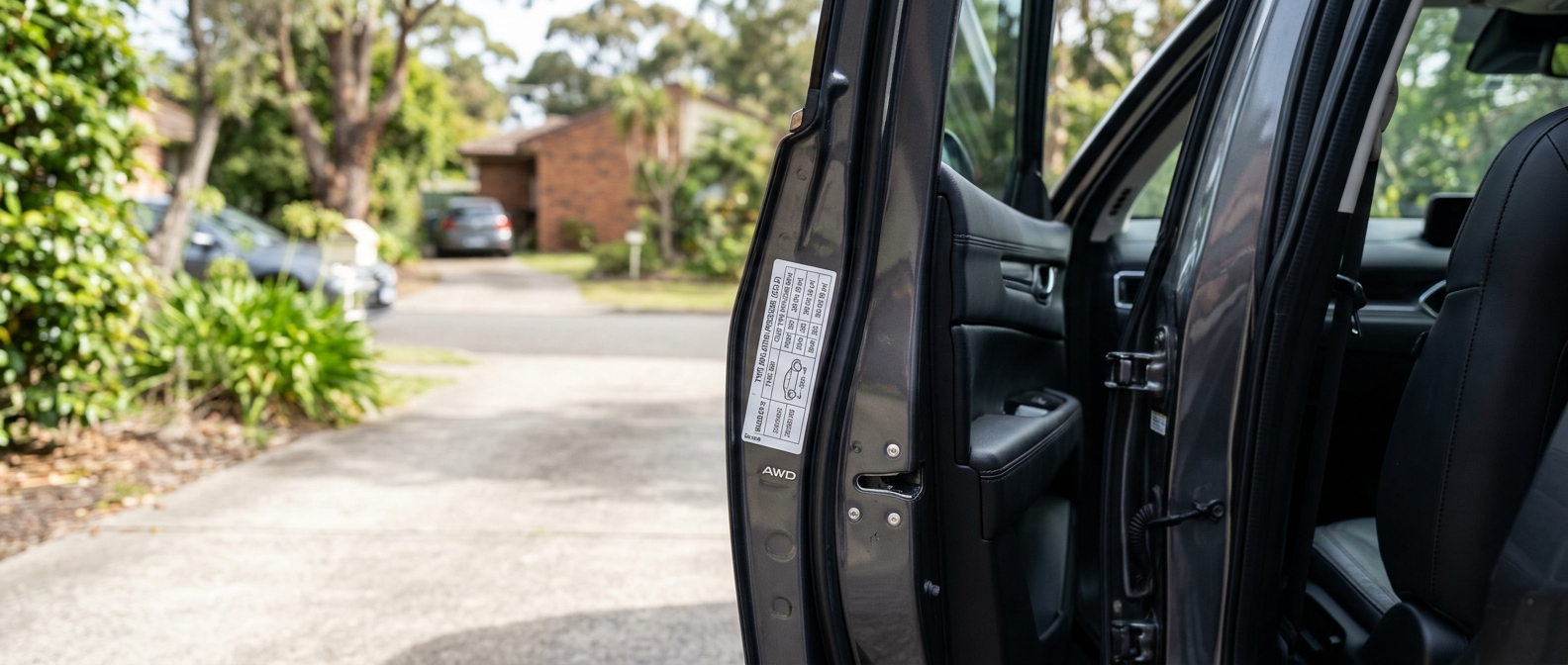
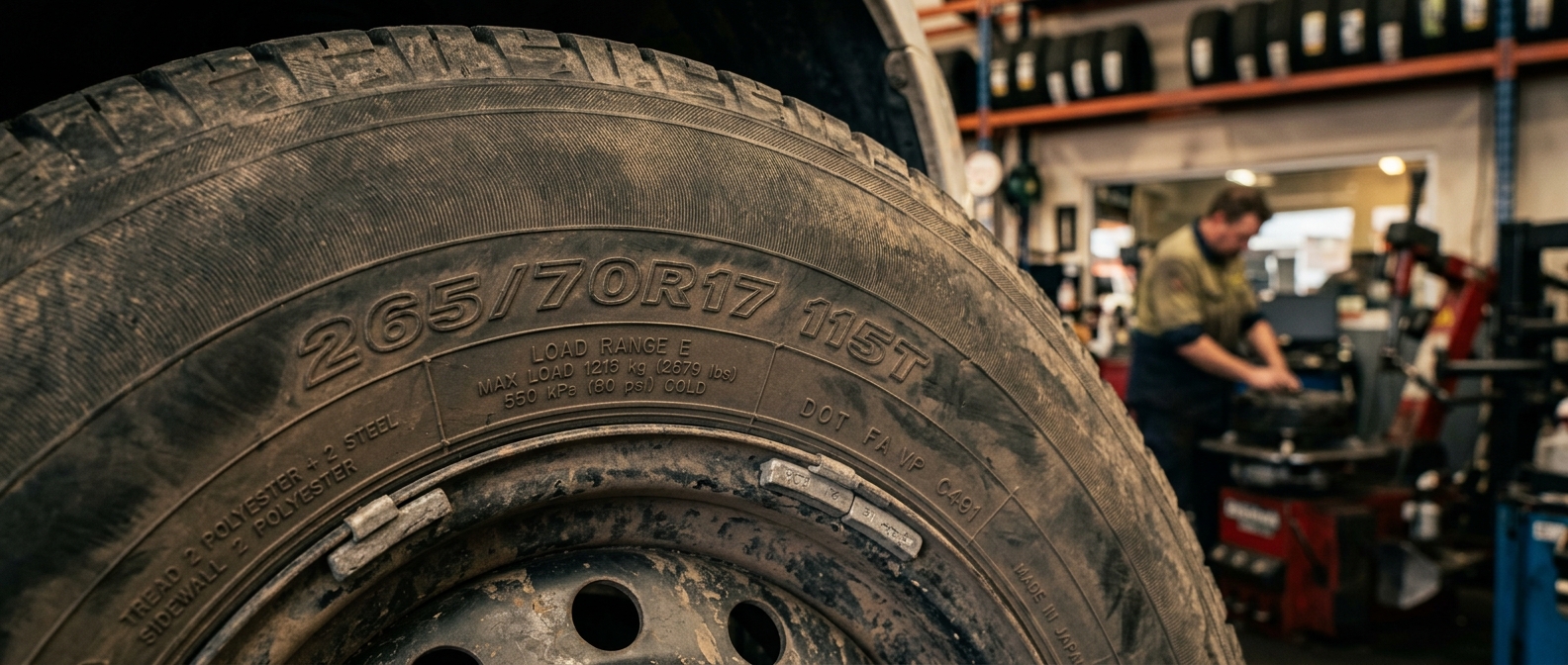
| Load index | Must be at least equal to the placard rating | A wider tyre with a lower load index is illegal and unsafe |
| Guard clearance | Tyre must sit within the bodywork, no rubbing on full lock/compression | Rubbing fails inspection and shreds tyres |
These figures are a guide only — the exact tolerances and whether you need an engineer’s certificate vary by state, so confirm with your state road authority before you buy. See whether you need an engineer’s certificate for bigger wheels, and if you are also changing wheel width, our guides to fitting wider tyres on the same rim, the rim width to tyre width chart and wheel offset and backspacing will keep you inside the guards.
Does plus-sizing affect my car insurance?
It can, and this is where hatch owners get caught. Aftermarket wheels and wider tyres are a modification, and Australian insurers expect you to declare modifications when you take out or renew a policy. If you do not, a claim tied to those wheels — or in some cases any claim at all — can be reduced or refused, and the policy can be cancelled. Declaring the change is likely to lift your premium a little, because the wheels cost more to replace, but it keeps your cover valid.
The safe move is a quick call or online update to your insurer before you fit the wheels, confirming the modification is legal and noted on your policy. Our guides to whether changing wheel size voids your insurance and whether you have to tell your insurer about aftermarket wheels cover exactly what to say.
Bottom line: Plus-sizing a hatchback is a looks-and-feel upgrade, not a free performance win. Keep the rolling diameter close to standard so your speedo stays legal, budget for a firmer ride and pricier tyres, protect those low-profile wheels from kerbs and potholes, and declare the change to your insurer. Get those four right and it is a safe, legal upgrade.
Thinking bigger than a hatch? The trade-offs shift with the car — see plus-sizing a sedan and plus-sizing a medium SUV for how the same rules play out on heavier vehicles.
Frequently asked questions
Does plus-sizing a hatchback use more fuel?
Usually a little. Wider, larger-diameter wheels and tyres are heavier and create more rolling resistance and aerodynamic drag, so you may see a small drop in economy. On a small hatch the effect is minor but real, especially in stop-start city driving.
How much bigger can I go on a hatchback?
Most hatchbacks are comfortable with a +1 or +2 fitment provided the rolling diameter stays close to standard and the tyre clears the guards. Beyond that you run into rubbing, harsh ride and possible certification requirements. Always check clearance on full steering lock and suspension compression.
Will bigger wheels damage my suspension or wheel bearings?
Heavier wheels increase the load on bearings and suspension components over time, and the harsher ride transmits more shock. It is rarely dramatic on a modest +1 hatch fitment, but staying close to standard wheel weight and diameter keeps the strain low.
Do I need a wheel alignment after plus-sizing?
Yes. Any time you change wheels and tyres it is worth having a wheel alignment done so the new tyres wear evenly and the car tracks true. It is a small cost next to a set of premium low-profile tyres.
Is plus-sizing reversible?
Completely. Keep your original wheels and tyres and you can return the car to standard at any time — handy for resale, or if the firmer ride wears thin. Many owners keep the factory set for exactly this reason.
Figures for tread, diameter tolerances, pricing and insurance are a guide based on sources current at the time of writing. Tyre sizing, modification rules and premiums change — always confirm your specific fitment with your state road authority, a qualified tyre fitter and your insurer.

0 Comments