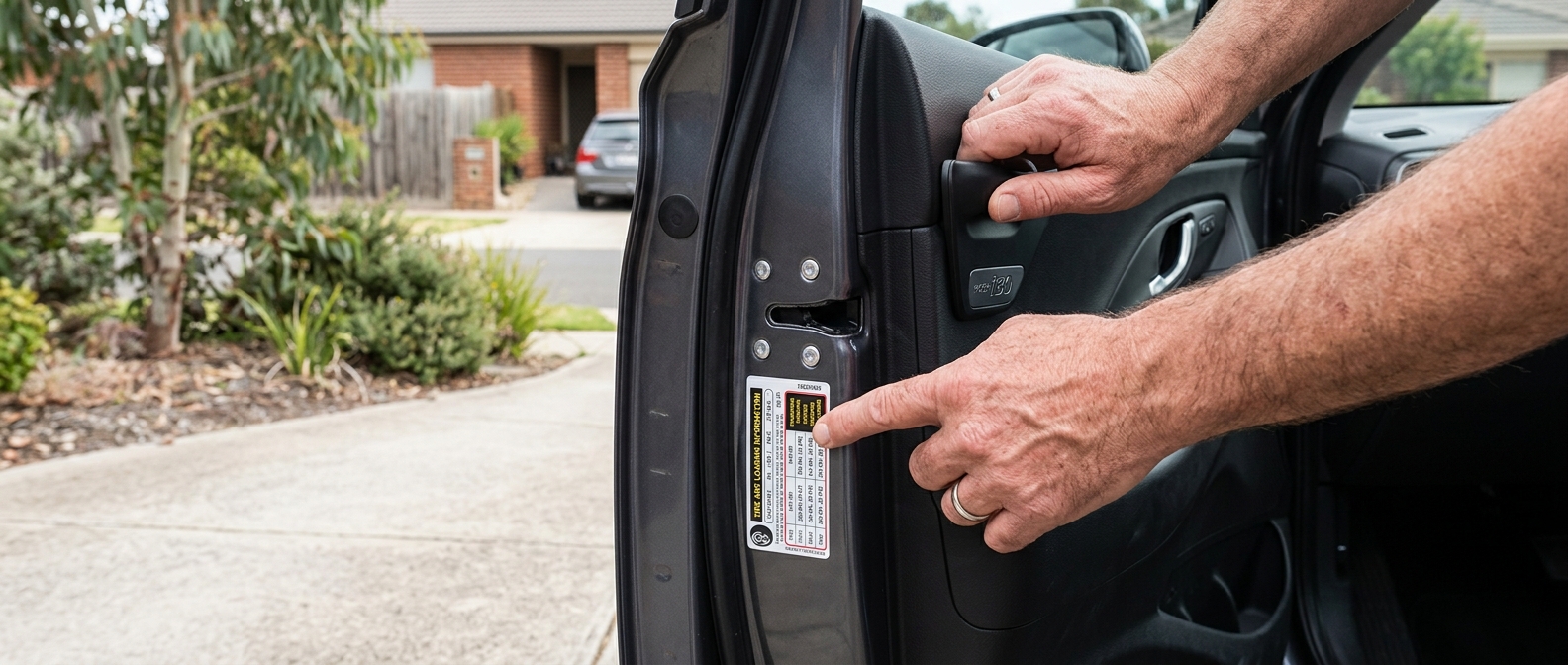
TL;DR: The original tyre size for a used car is printed on the tyre placard — a sticker usually inside the driver's door jamb, the fuel flap or the glovebox — and repeated in the owner's manual. Don't rely on the tyres currently fitted, because a previous owner may have changed them. Always cross-check the placard against the sidewall before you buy.
Why the fitted tyres aren't proof of the right size
When you buy a used car in Australia, the tyres already on it tell you what the last owner chose — not necessarily what the vehicle was built to run. Plenty of second-hand cars roll onto the lot wearing the wrong size: a cheap set fitted in a hurry, a plus-sized "look" the previous owner liked, or mismatched replacements bought one corner at a time. Reading only the sidewall of a fitted tyre can lock you into repeating someone else's mistake.
The original tyre size is the fitment the manufacturer certified for that vehicle when it was first sold in Australia. Getting back to it matters for your speedometer accuracy, your legal load capacity, your ride quality and — if the car ever needs a roadworthy or pink slip — passing inspection. This guide shows you every reliable way to find it.
Where is the tyre placard on an Australian car?
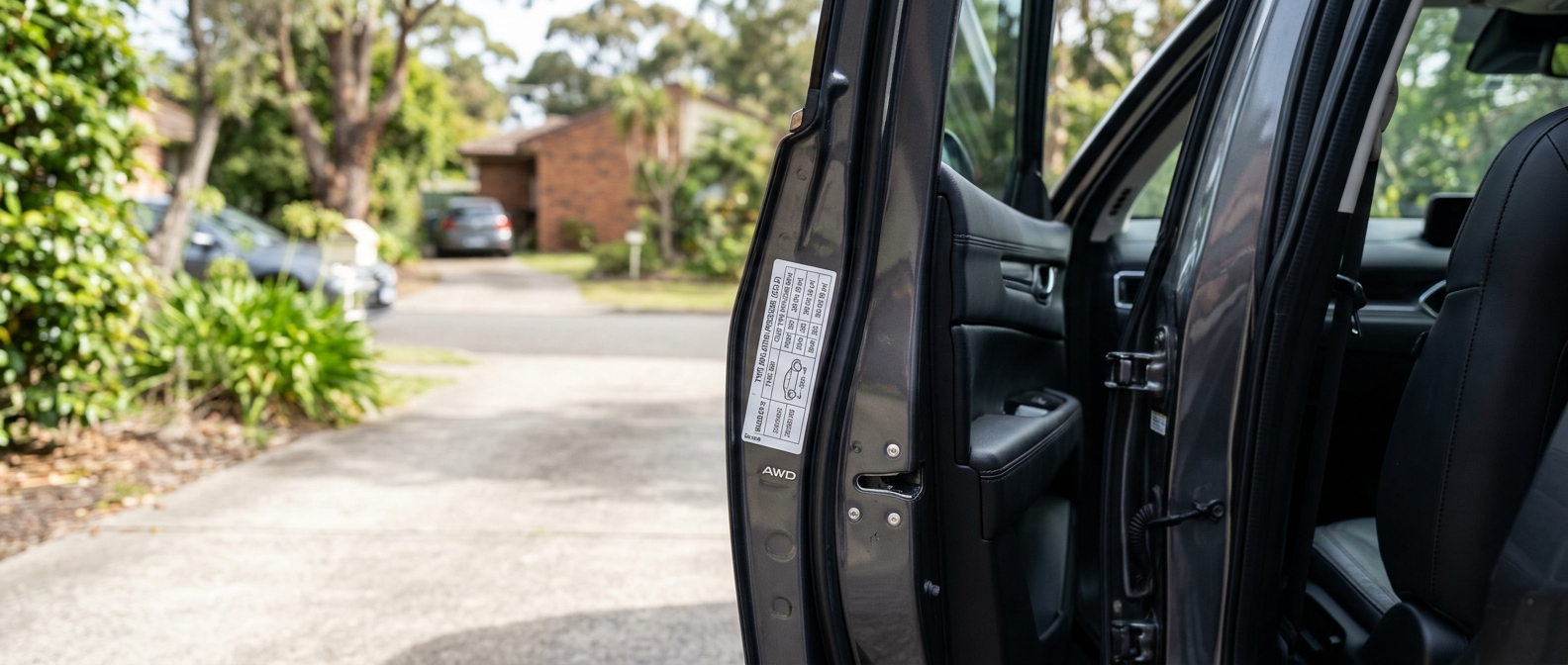
The single most reliable source is the tyre placard: a small factory sticker that lists the original tyre size, load index, speed rating and recommended cold inflation pressures. Under Australian Design Rules, vehicles must carry this information. The placard is usually found in one of these spots:
- Driver's door jamb or door edge — by far the most common location. Open the driver's door and look at the B-pillar or the door itself.
- Inside the fuel filler flap — common on many European and some Japanese models.
- Glovebox — inside the lid or on the wall of the compartment.
- Engine bay or boot — occasionally on older or imported vehicles.
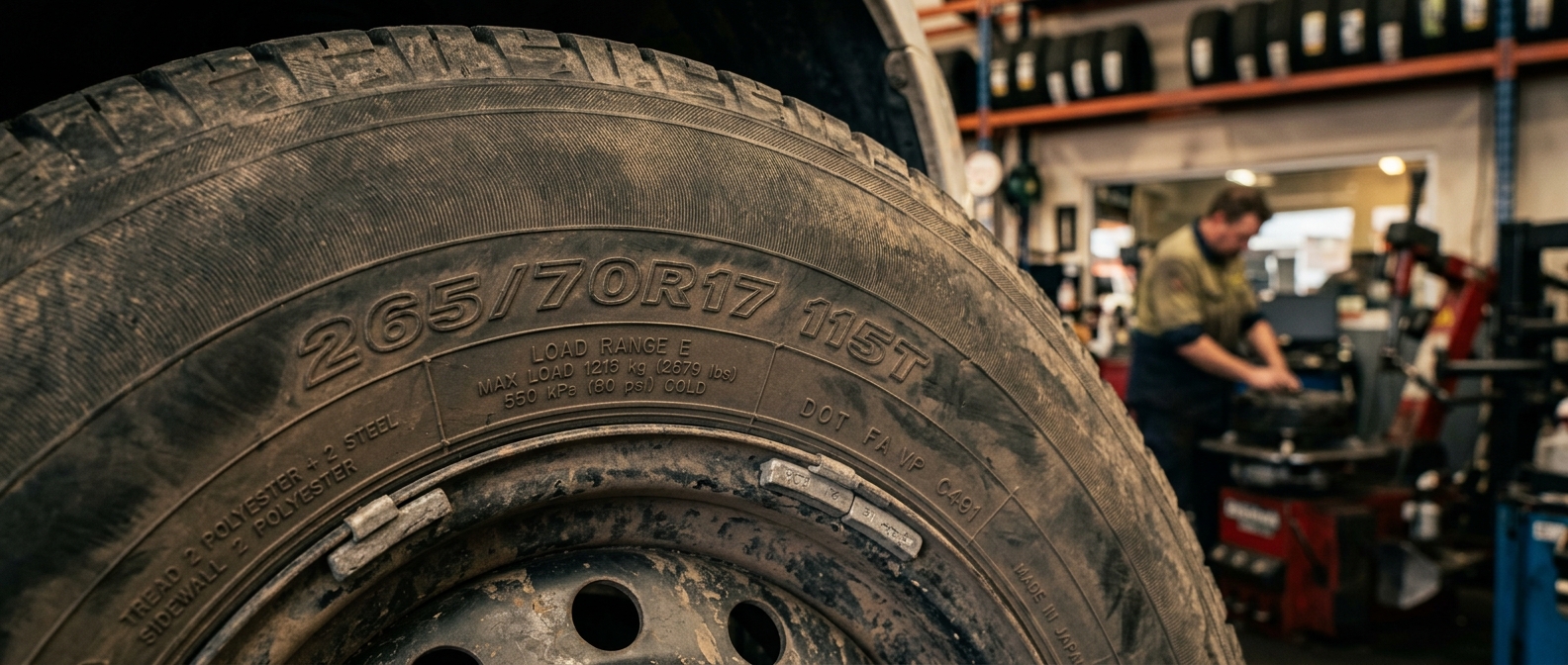
A typical placard entry reads something like 205/55 R16 91V — and the placard will show both the standard tyre size and often a temporary spare size. Learning to decode that string is worth five minutes: our guide on how to read a tyre sidewall breaks down every number and letter. For the placard specifically, see how to read your car's tyre placard (and when to ignore it).
How to read the size once you've found it
Using 205/55 R16 91V as the example:
| Part | What it means |
|---|---|
| 205 | Tread width in millimetres |
| 55 | Aspect ratio — sidewall height as a percentage of width |
| R | Radial construction |
| 16 | Rim diameter in inches |
| 91 | Load index (the minimum you must match or exceed) |
| V | Speed rating |
The load index and speed rating are just as important as the size. For the full tables, see our tyre load index chart for Australian vehicles and tyre speed rating chart.
What if the placard is missing or unreadable?
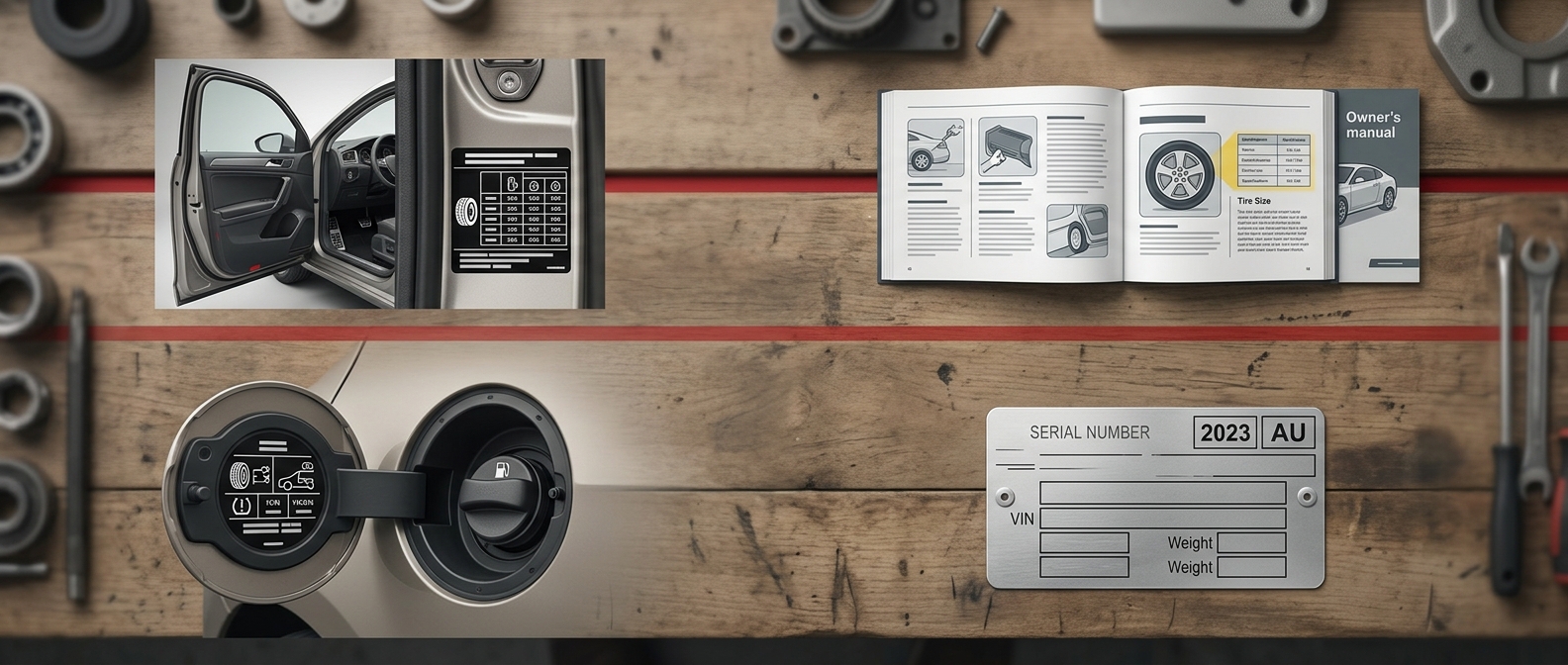
Placards fade, peel or get painted over — especially on older cars and vehicles that have been resprayed. If yours is gone, work through these sources in order.
1. The owner's manual
Every owner's manual has a specifications section listing the wheel and tyre sizes, load ratings and pressures. If the physical book is missing from the glovebox, most manufacturers publish the manual as a free PDF on their Australian website — search the make, model and build year. This is the second-most authoritative source after the placard.
2. The build plate and VIN
Your car's compliance/build plate and its 17-character VIN identify the exact variant. In Australia this matters more than you'd think: the same model name can be sold in several trims that take different wheels — a base model on 16-inch steel wheels and a sports variant on 18-inch alloys, for example. That's exactly why two cars with the same model name take different tyre sizes. Quote the VIN to a dealer or tyre retailer and they can confirm the factory fitment for your specific build.
A word of caution on VIN-lookup websites: many are US-based and return the American-market fitment, which can differ from the Australian-delivered version. Treat online VIN tyre lookups as a starting point and confirm against the placard, manual or an authorised dealer before you buy.
3. A dealer, tyre shop or the manufacturer
Any franchised tyre store — Bob Jane T-Marts, Tyrepower, Beaurepaires, JAX Tyres & Auto, mycar or an online retailer like Tyroola — can look up the factory fitment from your rego or VIN. So can the brand's Australian customer line. This is the quickest option if you're standing in a store.
How do I know the previous owner changed the tyres?
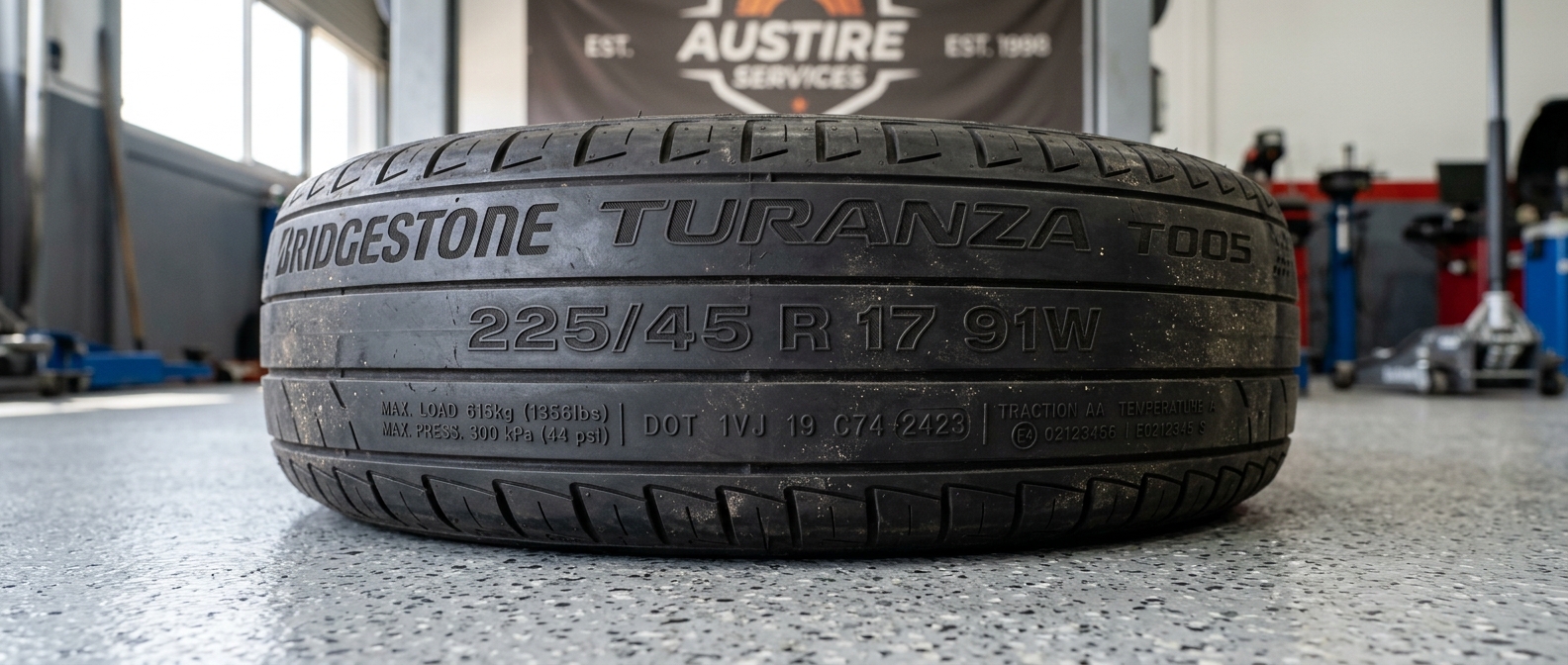
Once you have the original size from the placard or manual, compare it to what's actually fitted. Read the sidewall of each tyre and note any differences. Watch for these red flags:
- A different diameter (the last two-digit rim number, or a taller/shorter overall size) will throw out your speedometer. See how tyre size affects your speedometer accuracy and what rolling diameter means for your legal tyre size.
- A lower load index than the placard — this is both dangerous and illegal in Australia. Understand the stakes in what happens if you fit the wrong load rating tyres.
- Mismatched brands or sizes across axles — a sign tyres were replaced piecemeal.
- Plus-sized wheels — bigger rims with lower-profile tyres. If you like the look, that's fine, but understand the trade-offs first (see our plus-sizing guides).
While you're checking sizes, also read the DOT date code on each tyre. A used car can have the correct size but dangerously old rubber — a common trap.
Can I fit a different size to my used car?
You can, within limits. Australia allows some deviation from the original size, but the replacement must keep the vehicle safe and legal — matching or exceeding the load rating, staying within overall-diameter tolerances so the speedo remains accurate, and fitting inside the guards. The rules come from the Australian Design Rules and each state's roadworthy requirements. If you plan to move away from the factory size, start with the ADR requirements for tyres and wheels and confirm with your state road authority. When in doubt, the safest bet on a used car is to return it to the original placard size.
Bottom line
The tyres on a used car are a guess; the placard is the answer. Find the placard in the driver's door jamb, fuel flap or glovebox, back it up with the owner's manual or VIN, and cross-check against the sidewall. Do that before your next tyre purchase and you'll buy the right size — the size your car was actually built to run.
Frequently asked questions
Is the tyre size on the placard or on the tyre?
Both, but they can differ. The placard shows the original factory size; the sidewall shows whatever is currently fitted. On a used car, always treat the placard (or owner's manual) as the reference and check the fitted tyres against it.
Can I find my tyre size by rego in Australia?
Not directly through a government site, but any tyre retailer can enter your registration or VIN and return the factory fitment for your specific variant. Confirm it against the placard where possible, as trims of the same model can differ.
What if my two front tyres are a different size to the rears?
On most cars that's a warning sign of piecemeal replacement and should be corrected to the placard size. A few performance cars run factory staggered setups (wider rears), which is legitimate — check the placard, which will list both sizes if so.
Does the original size still apply if the car has aftermarket wheels?
The placard size assumes factory wheels. If a previous owner fitted different rims, the tyre size may have legitimately changed to suit them — but it still must meet load, diameter and clearance rules. See OEM vs aftermarket replacement tyres and verify the whole package is compliant.
Figures such as load ratings and legal tolerances are provided as a guide and can change. Always confirm the correct fitment for your vehicle with the tyre placard, owner's manual or your state road authority before buying.

0 Comments