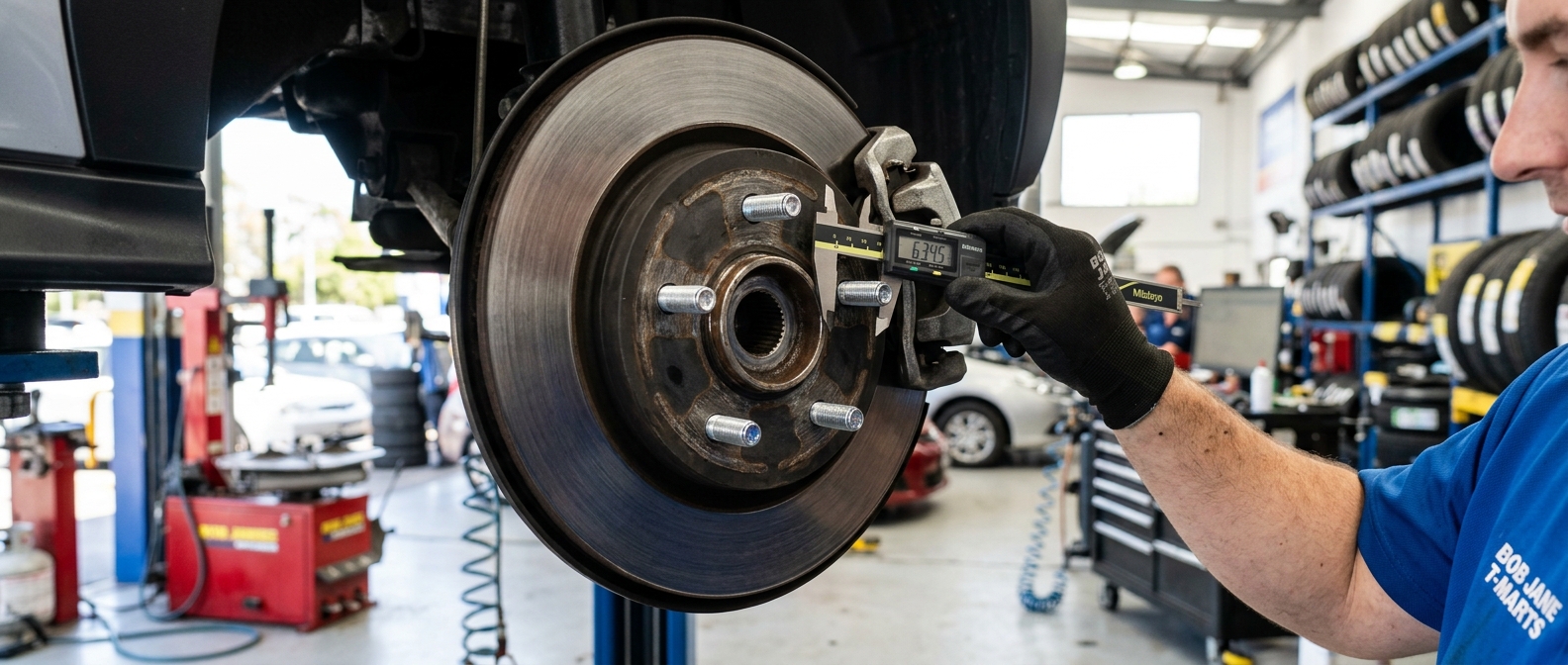
The short answer: A bolt pattern (PCD) is written as two numbers — the count of studs and the diameter of the circle they sit on, in millimetres, such as 5x114.3 or 6x139.7. To measure it, count the studs, then for even patterns measure straight across centre-to-centre, and for a 5-stud wheel measure from the centre of one stud to the centre of the stud two positions away, or use a multiplier. Get it exact: a 3 mm error means the wrong wheel.
What is a bolt pattern (and why "PCD" means the same thing)?
A bolt pattern — also called the PCD, or Pitch Circle Diameter — describes how a wheel bolts to your car's hub. It is written as two numbers, for example 5x114.3. The first number is how many studs (or bolt holes) the wheel has. The second is the diameter, in millimetres, of the imaginary circle drawn through the centre of every stud. So 5x114.3 means five studs sitting on a 114.3 mm circle.
Get this number wrong and the wheel simply will not bolt on — or worse, it bolts on but doesn't sit true, which is dangerous. It is the single most important fitment figure after tyre size, and it is the first thing any Australian tyre shop checks before ordering wheels. It sits alongside two other hub measurements — the centre bore and the hub-centric versus lug-centric design — that together decide whether a wheel truly fits.
How do you read a bolt pattern like 5x114.3 or 6x139.7?
Break the two numbers apart:
- First number = stud count. Australian passenger cars are usually 4 or 5 stud. Utes, 4WDs and vans are commonly 6 stud.
- Second number = the circle diameter in millimetres. Some are round metric figures (100, 120, 150), while others look odd (114.3, 139.7, 107.95) because they are converted from imperial inches — 114.3 mm is exactly 4.5 inches, and 139.7 mm is 5.5 inches.
You will occasionally see a pattern written the other way around (114.3x5). It means the same thing. What matters is that both numbers match your car exactly. A 5x114.3 wheel will never fit a 5x120 hub, even though both are five-stud.
How do you measure your bolt pattern at home?
You need a ruler or tape that reads millimetres, and ideally a set of vernier callipers for accuracy. Measure across a clean, unmounted wheel or the hub studs. The method depends on whether the stud count is even or odd.
Even patterns (4 and 6 stud)
With an even number of studs, two studs always sit directly opposite each other. Measure from the centre of one stud straight across to the centre of the stud directly opposite. That distance is the PCD. On a 6x139.7 LandCruiser wheel, opposite stud centres measure 139.7 mm.
Odd patterns (5 stud)
Five studs never line up directly opposite one another, so you cannot measure straight across. There are two reliable ways:
- The skip-a-stud method: measure from the centre of one stud to the centre of the stud two positions away (skipping the neighbour beside it). This chord, on a five-stud wheel, is very close to the true PCD — for 5x114.3 it reads about 114 mm.
- The multiplier method: measure the distance between the centres of two adjacent studs, then divide by the constant for that stud count. This is the most accurate approach when you only have a ruler.

Bolt pattern multiplier chart
Measure centre-to-centre between two adjacent studs, then divide by the number below to get the PCD:
| Stud count | Divide adjacent-stud distance by | Worked example |
|---|---|---|
| 4 stud | 0.7071 | 70.7 mm ÷ 0.7071 = 100 mm (4x100) |
| 5 stud | 0.5878 | 67.2 mm ÷ 0.5878 = 114.3 mm (5x114.3) |
| 6 stud | 0.5000 | 69.85 mm ÷ 0.5 = 139.7 mm (6x139.7) |
The maths matters because the answer is rarely a round number. If your calculation lands on 113.98 mm, the real figure is 114.3 mm — you are not looking at a mystery 114 mm pattern, just measurement rounding. When in doubt, confirm against the vehicle's factory figure rather than trusting a single tape measurement.
Common bolt patterns on Australian vehicles
These are the patterns you'll meet most often on the road here. Always verify your own vehicle — trims, model years and imports vary.
| Bolt pattern | Typical Australian vehicles |
|---|---|
| 4x100 | Holden Barina, Mitsubishi Lancer, Toyota Yaris, Mazda2, many small hatches |
| 5x100 | Subaru (older), Toyota 86 / Subaru BRZ, some VW |
| 5x114.3 | Toyota Corolla, Camry, RAV4, Mazda CX-5, Mitsubishi Outlander, Nissan X-Trail — the most common 5-stud pattern in Australia |
| 5x120 | Holden Commodore (VE/VF), some BMW |
| 5x150 | Toyota LandCruiser 200/300 Series, Tundra |
| 6x139.7 | Ford Ranger (2015+), Toyota HiLux, Isuzu D-Max, Mitsubishi Triton, LandCruiser 70 Series — the dominant ute/4WD pattern |
| 6x114.3 | Nissan Navara, some Pathfinder |
That last point is exactly why two cars with the same model name can take completely different fitments. Never buy wheels on the badge alone.
Does the bolt pattern have to match exactly?
Yes. There is no "close enough" with a bolt pattern. A wheel that is 5x120 will not safely mount on a 5x114.3 hub — the studs won't line up, and forcing it (or using the wrong nuts to fudge it) leaves the wheel clamped unevenly. The stud count and the diameter both have to be identical to your hub.
The one grey area is wheel adapters, which convert one pattern to another. They exist, but they add width, mass and another failure point, and their legality on Australian roads depends on your state's rules. If you're chasing a fitment that doesn't match, read our guide on whether you actually need spacers or adapters before spending money.
Bolt pattern vs the other fitment numbers
The bolt pattern gets a wheel bolted on, but three other measurements decide whether it fits your car properly:
- Offset and backspacing — how far in or out the wheel sits, which controls guard clearance and steering feel.
- Centre bore — the hole in the middle that locates the wheel on the hub. Too big and the wheel can sit off-centre and vibrate.
- Load rating — the wheel must be rated to carry your vehicle's weight, which matters most on wider fitments and staggered setups.
A wheel can share your bolt pattern and still be wrong on any of these. That's why fitment is a package, not a single number.
Bottom line: Your bolt pattern is a stud count and a circle diameter in millimetres — measure it exactly, match it exactly. Count the studs, measure across (even) or use the 0.5878 multiplier (five-stud), and confirm against a known factory figure before you buy a wheel.
Frequently asked questions
What does 5x114.3 mean?
Five studs arranged on a circle 114.3 mm in diameter. It's the most common five-stud pattern in Australia, used on cars like the Toyota Corolla, RAV4 and Mazda CX-5. The 114.3 mm figure is 4.5 inches converted to metric.
How do I measure a 5-stud bolt pattern without special tools?
Measure the straight-line distance between the centres of two studs sitting next to each other, then divide by 0.5878. For example, 67.2 mm ÷ 0.5878 ≈ 114.3 mm. If the number is close to a known pattern, round to the standard figure.
Can I fit a wheel with a slightly different PCD?
No. The bolt pattern must match your hub exactly. A few millimetres out means the studs won't align and the wheel can't be safely torqued. Adapters can convert patterns but add complexity and may need engineering sign-off depending on your state.
Where can I find my car's factory bolt pattern?
Check your owner's manual, the wheel or vehicle manufacturer's specs, or a reputable online database. If you bought the car used, cross-check the physical wheel — see our guide on finding the original fitment for a used car.
Is bolt pattern the same as stud pattern?
Yes. "Bolt pattern", "stud pattern" and "PCD" all describe the same thing — the number of studs and the diameter of the circle they sit on. Different retailers just use different words for it.
Fitment figures change between model years and variants. Confirm your exact bolt pattern with your vehicle manufacturer, a licensed wheel supplier, or a reputable fitment database such as Wheel-Size.com before purchasing. For modifications, check the Tyre & Rim Association of Australia standards and your state road authority.

0 Comments