Tyre Defect Notices: What Gets You a Yellow or Red Sticker
A defect notice is not a fine. It is an official notice that your vehicle has a fault serious enough that it must be repaired and re-checked before it is fully legal to drive again. Tyres are one of the most common reasons Australian drivers get “stickered”, because tyre faults are easy for an officer to spot at the roadside and they directly affect braking and control.
What is a tyre defect notice?
A defect notice is a document (and often a physical sticker placed on the windscreen) telling you the vehicle does not meet the roadworthy standard. It is issued under each state’s road-transport regulations by police, and by authorised transport or Main Roads inspectors. The notice lists the defects found, whether you may keep driving and for how long, and what you must do to clear it. Because tyres are a safety-critical item, a serious tyre fault is usually classed as a major defect.
Yellow sticker vs red sticker: what’s the difference?
Most states use a two-tier system, and the colours are broadly consistent even though the exact wording differs by jurisdiction.
| Sticker | Severity | What it means for you |
|---|---|---|
| Yellow (minor defect) | Fault present but vehicle not immediately dangerous | You can usually keep driving for a set period (often up to a few weeks) while you repair the fault and get the notice cleared. |
| Red (major / grounded defect) | Vehicle unsafe to drive | Driving may be prohibited except by the shortest route to a repairer or inspection station, and a badly grounded vehicle may need to be towed. |
Victoria, for example, distinguishes major defects (which it lists as including “worn-out tyres”) from minor defects, and treats worn tyres as a major safety concern. Exact colours, categories and clearance rules vary, so always read what your own notice says and confirm with your state authority.
What tyre faults get you a sticker?
The specific defects that most often lead to a tyre notice are:
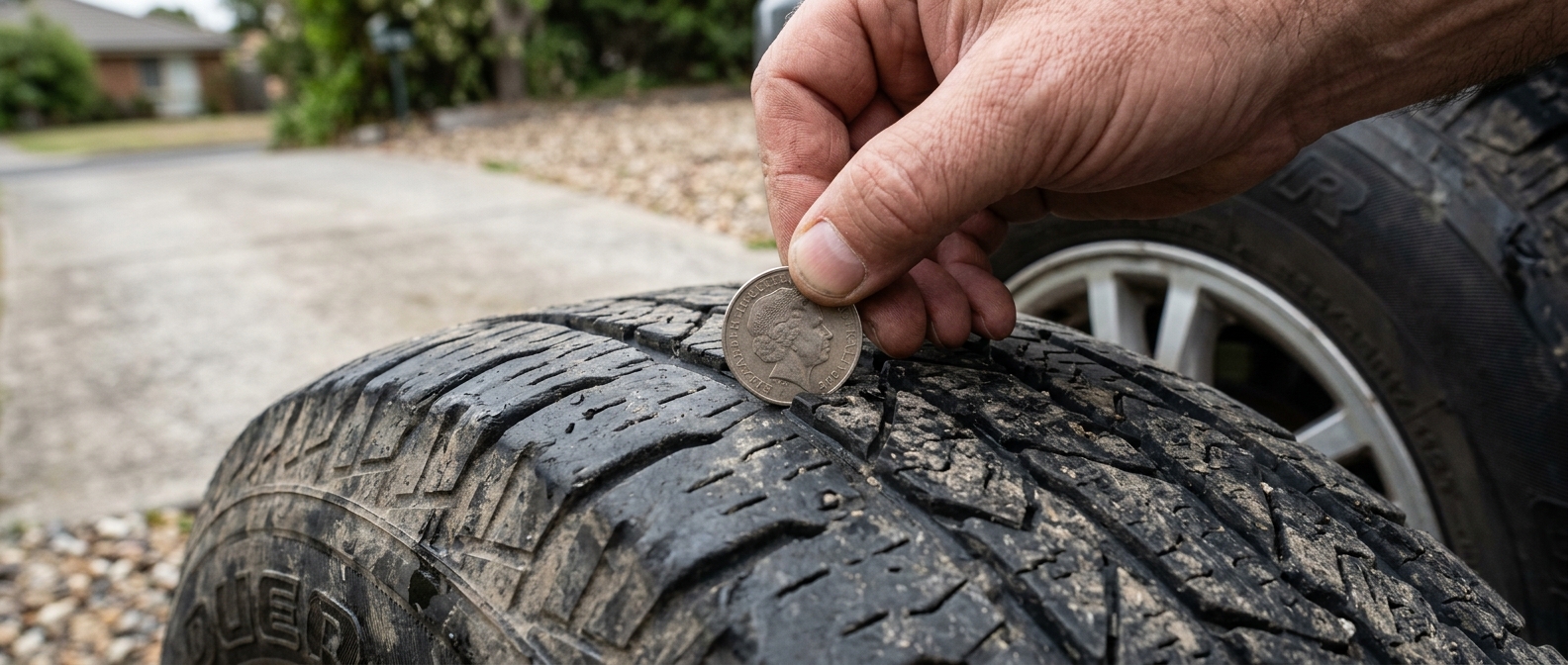
- Tread below the legal minimum. Australia’s legal minimum is 1.5 mm across the principal grooves around the whole tyre — not the 1.6 mm figure many retailers still quote (that is the UK rule). See our guide to the legal minimum tread depth in Australia.
- Cord, canvas or steel belt showing through the tread or sidewall.
- Bulges, lumps or a sidewall bubble, which signal internal damage.
- Cuts or cracks deep enough to reach the cords.
- An illegal or unsafe repair, or a repair in the sidewall or shoulder where repairs are not permitted.
- Tyres that don’t meet the placard load or speed rating, or that are the wrong size for the fitment — see what happens if your tyres don’t meet the placard load rating.
- Mismatched tyres in a way the rules don’t allow, such as different sizes on the same axle. Read running different tyre sizes front and rear and mixing tyre brands front and rear.
- Wheels that don’t comply, for example non-approved beadlock wheels or wheels/tyres protruding past the guards.
How do you clear a tyre defect notice?
Clearing a notice means fixing the fault and having the vehicle inspected and signed off. The general steps are:
- Read the notice. It states the defect type, any driving restriction and the deadline.
- Repair the fault — fit compliant tyres — and keep the receipt as proof.
- Get it inspected. Depending on the state and defect, that may be at an authorised inspection station, a licensed roadworthy/safety tester, or the transport department itself. Many states require a full inspection, not just a re-check of the listed item.
- Pay any clearance fee and lodge the cleared notice so your registration isn’t suspended.
Timeframes differ: Western Australia gives 14 days from the notice’s expiry to be inspected at an Authorised Inspection Station, while Victoria typically requires action within 28 days of issue before registration is suspended. Miss the deadline and you risk suspended or cancelled registration — and in WA, plates may even be seized. Check the exact figure on your notice.
Is a defect notice the same as a fine?
No. A defect notice makes you fix the car; a fine is a monetary penalty. But they often travel together — the same roadside stop can produce both a defect notice and an infringement with demerit points. See fines and demerits for illegal tyres in Australia. A defect notice can also feed into your next scheduled inspection, such as an NSW pink slip, a Victorian roadworthy or a Queensland safety certificate.
How to avoid getting stickered
Most tyre defects are avoidable with a two-minute check. Learn to read the tyre wear indicators and check your tread depth without a gauge, inspect sidewalls for cracks or bulges, and make sure any new tyres and wheels meet the placard and the ADR requirements for tyres and wheels.
Bottom line: A tyre defect notice is a “fix it and prove it” order, not a fine. Yellow usually means keep driving carefully and clear it soon; red usually means stop. The cheapest way to deal with one is to never earn it — keep tread above 1.5 mm, sidewalls sound, and tyres correctly rated for your car.
Frequently asked questions
Can I still drive with a yellow tyre defect sticker?
Usually yes, for a limited time and to get repairs done, but only if the notice says so. A yellow (minor) defect generally allows continued use for a set period; a red (major) defect can prohibit driving except directly to a repairer or inspection station. Always follow the wording on your notice.
How long do I have to clear a tyre defect notice?
It varies by state — commonly 14 to 28 days. WA allows 14 days from the notice’s expiry to be inspected; Victoria generally requires action within 28 days before registration suspension. Check the deadline printed on your notice.
Who can issue a tyre defect notice?
Police and authorised transport, Main Roads or vehicle-standards inspectors, depending on the state. Some consumer-protection and heavy-vehicle officers can issue them too.
Does a defect notice go on my record or affect insurance?
The notice itself is about roadworthiness, but driving on illegal tyres can affect an insurance claim if a crash results. See does changing wheel size void your insurance for how non-compliance interacts with cover.
What if I disagree with the defect?
You can seek a re-inspection or contact the issuing authority. Keep any evidence (photos, fitting receipts) that the tyres were compliant.
This article is general information for Australian drivers and reflects rules as at 2026. Defect categories, sticker colours and clearance timeframes differ between states and change over time — always confirm with your state or territory road authority.



0 Comments