What Is Hub-Centric vs Lug-Centric Fitment?
What does hub-centric mean?
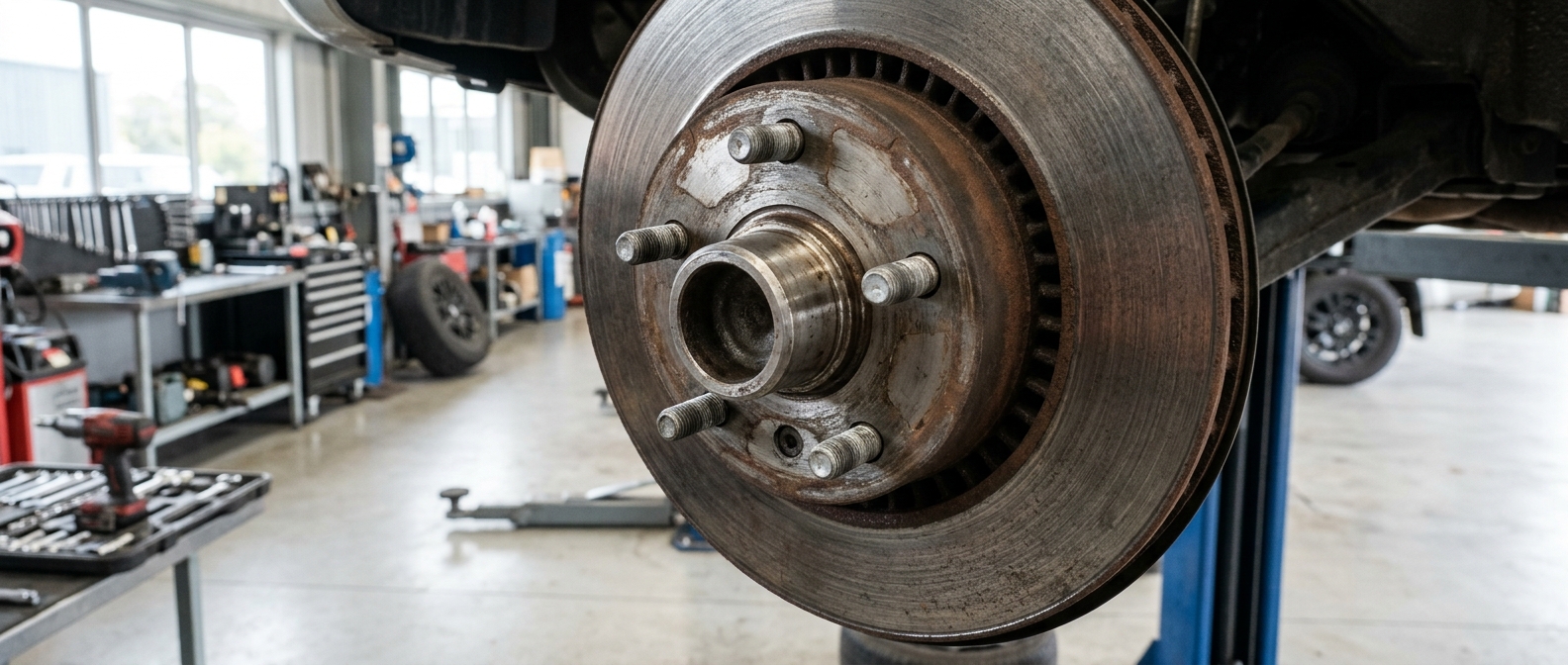
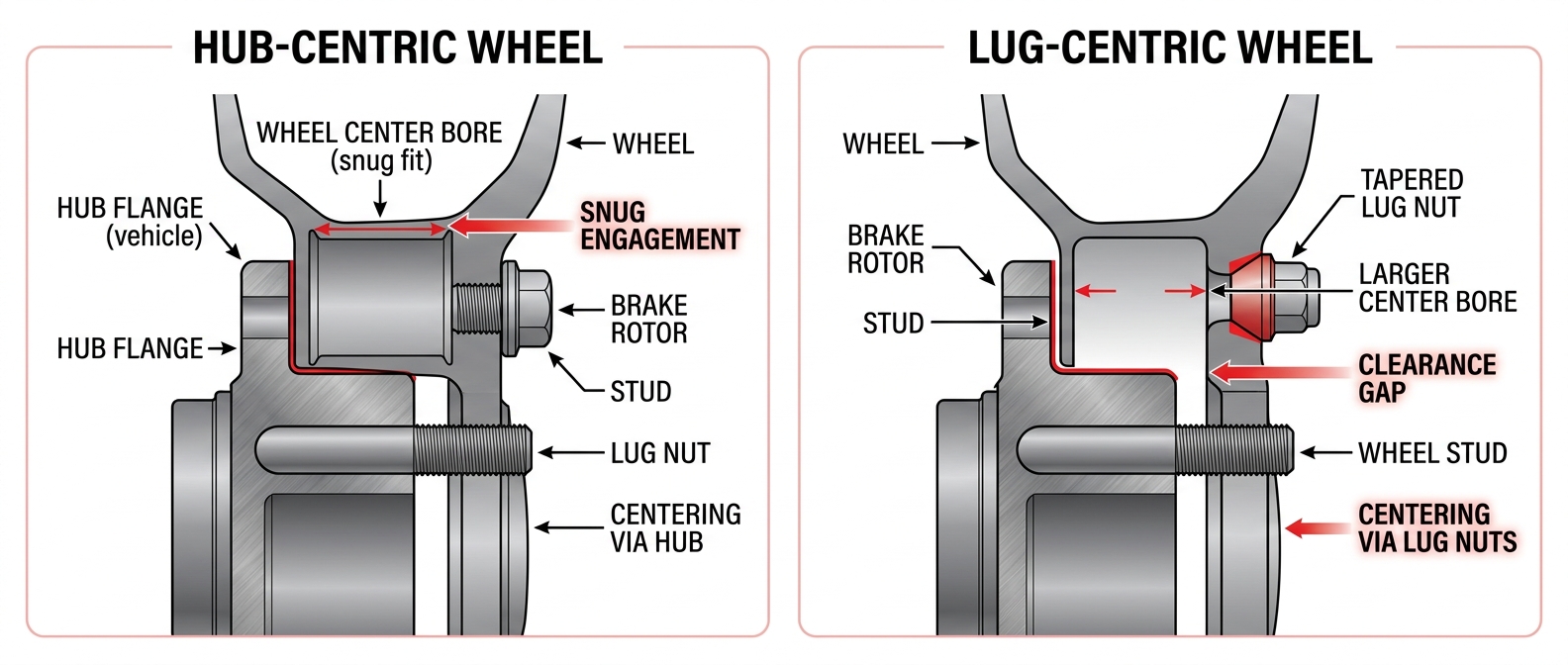
A hub-centric wheel is located by the raised centre hub on your car. The wheel’s centre bore (the big hole in the middle) is machined to sit snugly over that hub. When you slide the wheel on, the hub does the centring — the wheel is already sitting dead-centre before you thread on a single nut. The wheel nuts then simply clamp it tight.
This is how virtually every wheel fitted at the factory works. Because the hub carries the wheel’s weight and keeps it perfectly concentric, hub-centric fitment is the most stable, vibration-free arrangement.
What does lug-centric mean?
A lug-centric wheel (also called lug-centred) has a centre bore that’s deliberately larger than the hub, so the hub doesn’t touch it. Instead, the wheel is centred by the wheel nuts as you tighten them — specifically by the tapered (“conical” or “acorn”) seats where each nut meets the wheel.
Why make a wheel this way? Flexibility. One lug-centric wheel with an oversized bore can fit many different vehicles that share a bolt pattern (PCD) but have different hub diameters. That’s why aftermarket and multi-fit wheels are commonly lug-centric — it lets a manufacturer sell one wheel across a range of cars.
What’s the practical difference?
The difference shows up as vibration — or the absence of it.
| Hub-centric | Lug-centric | |
|---|---|---|
| Centred by | The vehicle hub | The wheel nuts (tapered seats) |
| Centre bore | Matched to the hub | Larger than the hub |
| Typical use | Factory / OEM wheels | Aftermarket / multi-fit wheels |
| Vibration risk | Low — always concentric | Higher if not centred carefully |
| Fix for vibration | N/A | Fit hub-centric rings |
With a hub-centric wheel, the hub does the hard work every time, so the wheel is always concentric with the axle. With a lug-centric wheel, the wheel can sit very slightly off-centre if the nuts aren’t tightened evenly and in the right sequence. Even a fraction of a millimetre of offset becomes a noticeable wobble at speed.
Why do lug-centric wheels sometimes vibrate?
The most common complaint after fitting aftermarket wheels is a steering-wheel or floor vibration that appears at highway speed — often around 90–110 km/h — despite the wheels being freshly balanced. The usual culprit is a lug-centric wheel that hasn’t ended up perfectly centred on the hub.
Because the oversized bore leaves a gap around the hub, the wheel has room to settle slightly off-centre while you do the nuts up. Balancing the wheel on a machine can’t fix that, because the machine centres the wheel on its cone, not on your car’s hub. The result is a vibration that no amount of re-balancing cures. If that sounds familiar, our guides on vibration at 100 km/h and why new tyres still vibrate after balancing walk through the diagnosis.
What are hub-centric rings and do you need them?
Hub-centric rings (centring rings) are the fix. They’re precision-made plastic or aluminium rings that fill the gap between your car’s hub and the oversized bore of a lug-centric wheel. The ring’s outer diameter matches the wheel bore; its inner diameter matches your hub. Fit them and a lug-centric wheel effectively becomes hub-centric — the wheel is centred by the hub again, and the vibration disappears.
If you’ve bought aftermarket wheels with a bore larger than your hub, hub-centric rings are strongly recommended. They’re inexpensive, and a good tyre shop will supply and fit the correct size as a matter of course. Just make sure you get rings sized exactly for your hub and your wheel bore — the numbers are stamped on the ring (for example, 73.1 mm wheel bore to 66.1 mm hub).
Do the wheel nuts carry the load?
This is where people get nervous, so it’s worth being precise. On either type of fitment, the clamping force from correctly torqued wheel nuts is what holds the wheel on and carries the driving and braking loads through friction between the wheel and hub face. The hub (or a hub-centric ring) centres the wheel; the nuts clamp it.
What hub-centric rings do not do is carry the vehicle’s weight in normal running — that’s the clamped joint’s job. The rings keep everything concentric so the clamped joint stays even. This is exactly why correct wheel nut torque matters so much, and why you should re-torque wheel nuts after the first 50–100 km on new wheels. Tapered (conical) nuts must match the seat shape in your wheels, too — the wrong nut seat is a genuine safety issue.
Which should you choose?
You rarely get to “choose” outright — it depends on the wheel. If you’re buying quality wheels made specifically for your model, they may be hub-centric out of the box, which is ideal. If you’re buying multi-fit or budget aftermarket wheels, they’ll likely be lug-centric, and that’s fine provided you fit the correct hub-centric rings. Either way, the goal is the same: a wheel that’s perfectly concentric with the hub and clamped down to the right torque.
The same care applies to anything that changes how the wheel meets the hub, including wheel spacers, which should themselves be hub-centric. And if you’re chasing a specific look with a staggered setup or a different offset, get the centring right first — a beautiful wheel that shakes at 100 km/h is no bargain.
What about replica wheels?
Replica and budget wheels are usually lug-centric and vary in machining quality, so centring and fitment matter even more. In Australia, look for wheels carrying recognised approval marks and buy from a reputable supplier. Our guides on whether replica wheels are legal in Australia and what JWL and VIA marks mean explain what to check before you buy. For general fitment standards, tyre shops work to the guidance summarised in the hub-centric vs lug-centric fitment reference.
Frequently asked questions
Are hub-centric wheels better than lug-centric?
Hub-centric wheels are more foolproof because the hub centres them automatically every time. Lug-centric wheels can be just as smooth and stable, but only if they’re fitted with the correct hub-centric rings and the nuts are torqued evenly. In practice, a lug-centric wheel with proper rings performs the same as a hub-centric one.
Do I really need hub-centric rings?
If your aftermarket wheel’s centre bore is larger than your car’s hub, yes. The rings eliminate the gap that lets the wheel sit off-centre and cause vibration. They’re cheap insurance against a shake that balancing won’t fix.
Can hub-centric rings fail?
Quality rings from a reputable supplier are reliable because they don’t carry the vehicle’s weight in normal running — the clamped wheel joint does. They keep the wheel concentric. Avoid cheap, poorly finished rings and always fit the exact size for your hub and wheel bore.
Why do my new wheels vibrate even after balancing?
The most common cause on aftermarket wheels is a lug-centric wheel that isn’t centred on the hub because no hub-centric rings were fitted. Balancing centres the wheel on the machine’s cone, not your hub, so it can’t fix an off-centre mount. Fit the correct rings and re-torque.
Are factory wheels hub-centric?
Almost always, yes. Original-equipment wheels are machined to fit your specific hub, so they’re hub-centric and need no rings. It’s aftermarket and multi-fit wheels that are commonly lug-centric.


0 Comments