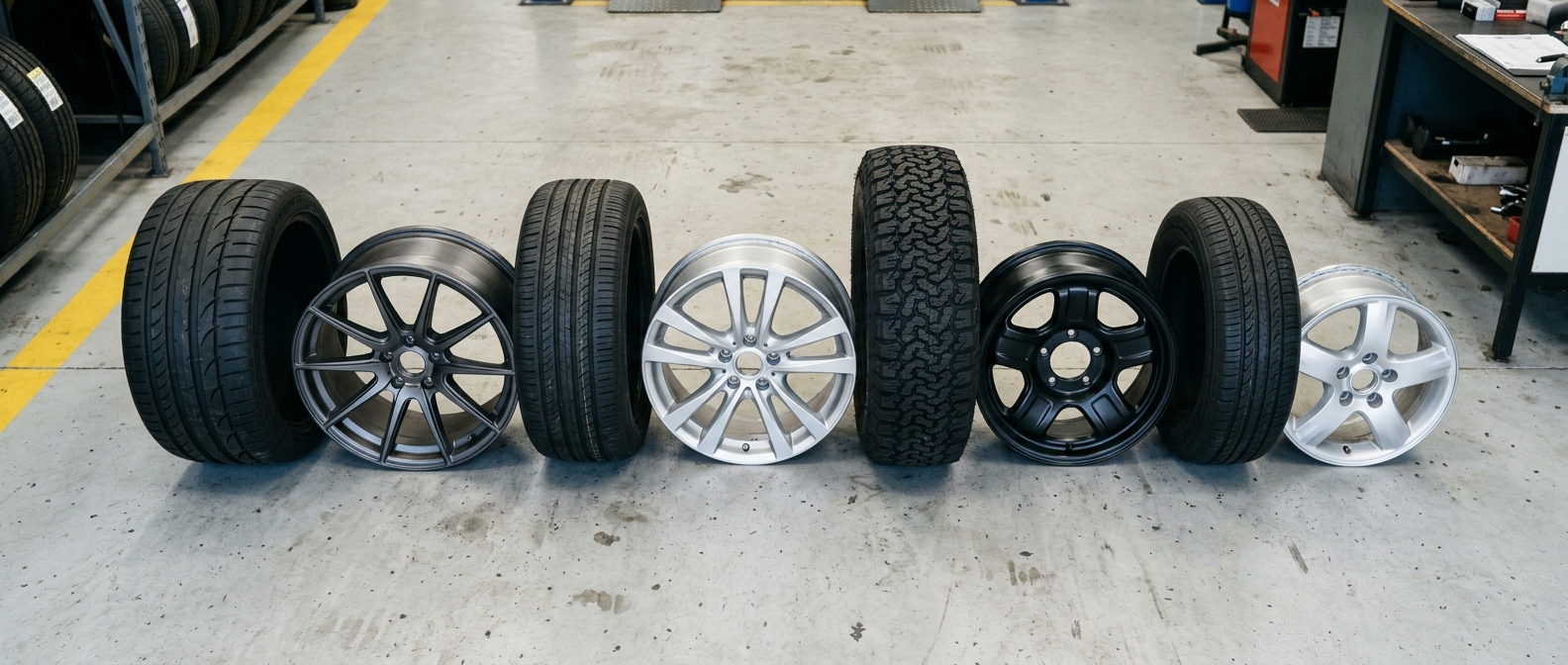
Wheels are measured in inches of width, tyres in millimetres of section width, and that mismatch trips up a lot of Australian buyers. The reassuring part is that each rim width happily carries a spread of tyre widths. This chart gives you the safe minimum, the ideal (design-target) range, and the maximum tyre width for the rim sizes you'll actually encounter—from a small hatch through to a wide-wheeled ute or performance car.
If you're trying to work out whether a specific wider set will fit what you already own, read this alongside our guide on fitting wider tyres on the same rim.
Rim width to tyre width chart
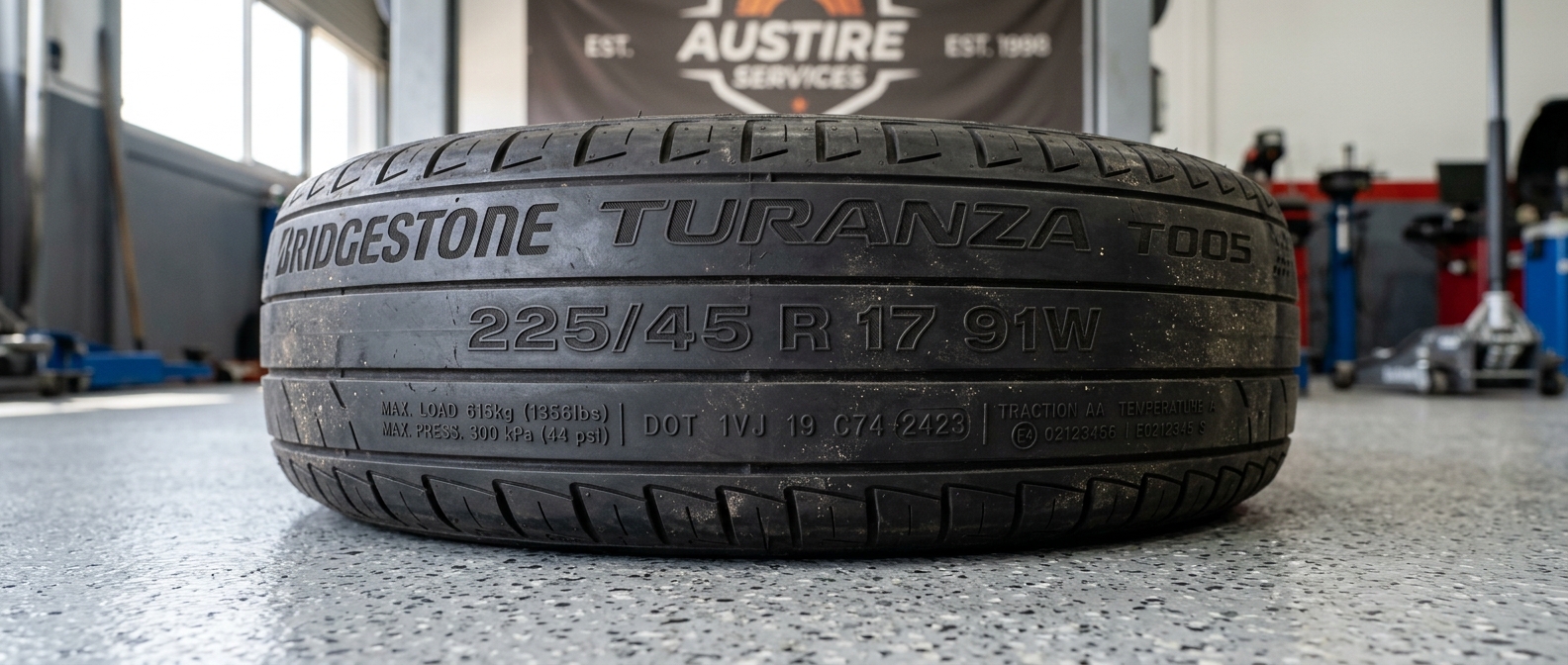
Read it by tyre section width (the first number in a size like 225/45R17). The "ideal range" is where the tyre performs as designed; the minimum and maximum are the edges of its safe rim-width window.
| Tyre section width | Minimum rim | Ideal rim range | Maximum rim |
|---|---|---|---|
| 185mm | 5.0" | 5.5"–6.5" | 7.0" |
| 195mm | 5.5" | 6.0"–6.5" | 7.5" |
| 205mm | 5.5" | 6.0"–7.5" | 7.5" |
| 215mm | 6.0" | 6.5"–7.5" | 8.0" |
| 225mm | 6.0" | 6.5"–8.0" | 8.5" |
| 235mm | 6.5" | 7.0"–8.5" | 9.0" |
| 245mm | 7.0" | 7.5"–9.0" | 9.5" |
| 255mm | 7.0" | 8.0"–9.5" | 10.0" |
| 265mm | 7.5" | 8.5"–10.0" | 10.5" |
| 275mm | 8.0" | 9.0"–10.5" | 11.0" |
| 285mm | 8.5" | 9.5"–11.0" | 11.5" |
| 295mm | 9.0" | 10.0"–11.5" | 12.0" |
| 305mm | 9.5" | 10.5"–12.0" | 12.5" |
| 315mm | 9.5" | 10.5"–12.5" | 13.0" |
How do you read the chart in practice?

Say your wheels are 7.5" wide. Scanning the ideal-range column, that rim comfortably suits anything from about 225mm through to 245mm, and will accept a 205 (near its narrow edge) or a 255 (near its wide edge) if needed. That's why one wheel can wear several tyre widths across its life.
The relationship is roughly linear: each half-inch of rim width shifts the tyre's actual section width by about 5mm. Fit a 225 on a 7.0" rim and it sits close to its published width; fit the same 225 on an 8.0" rim and it measures a touch wider and squarer. This is also why two cars can wear the same tyre size but look different—see why the same model can take different tyre sizes.
The 70–90% quick check
If you don't want to read a table, use the ratio: rim width should be about 70–90% of tyre section width. Convert both to the same unit—divide a millimetre tyre width by 25.4 to get inches—then check the rim lands in that band. A 245mm tyre is ~9.65"; 70–90% of that is roughly 6.8" to 8.7", which matches the chart's 7.5"–9.0" ideal range closely enough for a buying decision.
Does a wider rim change the tyre's height?
Section width and section height are linked through the aspect ratio, so a wider tyre in the same code is also taller. Mounting a given tyre on a wider rim within range barely changes its diameter, but choosing a wider tyre does. Before changing width, understand how aspect ratio works and why rolling diameter sets your legal size. To keep diameter steady when going wider, drop the profile a step.
What are the Australian fitment rules?
Matching rim and tyre width correctly is the engineering half; staying road-legal is the other. Australian requirements flow from the Australian Design Rules and Tyre & Rim Association of Australia standards, applied by each state. The recurring rules:
- Don't fit a rim narrower than the manufacturer's minimum for your model.
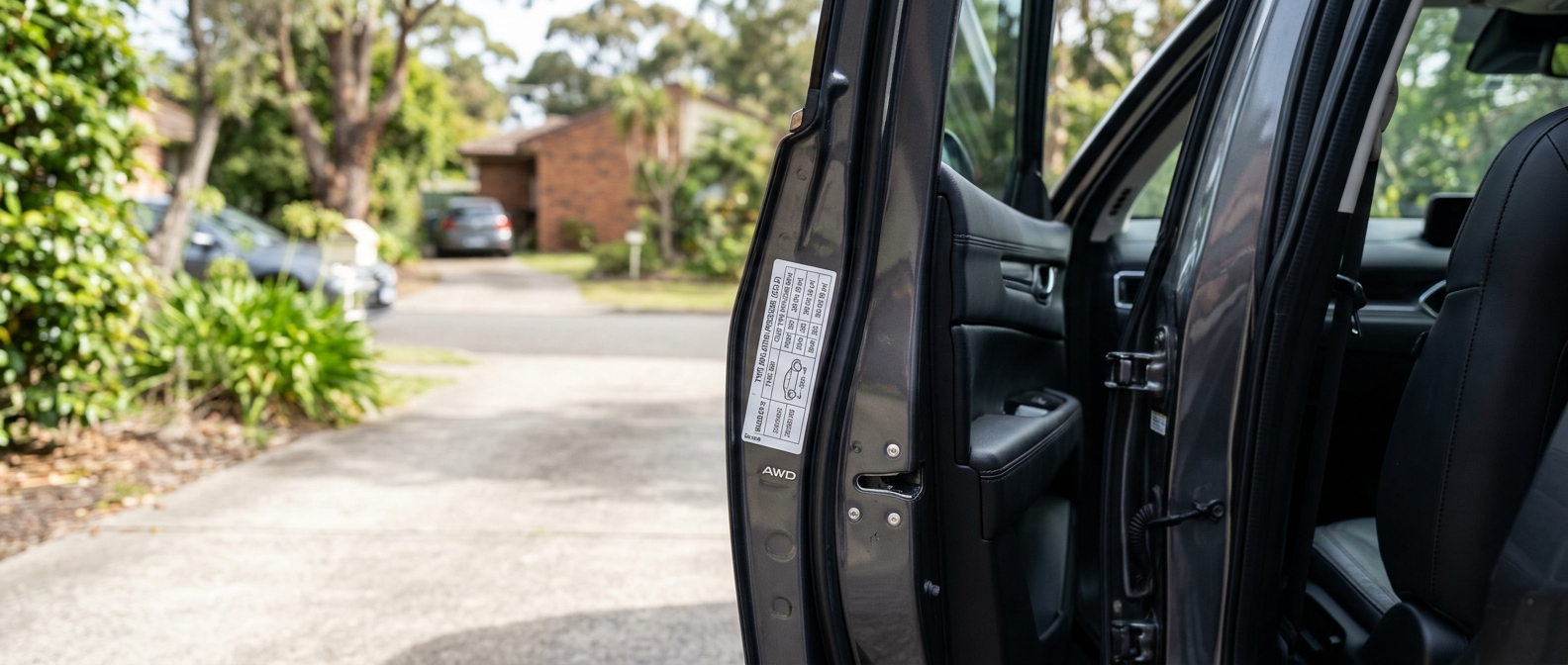
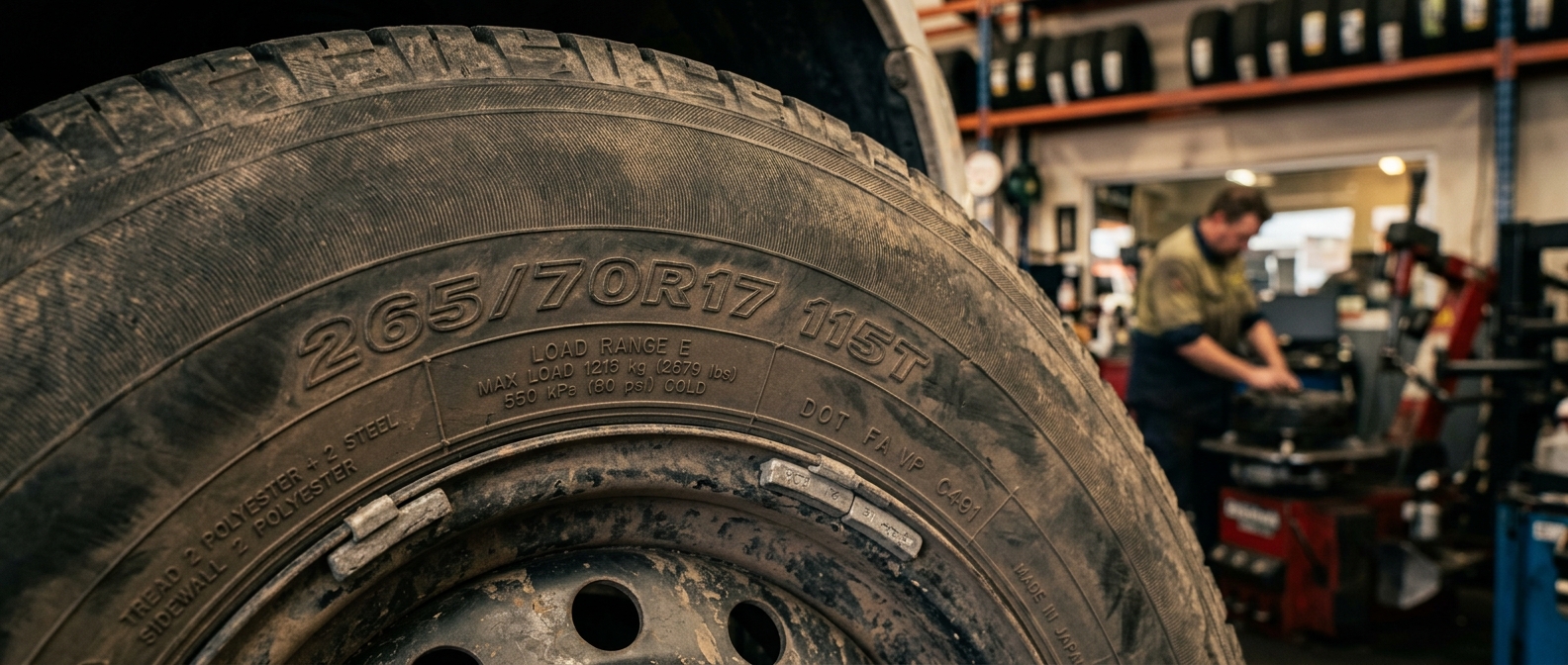
- Keep the tyre's load index at or above the placard figure—cross-check the tyre placard and read the codes on the sidewall.
- Keep the wheel and tyre inside the guards with no fouling at full lock or full suspension travel.
- Track-width increases are typically limited (around 25mm for cars, 50mm for off-road 4WDs) before certification—see offset and backspacing and whether you need an engineer's certificate.
For the standards themselves, see what the Tyre & Rim Association standards mean for your fitment. Because thresholds differ by state and change over time, confirm current figures with your state road authority or the federal Department of Infrastructure and Transport before committing. Running mismatched widths front-to-rear has its own rules—see staggered wheel setups.
Frequently asked questions
What tyre width fits a 7-inch rim?
A 7.0" rim ideally suits 205mm to 235mm tyres, and will accept 195mm at the narrow edge or 245mm at the wide edge. The 215–225mm range is the sweet spot for most cars on a 7" wheel.
Can one rim really fit several tyre widths?
Yes. Most rims have a safe window of roughly three to five tyre-width steps. Choosing within the ideal range gives the best handling, wear and comfort.
Is the chart the same for 4WD and passenger tyres?
The width relationship is the same, but 4WD and light-truck (LT) tyres add load-rating and construction requirements—see LT vs P-metric tyres. Never trade width for a lower load rating on a loaded ute or tow vehicle.
How do I find my current rim width?
It's often stamped on the back of the spoke or barrel (for example "7Jx17" means a 7-inch-wide, 17-inch rim). If you can't find it, a tyre fitter can measure it in seconds.
Bottom line
Match tyres to rims by range, not by a single number: keep the rim at roughly 70–90% of the tyre's section width and stay inside the chart's ideal band for the best result. Then confirm the overall diameter and your state's fitment rules before buying—the chart gets the fit right, but legality is what keeps the car on the road.
Rim-width ranges are general industry guidance; individual tyre models and state fitment rules can differ. Confirm the specific tyre's approved range and your state road authority's current requirements before purchasing.

0 Comments