Western Australia handles roadworthiness differently to the eastern states. There’s no blanket “sell it, inspect it” rule for every used car, but when a vehicle examination is required, tyres and rims are one of the inspected categories — and worn or non-conforming tyres will fail. This guide covers when WA inspects a vehicle and exactly what tyres need to pass.
When is a vehicle inspection required in WA?
Transport WA (the Department of Transport / DVS) requires a vehicle examination in specific situations rather than on every transfer:
- Licensing (registering) a vehicle in WA for the first time, including vehicles brought in from interstate
- Clearing a defect notice (yellow sticker / vehicle examination notice)
- After certain modifications to engine, body or dimensions
- Repairable write-off vehicles being re-licensed
- Annual inspections for specific vehicle types — taxis, rideshare and charter vehicles, driving-instructor vehicles, tow trucks, buses and larger passenger-carrying vehicles
A routine private sale of an already-WA-licensed car does not automatically trigger an inspection — but the vehicle must still be roadworthy to be driven, and a buyer can request one. An examination certificate is only valid for a short window (typically three months), so timing matters.
What tread depth do tyres need to pass in WA?
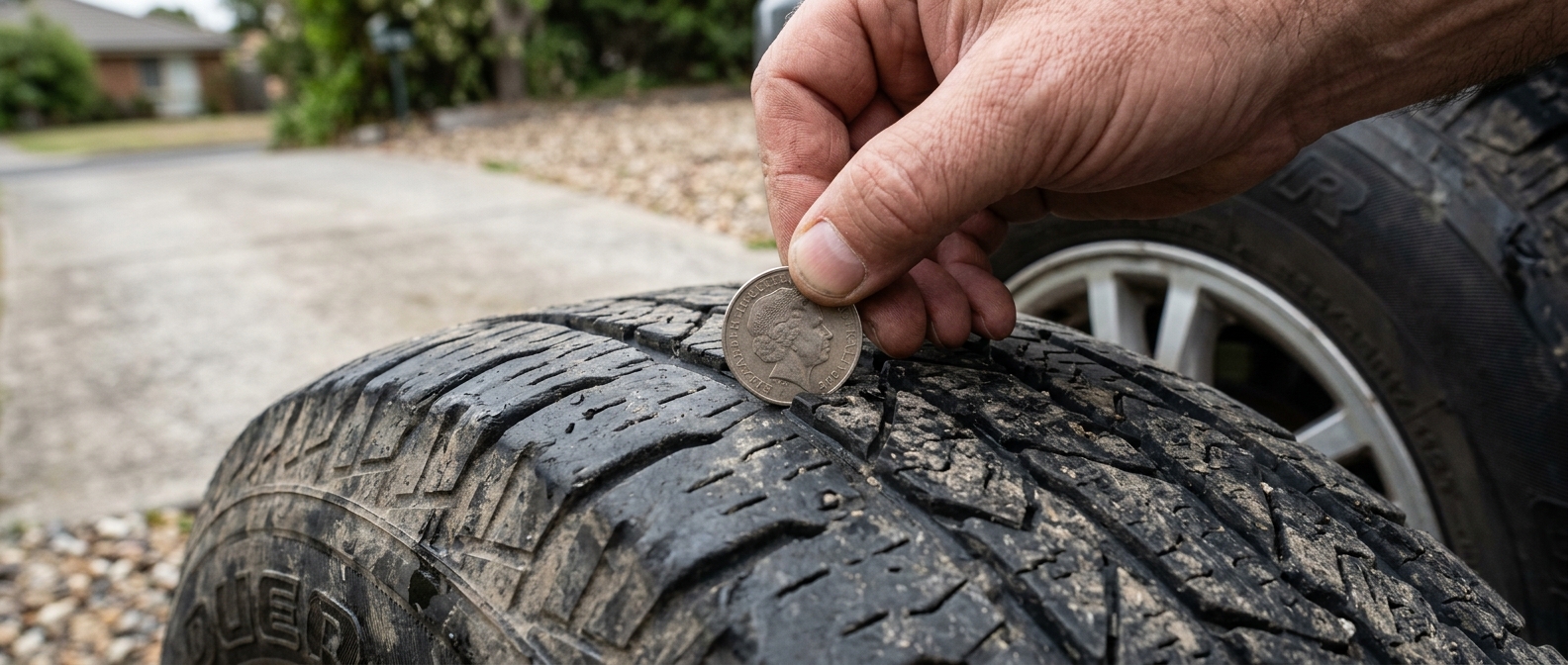
The minimum tread depth is 1.5mm in the principal grooves — the national Australian standard that applies in WA, not the 1.6mm UK figure. A tyre worn below 1.5mm anywhere in a main groove, or with a tread wear indicator contacting the road, will fail. If you’re unsure how to check, see checking tread depth without a gauge and finding your wear indicators.
What tyre and rim damage fails a WA examination?
The tyres-and-rims category of a WA examination covers condition as well as depth. Expect a fail for:
- Cuts, cracks or bulges exposing the casing or cords
- Bulges or blisters in the sidewall
- Tread or casing separation and exposed cords
- Uneven or abnormal wear indicating a mechanical fault
- Cracked, bent, buckled or damaged rims, or loose/missing wheel nuts
Abnormal wear often points to alignment or suspension problems rather than the tyre itself — read inside-edge wear to diagnose it before an inspection.
Do the tyres have to match the vehicle?
Yes. Tyres must be the correct size for the vehicle and carry a load rating and speed rating suitable for it, as shown on the tyre placard. Under-rated tyres are a fail — see what happens if your tyres don’t meet the placard load rating. Tyres on the same axle must be matched, and any wheel/tyre upsizing must comply with the national modification code — our guide on engineer’s certificates for bigger wheels explains when approval is needed.
WA vehicle examination tyre checklist
| Item | Pass | Fail |
|---|---|---|
| Tread depth | 1.5mm+ in principal grooves | Below 1.5mm / TWI touching road |
| Tyre condition | No cuts, bulges or exposed cords | Damage, separation, sidewall bulge |
| Rims | Undamaged, secure, correct type | Cracked/bent rims, loose nuts |
| Size & rating | Matches placard spec | Wrong size or under-rated |
What happens if your tyres fail?
A failed examination lists the items to fix. You rectify the tyres or rims and return for a re-check within the allowed window. If the vehicle was inspected because of a defect notice, the notice isn’t cleared until the re-check passes. Driving on illegal tyres separately can attract a penalty — see fines and demerits for illegal tyres and how defect notices work.
WA’s tyre standards mirror the other states — compare a NSW pink slip, a Victorian roadworthy and a Queensland safety certificate.
Bottom line: WA doesn’t inspect every private sale, but when an examination is required, tyres under 1.5mm, damaged, or the wrong size/rating will fail — and so will damaged rims. Check tread, sidewalls and rims first, and confirm current requirements with Transport WA.
Frequently asked questions
Do I need a roadworthy to sell a car privately in WA?
Not for a routine transfer of an already-licensed vehicle — WA has no blanket private-sale inspection. But the car must still be roadworthy, and inspections apply for interstate/first licensing, defects, mods and certain vehicle types.
What is the minimum tyre tread depth in WA?
1.5mm in the principal grooves — the national standard, not 1.6mm.
How long is a WA examination certificate valid?
Typically about three months. Confirm the current validity with Transport WA when you book.
Will mismatched or under-rated tyres fail?
Yes. Tyres must match the vehicle’s placard size and load/speed rating, and same-axle tyres must match.
General information only, current as a guide for 2026. Rules can change — confirm current tyre and examination requirements with Transport WA.



0 Comments