Selling or re-registering a light vehicle in Queensland means passing a Safety Certificate inspection, and worn or damaged tyres are one of the most common reasons vehicles fail. Queensland inspectors work to the Queensland Light Vehicle Inspection Manual, which sets consistent tyre criteria for vehicles up to 4.5 tonnes. Here’s what they check.
When do you need a safety certificate in Queensland?
A Queensland Safety Certificate is required when you transfer registration to a new owner (selling), and when you register an unregistered vehicle. It’s displayed when a registered vehicle is advertised or offered for sale. Certificates are issued by an Approved Inspection Station and are valid for a set period or distance — confirm the current validity when you book.
What tread depth do tyres need to pass a Queensland safety certificate?
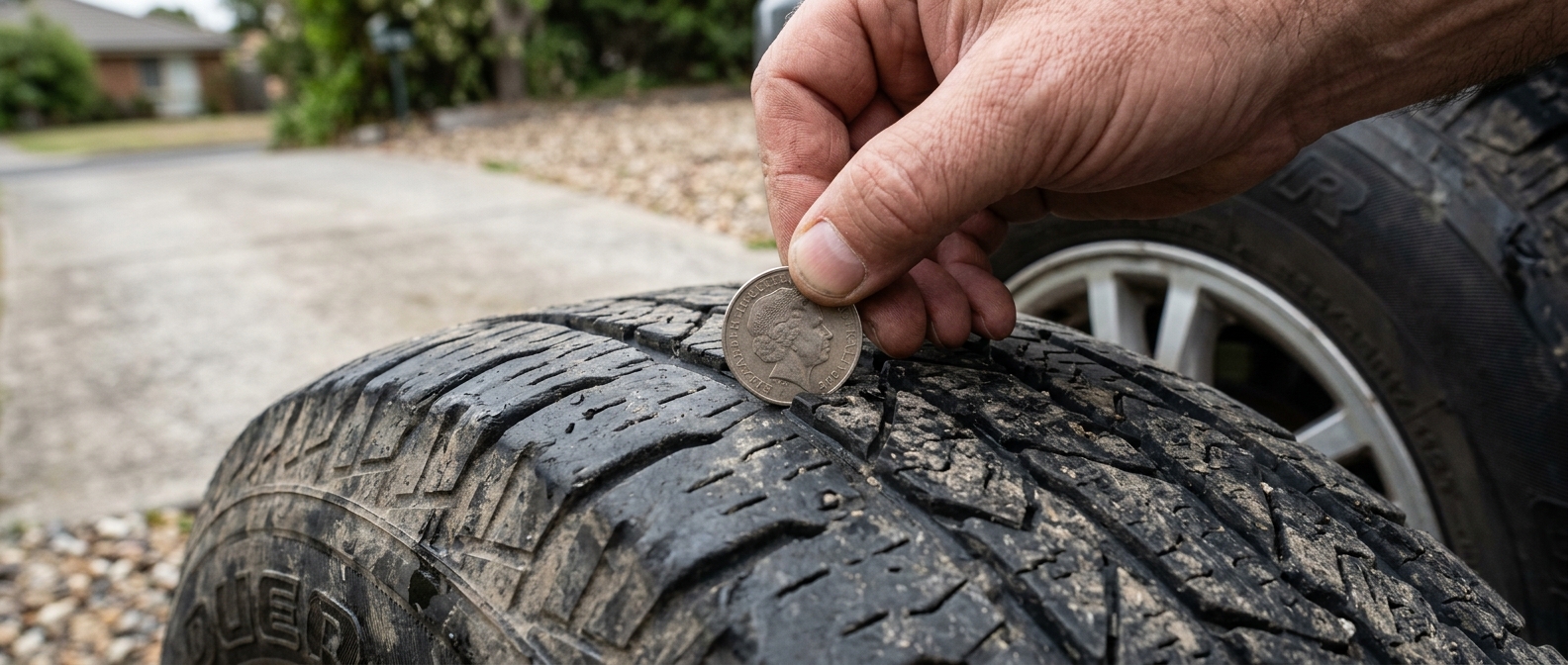
The minimum tread depth in Queensland is 1.5mm across the principal grooves — specifically, at least 1.5mm of tread in the grooves across the central three-quarters of the tyre’s width and around its full circumference. This is the Australia-wide standard. You’ll still see the “1.6mm” figure quoted online (including by some tyre shops), but that’s the UK limit — the Queensland legal minimum is 1.5mm.
Tyres carry moulded tread wear indicators (TWIs) at the 1.5mm level. When those bars sit flush with the tread, the tyre is finished. Our guides on where to find wear indicators and the 1.5mm rule explained walk through it in detail.
What tyre damage fails a Queensland inspection?
Beyond tread, inspectors reject tyres showing structural damage. Under the manual, a tyre fails for:
- Cuts, cracks or bulges deep enough to reach or expose the cords
- Tread separation or exposed/damaged cords
- Cracked, perished or damaged sidewalls
- Cracked, damaged or loose valve stems
- Improper repairs outside the tread/crown area
Tyre failure is repeatedly cited as one of the leading causes of safety certificate rejections in Queensland. A sidewall bulge, in particular, is an instant fail and can’t be repaired — see is a sidewall bubble repairable? and sidewall cracking: cosmetic or dangerous.
Do the tyres have to match the vehicle?
Yes, and Queensland’s fitment rules are specific. Tyre load ratings must not fall below the vehicle manufacturer’s original specification, and the original speed rating must be at least 180 km/h unless a lower rating is legally specified. Tyres on the same axle must match in size and construction, and tyre widths can’t vary dramatically across the vehicle — the narrowest tyre generally must be at least 70% of the widest tyre’s width. Check your required figures on the tyre placard and understand the risk in fitting under-rated tyres.
Queensland safety certificate tyre checklist
| Item | Pass | Fail |
|---|---|---|
| Tread depth | 1.5mm+ across central three-quarters | Below 1.5mm / TWI touching road |
| Structure | No cuts to cords, no bulges | Exposed cords, tread separation, bulges |
| Load rating | Meets or exceeds manufacturer spec | Below placard load index |
| Speed rating | 180 km/h+ (unless legally lower) | Under-rated for the vehicle |
What happens if your tyres fail?
A failed Safety Certificate is a rectification list, not a fine. You replace or repair the tyres and return to the Approved Inspection Station to have the failed items re-checked. Driving on illegal tyres on the road is a separate matter that can attract a penalty and demerit points — see fines and demerits for illegal tyres. Queensland can also issue defect notices for unsafe tyres.
The standard closely tracks other states — compare a NSW pink slip and a Victorian roadworthy.
Bottom line: Queensland fails tyres under 1.5mm, with a wear indicator touching the road, or with bulges, exposed cords or under-rated load. Inspect tread and sidewalls before booking, and confirm current criteria with Queensland Transport and Main Roads or your Approved Inspection Station.
Frequently asked questions
Is the minimum tread depth 1.5mm or 1.6mm in Queensland?
1.5mm. The Australian legal minimum is 1.5mm in the principal grooves; 1.6mm is the UK figure and does not apply in Queensland.
Will a nail-repaired tyre pass a safety certificate?
A correctly performed repair in the tread/crown area can pass. Repairs to the sidewall or shoulder are not permitted and will fail. See our repair-location guide.
Do all four tyres have to be the same brand?
Not necessarily, but tyres on the same axle must match in size and construction, and all must meet the vehicle’s size, load and speed requirements.
How often is a safety certificate needed?
When selling/transferring a registered vehicle or registering an unregistered one. Confirm current validity periods with Transport and Main Roads.
General information only, current as a guide for 2026. Rules can change — confirm current tyre and safety certificate requirements with Queensland Transport and Main Roads or an Approved Inspection Station.



0 Comments