
Australian English. Figures current as a guide for 2026 — always confirm inspection rules and penalties with your state or territory road authority.
What are tyre wear indicators and what do they mean?
TL;DR: Tyre wear indicators (TWIs) are small raised rubber bars moulded across the bottom of a tyre's main grooves at exactly 1.5mm high — Australia's legal minimum tread depth. Find them by the triangle (▲) or "TWI" mark on the tyre's shoulder. When the tread wears down level with the bars, the tyre has reached the legal limit and must be replaced.
Tyre wear indicators are the simplest safety feature on your car that almost nobody knows how to read. They're built into every tyre sold in Australia, they cost nothing to use, and they tell you the one thing that matters most about a worn tyre: whether it's still legal. This guide explains what they are, exactly where to find them, and how to use them alongside a wider wear check.
How tall are the wear indicator bars, and why 1.5mm?
The bars are moulded to 1.5mm in height, which is deliberate: it matches Australia's legal minimum tread depth of 1.5mm in all principal grooves, in every state and territory. When new, a tyre's tread might be 7–8mm deep and the bars sit far below the surface. As the tread wears, the gap closes. The moment the tread is flush with the bars, you have 1.5mm left — the legal floor.
Be aware that some Australian websites quote the minimum as 1.6mm. That's the UK and European figure, copied across in error. The Australian standard is 1.5mm, and the wear bars are built to it (tyre makers such as Continental Australia explain how the indicators are moulded to the minimum depth). Our guide to the legal minimum tyre tread depth in Australia explains the rule in full.
Where are the tyre wear indicators located?
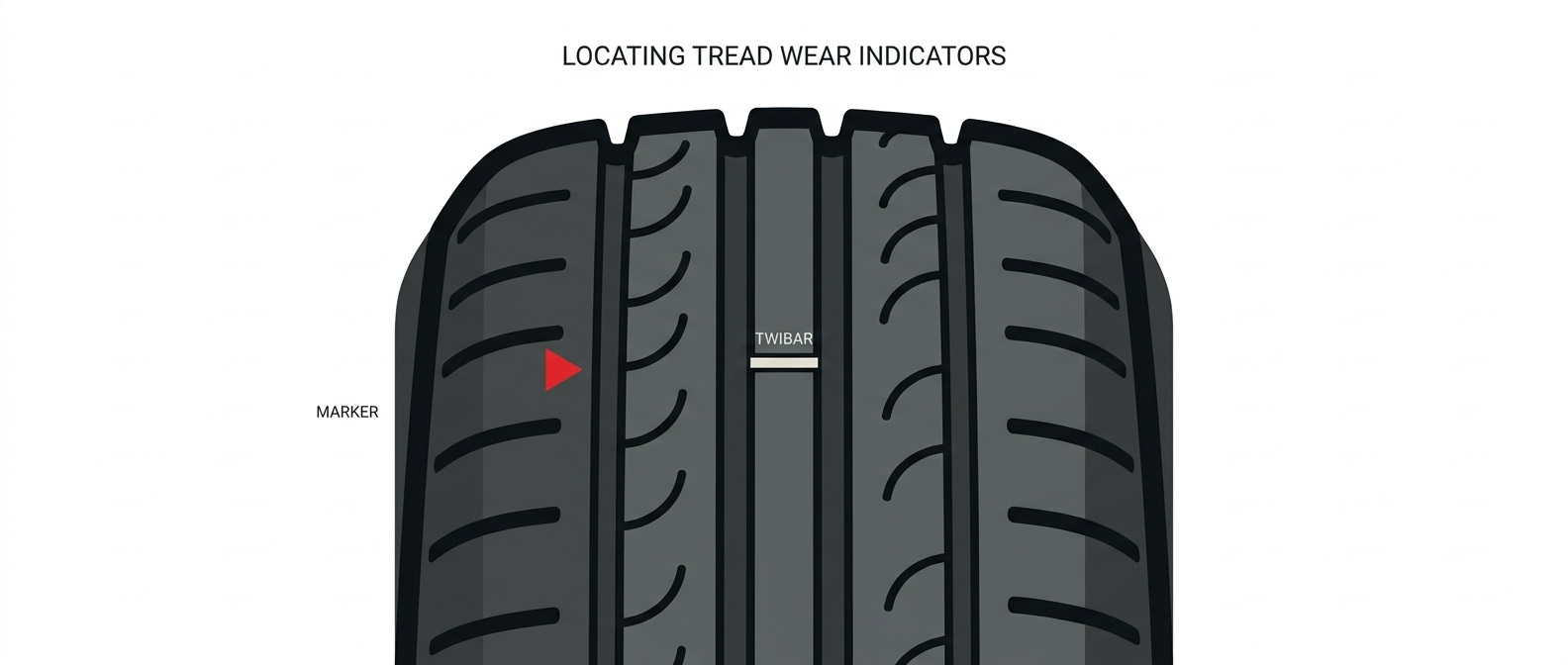
The bars themselves sit inside the circumferential (around-the-tyre) grooves, but they're small and easy to miss unless you know where to look. The trick is the marker on the tyre's shoulder — the outer edge where the tread meets the sidewall.
- The triangle (▲): most brands mould a small triangle into the shoulder rubber. Line it up and look straight in — the wear bar is in the groove directly inboard of it.
- The letters "TWI": some brands stamp "TWI" on the shoulder or lower sidewall instead of, or as well as, the triangle.
- Multiple points: there are usually six or more markers spaced evenly around the tyre, so you can check the bars at several positions.
Once you've found a marker, you'll spot the raised bar as a bridge of rubber running across the base of the groove. If you're still learning to read the outside of a tyre, our guide on how to read a tyre sidewall shows what every mark and letter means.
How to read the indicators correctly
| What you see | What it means |
|---|---|
| Bars sit well below the tread surface | Plenty of tread left — tyre is fine |
| Tread getting close to the bars | Nearing the limit — plan replacement |
| Tread flush with the bars | At 1.5mm — legally worn out, replace now |
| Bars showing on one side only | Uneven wear — investigate alignment or pressures |
That last row matters. If the bars appear on one edge but not the other, the tyre isn't just worn — it's wearing unevenly, which points to a fixable underlying fault. That's the difference between the wear indicator (a legal pass/fail) and wear diagnosis (why it happened).
Indicators vs wear patterns: reading the whole story
The wear bars tell you when a tyre is finished. The wear pattern tells you why. Checking both at once saves you money, because replacing a tyre without fixing the cause just wears the new one out the same way.
| Wear pattern | Common cause |
|---|---|
| Both shoulders worn, centre good | Under-inflation |
| Centre worn, shoulders good | Over-inflation |
| One edge feathered or angled | Wheel alignment (toe/camber) |
| Cupped or scalloped patches | Worn suspension or out-of-balance wheel |
If the bars are only showing on the inside or outside edge, chase it up before you buy new rubber: see outside-edge wear, feathering and the signs your car needs a wheel alignment. For the full mechanic's-eye view, read how to read tyre wear patterns like a mechanic.
Should you wait until the indicators show?
No — treat the bars as a legal red line, not a replacement schedule. By the time the tread is flush with the indicators, wet-weather grip has already dropped a long way. Braking distances lengthen and the risk of aquaplaning climbs sharply as tread thins out. Most tyre makers and road-safety bodies recommend replacing at around 3mm, well before the bars appear.
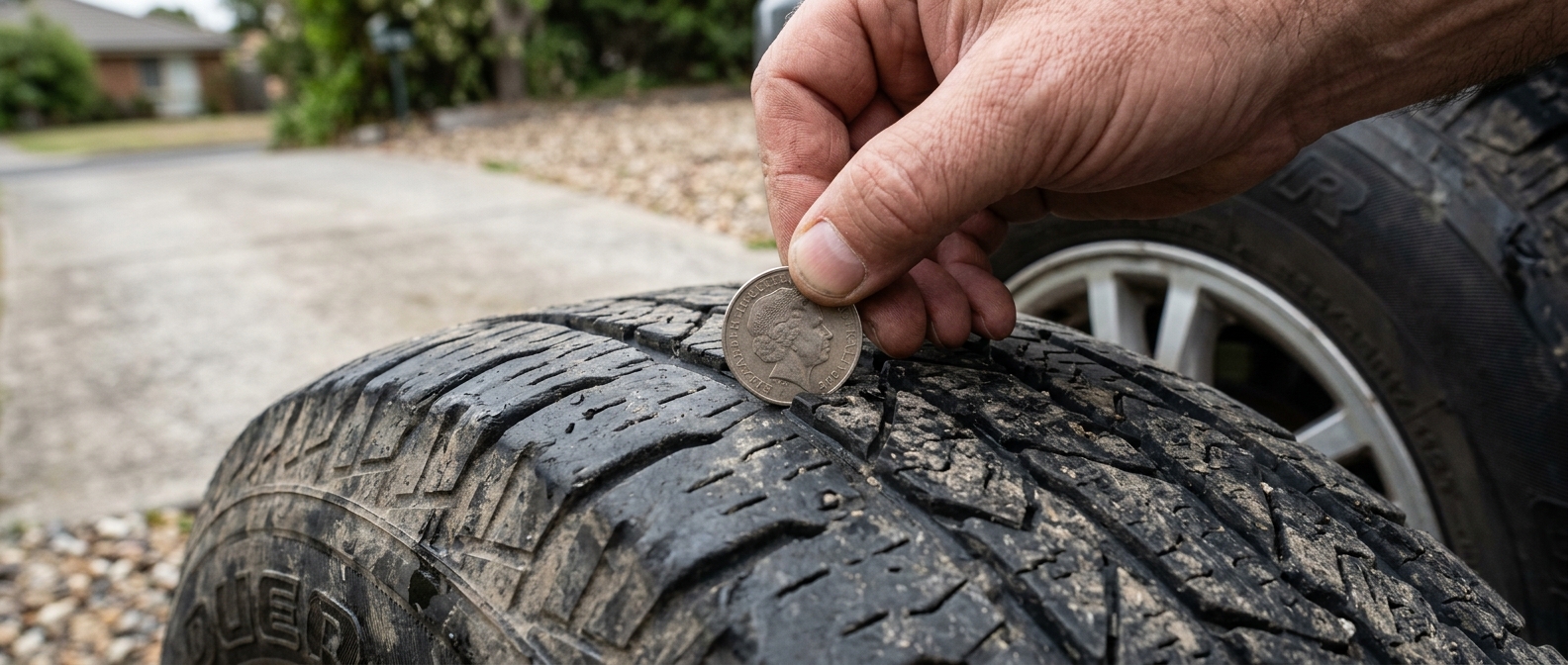
To catch that 3mm point early without a gauge, use the 20-cent coin method in our guide on how to check your tread depth without a gauge. And because tyres also age out, cross-check the age of tyres over five years old even when tread looks healthy. For the bigger picture on timing, see when to replace tyres.
A tyre worn to or past the indicators will also fail a state inspection — a Victorian roadworthy, a Queensland safety certificate or a NSW pink slip — and can trigger a defect notice plus fines and demerits.
Bottom line
Tread wear indicators are your tyre's built-in legal gauge, set at 1.5mm. Find them by the triangle or "TWI" mark on the shoulder. When the tread is flush with the bars, the tyre is done — but for safety, act at 3mm, not at the bars.
Frequently asked questions
What does TWI stand for on a tyre?
TWI stands for Tread Wear Indicator. The letters are often stamped on the tyre's shoulder to mark where the raised wear bars sit inside the adjacent groove.
How do I know when the wear indicators mean the tyre is illegal?
When the tread surface is level (flush) with the raised bars, the tyre is at 1.5mm — Australia's legal minimum — and is unroadworthy. If the tread is still clearly above the bars, you have tread remaining.
Do all tyres have wear indicators?
Yes. All road tyres sold in Australia have moulded tread wear indicators at 1.5mm. Some brands add extras, such as numbered wear stages, but the 1.5mm bars are universal.
Why are the wear bars showing on only one edge?
That's uneven wear, usually from a wheel alignment issue or incorrect tyre pressures. Fix the underlying cause before fitting new tyres, or the replacements will wear the same way.
Are wear indicators as accurate as a tread depth gauge?
For the legal 1.5mm limit they're very reliable, because they're moulded to that exact depth. A gauge is better for tracking wear over time and for spotting when you've reached the recommended 3mm replacement point.



0 Comments