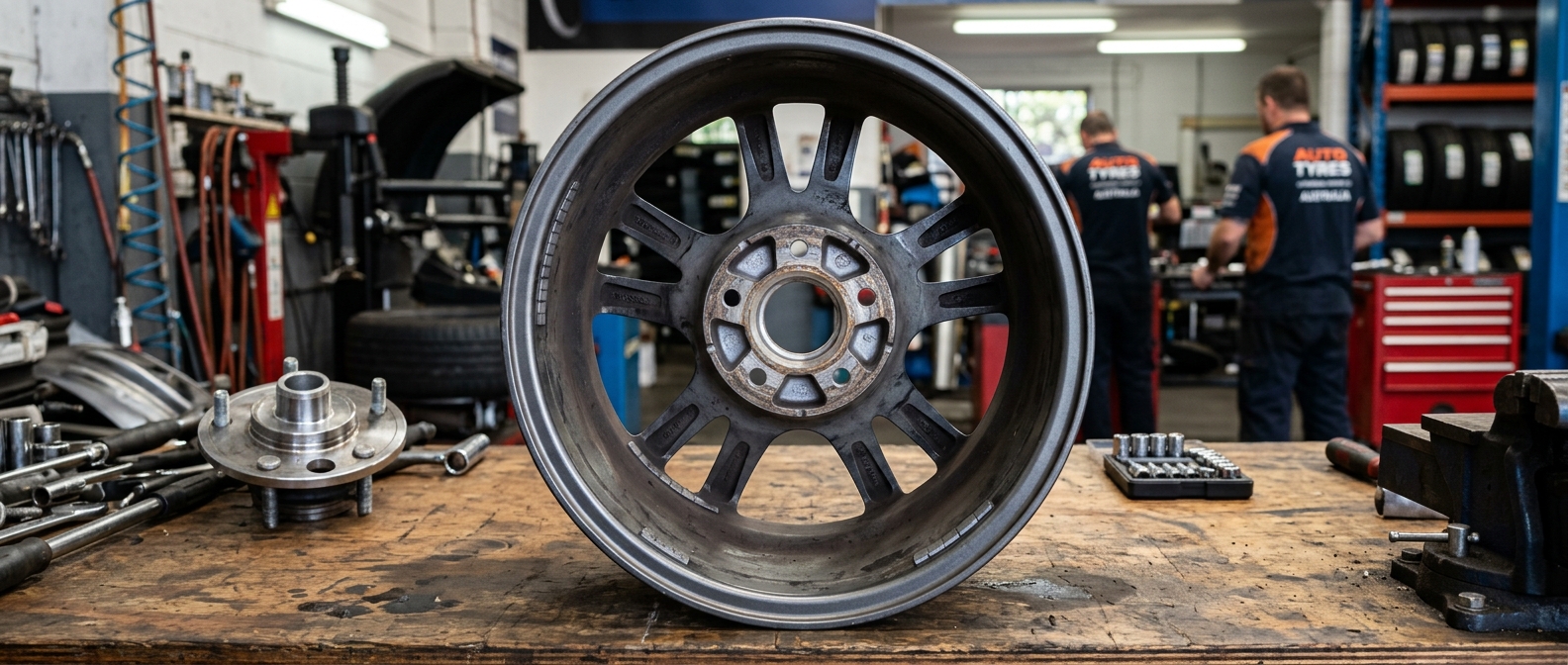
TL;DR: The centre bore is the machined hole in the back of a wheel that slides over your car's hub spigot. On factory wheels it matches the hub exactly, so the wheel is centred before you even touch the nuts. Many aftermarket wheels have a larger centre bore, leaving a gap that lets the wheel sit slightly off-centre and vibrate at highway speed. Hub-centric rings fill that gap and fix it.
What is a centre bore?
The centre bore is the large round hole in the middle of a wheel, on the back face, that fits over the raised cylinder (the spigot or hub flange) on your car's hub. It is usually marked as "CB", "DIA" or "D" on a wheel's specification. Its job is simple but important: it carries the weight of the car and locates the wheel dead-centre on the axle so it spins true.
Centre bore is measured in millimetres, to one decimal place, and it is not standardised across the industry. A Toyota might use a 60.1mm hub, a Ford Ranger 93.1mm, a Holden Commodore 67.1mm and a European car something else again. Original-equipment (OEM) wheels are machined to sit snugly on that exact hub. This is what fitters mean when they call a factory wheel hub-centric — the hub itself does the centring.
Centre bore is one of four numbers that decide whether a wheel actually fits your car. The others are bolt pattern and PCD, offset and backspacing, and rim width and diameter. Get the bolt pattern and offset right but ignore the centre bore, and the wheel will still bolt on — it just won't run smoothly.
Why do new wheels vibrate at highway speed?
Aftermarket wheel makers can't machine a different centre bore for every car on the road, so most cast their wheels with a deliberately large centre bore — big enough to clear the biggest common hub. That means when you fit them to a car with a smaller hub, there is an air gap between the wheel's bore and the hub spigot.
With that gap, nothing centres the wheel except the wheel nuts or bolts as you tighten them. This is called a lug-centric fitment. In theory the tapered seats on the nuts pull the wheel true; in practice it is very easy for the wheel to end up sitting a fraction of a millimetre off-centre. At low speed you'll never feel it. From about 90–110km/h that tiny offset becomes a rhythmic wobble you feel through the steering wheel or the seat — the classic symptom of a wheel that isn't running on its true axis.
Because the vibration comes and goes with speed and often appears straight after new wheels are fitted, it's frequently misdiagnosed as a balancing problem. If your new tyres still vibrate after balancing, or you feel a shake that only shows up around 100km/h, an oversized centre bore is one of the first things a good fitter will check. Our guide to vibration at 100km/h walks through the full diagnosis, and steering-wheel shake vs seat shake explains what the location of the shake tells you.
What are hub-centric rings and do they work?
Hub-centric rings are precision plastic or aluminium collars that fill the gap between a wheel's oversized centre bore and your car's smaller hub. The outer diameter of the ring matches the wheel bore; the inner diameter matches the hub. Slip them on and a lug-centric wheel becomes hub-centric again — the wheel is located by the hub, not by the nuts.
They genuinely work, and they are the standard, accepted fix that reputable wheel and tyre shops in Australia fit as a matter of course when they sell you wheels with a larger bore. A ring described as "73.1 to 67.1", for example, suits a 73.1mm wheel bore on a 67.1mm hub.
A few points worth knowing:
- Rings centre; they don't carry the load. Once the wheel is torqued correctly, clamping force between the wheel and hub face carries the vehicle's weight. The ring's job is only to hold the wheel centred while you tighten it and while the car is stationary.
- Aluminium vs plastic. Both are used widely. Quality glass-reinforced plastic rings are fine for road cars and won't corrode onto the hub. Aluminium is favoured by some for heat tolerance near the brakes.
- They must be the correct pair of sizes. A ring that's loose on the hub does nothing. Buy them matched to your exact wheel bore and hub diameter.
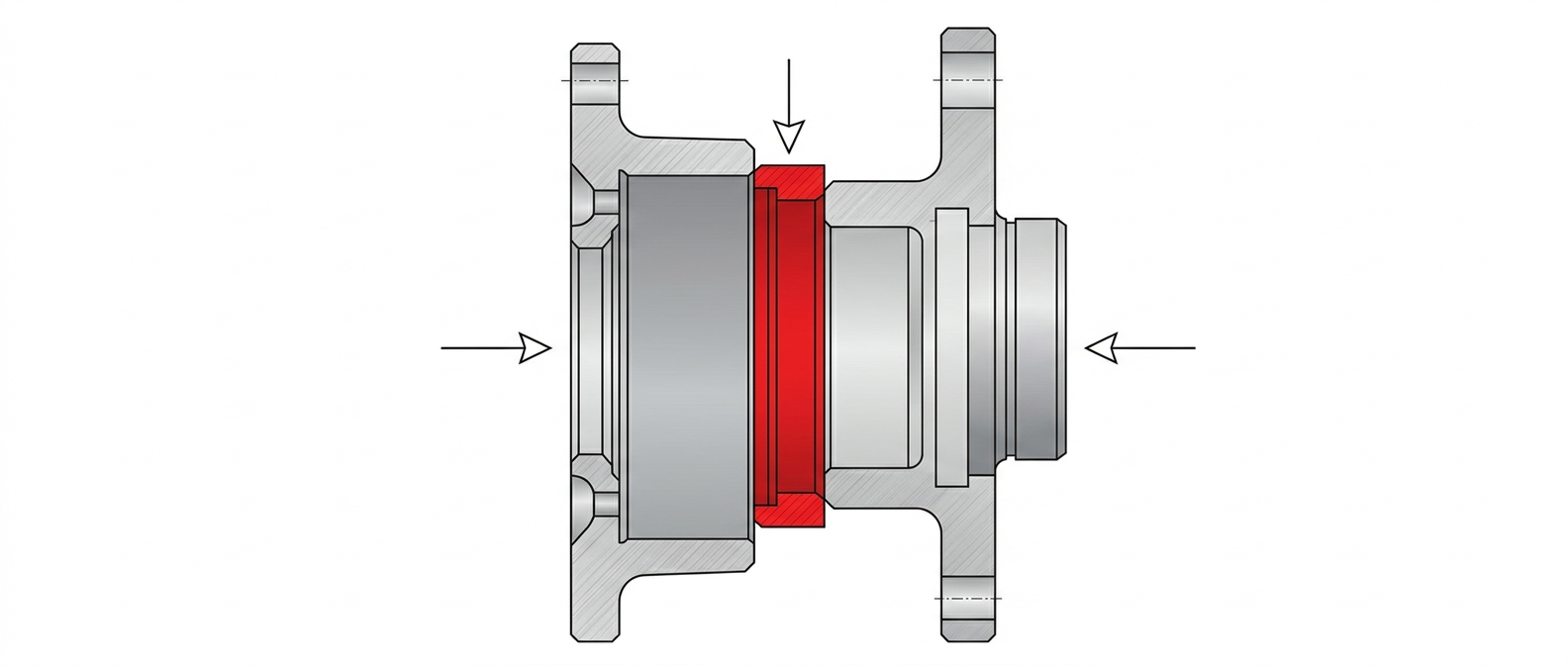
Hub-centric vs lug-centric: what's the difference?
| Feature | Hub-centric | Lug-centric |
|---|---|---|
| What centres the wheel | The hub spigot | The wheel nuts/bolts |
| Typical fitment | OEM wheels; aftermarket with correct rings | Aftermarket wheels with oversized bore, no rings |
| Highway smoothness | Excellent — wheel runs true | Can wobble if not perfectly seated |
| Load path (once torqued) | Clamping force at hub face | Clamping force at hub face |
| Risk if done wrong | Low | Vibration, uneven stud stress |
For a fuller explanation of the two systems and how the nuts and hub share the work, see our dedicated guide to hub-centric vs lug-centric fitment.
How do you measure your centre bore?
You need two numbers: your hub diameter and the wheel's centre bore.
- Hub diameter: with the wheel off, measure the outer diameter of the raised spigot the wheel sits on, using vernier callipers. Measure the machined step the wheel rests against, not the wheel-bearing dust cap.
- Wheel centre bore: measure the inner diameter of the hole in the back of the wheel with callipers.
- Compare: if the wheel bore is larger than the hub, you need rings sized to bridge the difference. If the wheel bore is smaller than the hub, the wheel will not fit at all — never machine a hub or force a wheel on.
If you're buying wheels sight-unseen — online, interstate, or second-hand — ask the seller for the centre bore before you commit, and confirm your hub diameter from your owner's manual or a fitment lookup. This matters just as much with replica wheels, which almost always run a generic oversized bore.
Is a mismatched centre bore legal and safe in Australia?
There is no specific national road rule that bans a wheel with an oversized centre bore, provided the wheel is correctly and safely fitted — and using hub-centric rings is the accepted way to do that. The relevant national reference is the federal Vehicle Standards Bulletin 14 (VSB 14), which covers wheel and tyre modifications, alongside the fitment guidance of the Tyre & Rim Association of Australia. Roadworthiness is assessed by your state authority, so a wheel that vibrates, sits proud of the hub, or shows stressed studs can still fail an inspection or attract a defect notice.
The practical takeaway: fitting quality rings sized to your hub is both the safe and the sensible choice. Rules and inspection standards vary between states and change over time, so confirm the current requirements with your state road authority or a licensed wheel-and-tyre fitter before modifying.
Bottom line
A centre bore that's too large is the most common reason quality new wheels vibrate at highway speed. It's not a fault in the wheel — it just needs the right hub-centric rings to sit true on your hub. Get the two measurements, buy matched rings, and torque correctly.
Frequently asked questions
Do I need hub-centric rings if my wheels bolted straight on?
Possibly. A wheel can bolt on and still have an oversized centre bore. If the wheel bore is larger than your hub and you feel a vibration around 90–110km/h, rings are very likely the fix. If the bore already matches the hub snugly, you don't need them.
Are plastic hub-centric rings safe?
Yes. Quality reinforced-plastic rings only centre the wheel; the clamping force of correctly torqued nuts carries the load. Plastic has the advantage of never corroding onto the hub, which makes wheel removal easier later.
Can a wrong centre bore damage my car?
Long-term, running a badly off-centre wheel puts extra stress on the wheel studs and can accelerate wear in steering and suspension components, on top of the annoying vibration. It's worth fixing promptly.
What if the wheel bore is smaller than my hub?
Then the wheel won't fit. Do not have the hub machined down or force the wheel on — choose a wheel with the correct or a larger bore and use rings instead.
Does centre bore affect load capacity?
No. Load capacity comes from the wheel's rating and your tyre's load index. The centre bore only affects how the wheel is centred, not how much it can carry.


0 Comments