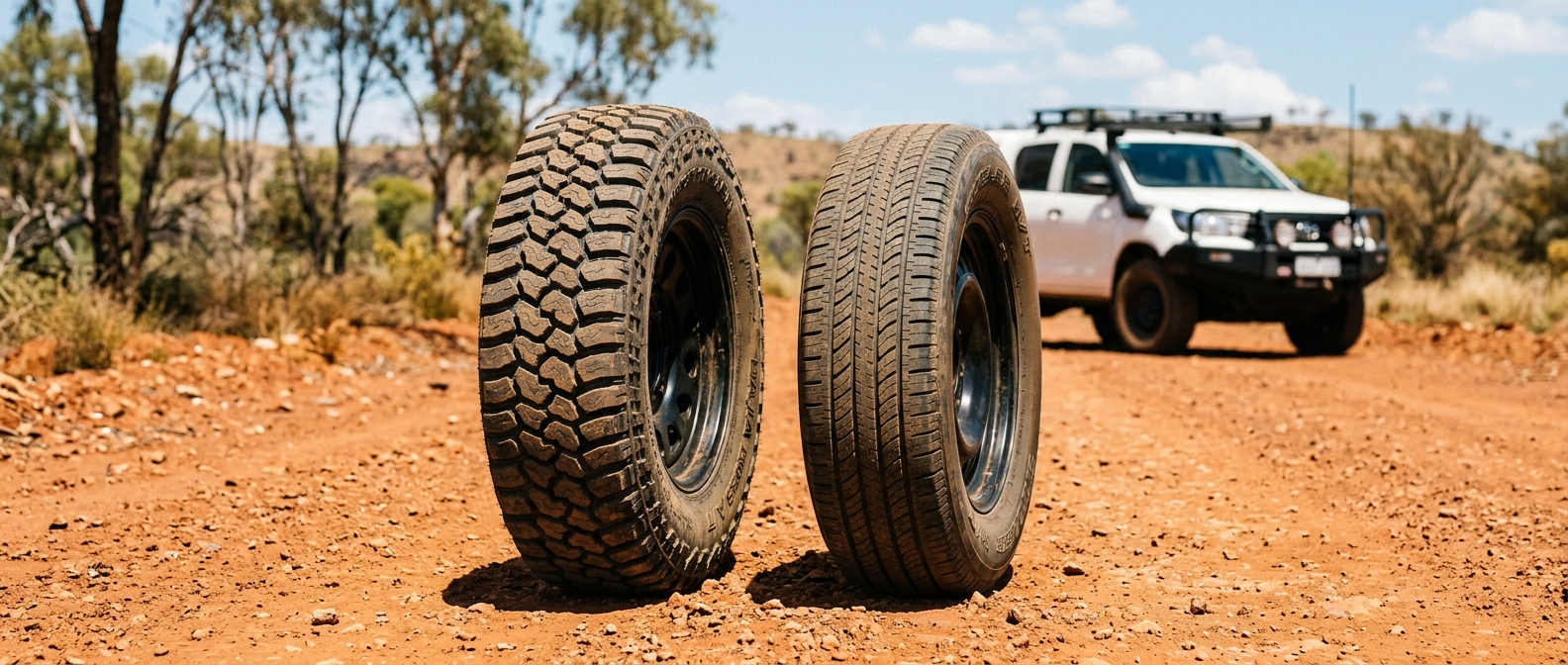
Quick answer: P-metric (passenger) tyres are built for comfort, quiet and fuel economy on sealed roads. LT (Light Truck) tyres use tougher, heavier construction for towing, load-carrying and off-road touring. In Australia the choice matters most for utes, 4WDs and vans: LT resists punctures and sidewall damage but rides firmer, weighs more and uses more fuel. Match the construction to how you actually use the vehicle.
What’s the difference between P-metric and LT tyres?
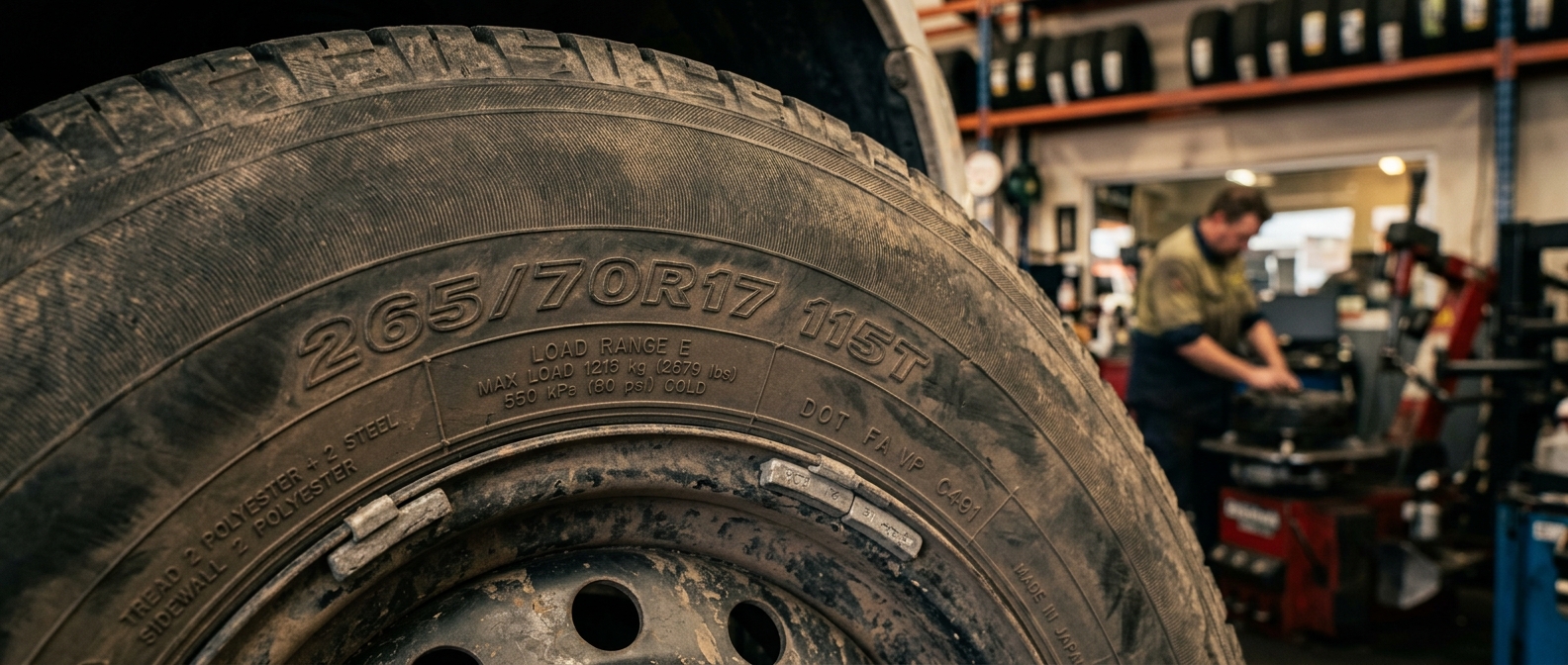
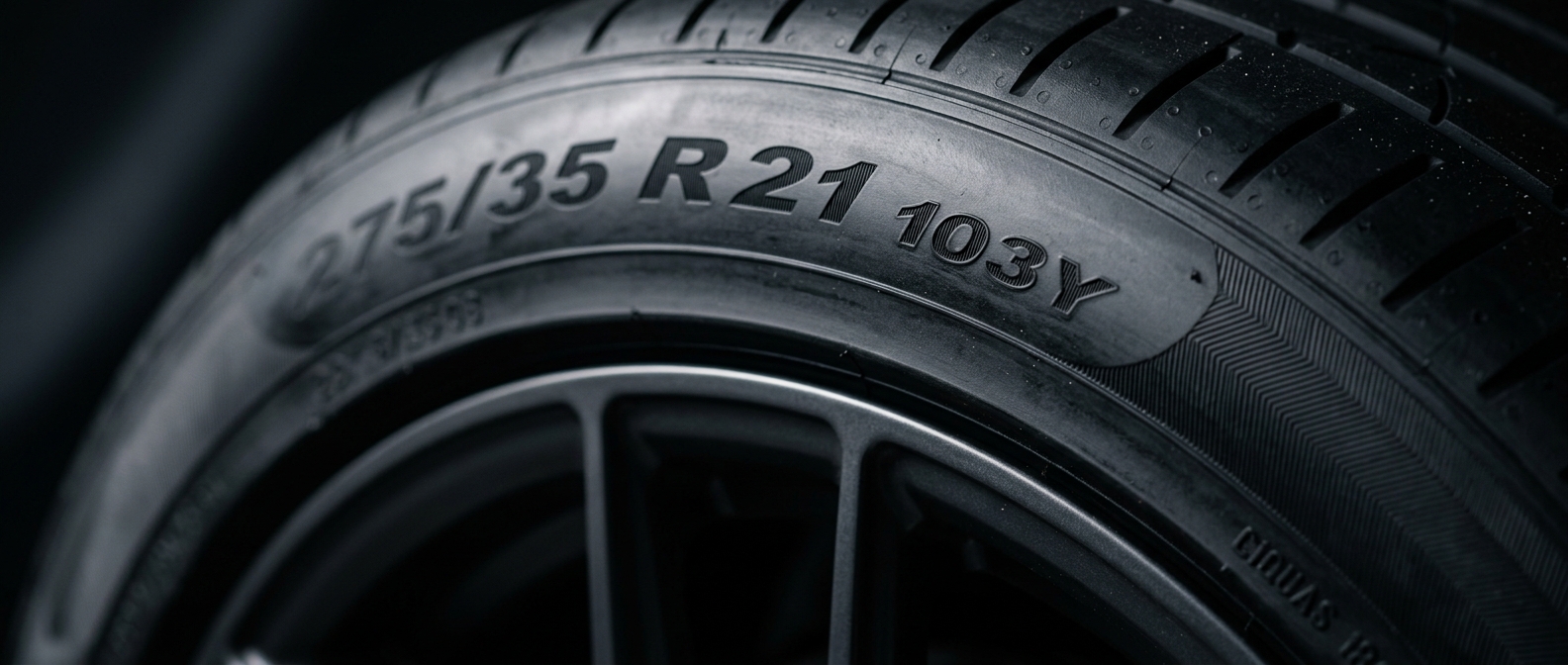
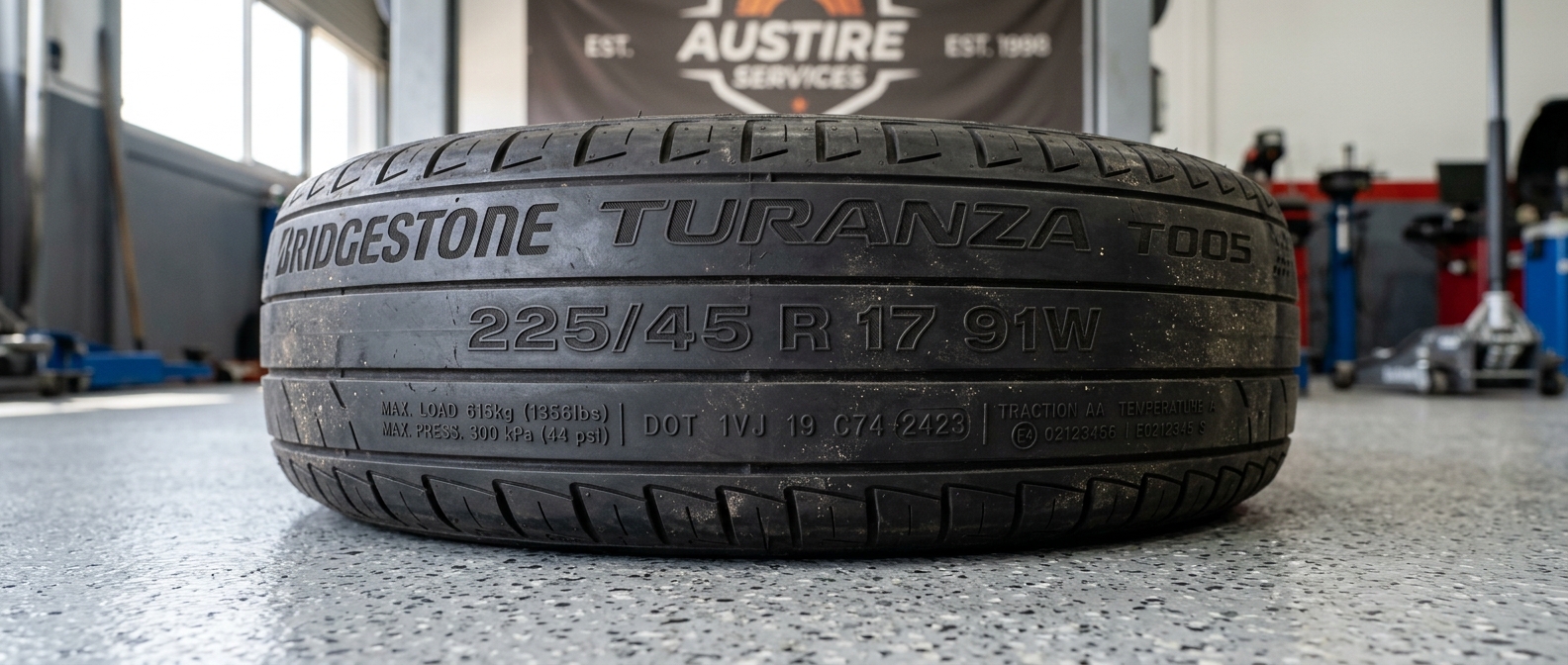
The letters at the start of a tyre size tell you its construction standard. A tyre with no prefix or a “P” (for example 265/70R17 or P265/70R17) is a passenger tyre. One marked “LT” (for example LT265/70R17) is a Light Truck tyre. Same numbers, very different tyre. Our sidewall reading guide shows exactly where this sits in the size code.
P-metric tyres have thinner, more flexible sidewalls tuned for a smooth, quiet ride and lower rolling resistance. LT tyres are built with reinforced casings — thicker cords and tougher internal layers — so they resist punctures, cuts and flexing under heavy load. As Cooper Tires Australia notes of the two constructions, “they’re both 2-ply, but the strength of the thicker cord is far better” in the LT casing.
How the two constructions compare
| Factor | P-metric (Passenger) | LT (Light Truck) |
|---|---|---|
| Sidewall | Thinner, more flexible | Reinforced, stiffer, tougher |
| Puncture / cut resistance | Lower | Higher |
| Load carrying | Moderate | High — rated at higher pressures |
| Typical inflation pressure | Lower (car-style) | Higher (often 40 psi+ loaded) |
| Ride comfort | Softer, quieter | Firmer, more road noise |
| Fuel economy | Better | Worse (heavier, more rolling resistance) |
| Weight | Lighter | Heavier |
| Best for | On-road SUVs, daily driving | Towing, off-road, heavy loads, remote travel |

Why does this matter more in Australia?
Australia punishes tyres. Long remote-road distances, sharp gibber and rock, corrugated dirt, hot bitumen and heavy touring loads all expose the weakness of a soft passenger casing. For a 4WD that tows a caravan across the Nullarbor, runs the Gibb River Road, or carries a full tradie load, the reinforced sidewall of an LT tyre is genuine insurance against a shredded sidewall hundreds of kilometres from help. That’s why serious tourers lean toward LT — see do you need LT-construction tyres for the honest answer on when it’s worth it, and three-ply vs two-ply sidewalls for the construction detail.
But the trade-off is real. LT tyres are heavier, so they blunt acceleration and cost fuel; they ride firmer and generate more road noise; and unladen, that stiff casing can feel harsh. A suburban SUV that never leaves the bitumen gains almost nothing from LT and gives up comfort and economy.
Which should you fit?
Stick with P-metric / passenger if you…
- Drive mostly on sealed roads — commuting, school run, highway touring without heavy loads
- Own a car-based SUV or crossover used on-road
- Prioritise ride comfort, low noise and fuel economy
Step up to LT if you…
- Tow a caravan, boat or heavy trailer regularly — see best towing tyres for a dual-cab ute
- Carry heavy loads in a ute or van (tradie loads, touring gear)
- Travel remote, corrugated or rocky tracks where a sidewall failure is a serious problem
- Run reduced pressures off-road, where the stronger casing resists rolling off the rim
One caution before switching: check the load rating maths. If you’ve had a GVM upgrade or you tow near your limits, confirm the tyre’s load index still covers your axle loads. And any tyre you fit must still meet the load rating on your vehicle placard — dropping below it is covered in what happens if you fit the wrong load rating tyres.
Pressures are not interchangeable
The single most common LT mistake is running the wrong pressure. LT tyres are engineered to carry their load at higher inflation than passenger tyres, and the correct figure depends on your actual axle load. If you fit LT tyres, get a proper placard-and-load-based pressure, and re-check when towing or fully loaded. Our guides to tyre pressures for towing a caravan and tyre rules for towing cover the numbers and the law. Because towing also accelerates wear, see how towing shortens tyre life.
Bottom line
Bottom line: Choose construction by use, not by badge. If your vehicle lives on the bitumen, P-metric passenger tyres give you the best ride, quiet and economy. If you tow, load up, or head remote and off-road, LT tyres buy you a tougher sidewall and higher load capacity — at the cost of comfort, weight and fuel. Whichever you pick, meet the placard load rating and set pressures to match your real-world load.
Frequently asked questions
Are LT tyres legal on a normal 4WD in Australia?
Yes, provided the tyre meets or exceeds the load rating on your vehicle’s placard and is an approved size. LT tyres are widely fitted to utes and 4WDs. Confirm the load index covers your axle loads.
Do LT tyres use more fuel?
Generally yes. They’re heavier and have higher rolling resistance than an equivalent passenger tyre, so most drivers see a small fuel-economy penalty, more noticeable when the vehicle is light or driven mostly on-road.
Can I fit LT tyres to a car-based SUV?
Usually there’s little benefit — a soft-roader gains comfort loss and fuel cost without needing the tough casing. LT makes sense on body-on-frame utes and 4WDs that tow, load up or go remote. Check clearance and load rating first.
Why do LT tyres ride so firmly when unladen?
The reinforced casing is designed to carry heavy loads, so with an empty tray it feels stiff. Setting pressures for the actual (lighter) load, rather than the maximum, softens the ride considerably.
Is an LT tyre the same as an XL tyre?
No. An XL (Extra Load) tyre is a passenger tyre that carries more via higher pressure. An LT tyre uses genuinely heavier truck-grade construction. They solve different problems.
External references: Cooper Tires Australia – P vs LT tyres; Michelin Australia – Load and speed ratings; Tyre & Rim Association of Australia / Tyre Safety.

0 Comments