Refined Autos · Australian Legality & Compliance
TL;DR: The ACT requires a roadworthy inspection when you transfer a privately sold vehicle over 6 years old, bring a car in from interstate, re-register a lapsed vehicle, or clear a defect — there is no annual check for ordinary private cars. Tyres must have at least 1.5 mm tread with no cuts, bulges or exposed cords, and meet the manufacturer’s load and speed ratings. Confirm details with Access Canberra.
Tyre Rules for an ACT Vehicle Inspection
The Australian Capital Territory sits between the “inspect everything” states and the “inspect almost nothing” ones. It has no annual roadworthy for ordinary private cars, but it does require an inspection when an older vehicle changes hands privately — a rule that catches out plenty of Canberra buyers and sellers. When that inspection happens, your tyres are checked against the national in-service standard. Here’s what you need to know before you book in.
Figures below are a guide based on published ACT information; always confirm current requirements with Access Canberra or an authorised inspection station.
When does the ACT require a roadworthy inspection?
A roadworthy inspection is required in the ACT when you’re:
- Transferring ACT registration for a vehicle more than 6 years old (the key private-sale trigger).
- Changing interstate registration to the ACT.
- Clearing a defect notice, including a tyre defect.
- Re-establishing cancelled or lapsed registration.
- Registering a privately purchased vehicle (not one bought from a licensed dealer).
- Renewing registration for public vehicles — taxis, buses, hire cars, rideshare and motorcycles used commercially.
- Presenting for a recall inspection, or registering heavy, modified, imported or left-hand-drive vehicles.
Crucially, there is no universal age-based annual inspection for ordinary private vehicles — annual inspections apply to rideshare and public vehicles. Private and rideshare inspections are done at authorised inspection stations, while public, heavy, modified, imported and left-hand-drive vehicles go through the Access Canberra inspection station.
What tyre standard applies in the ACT?
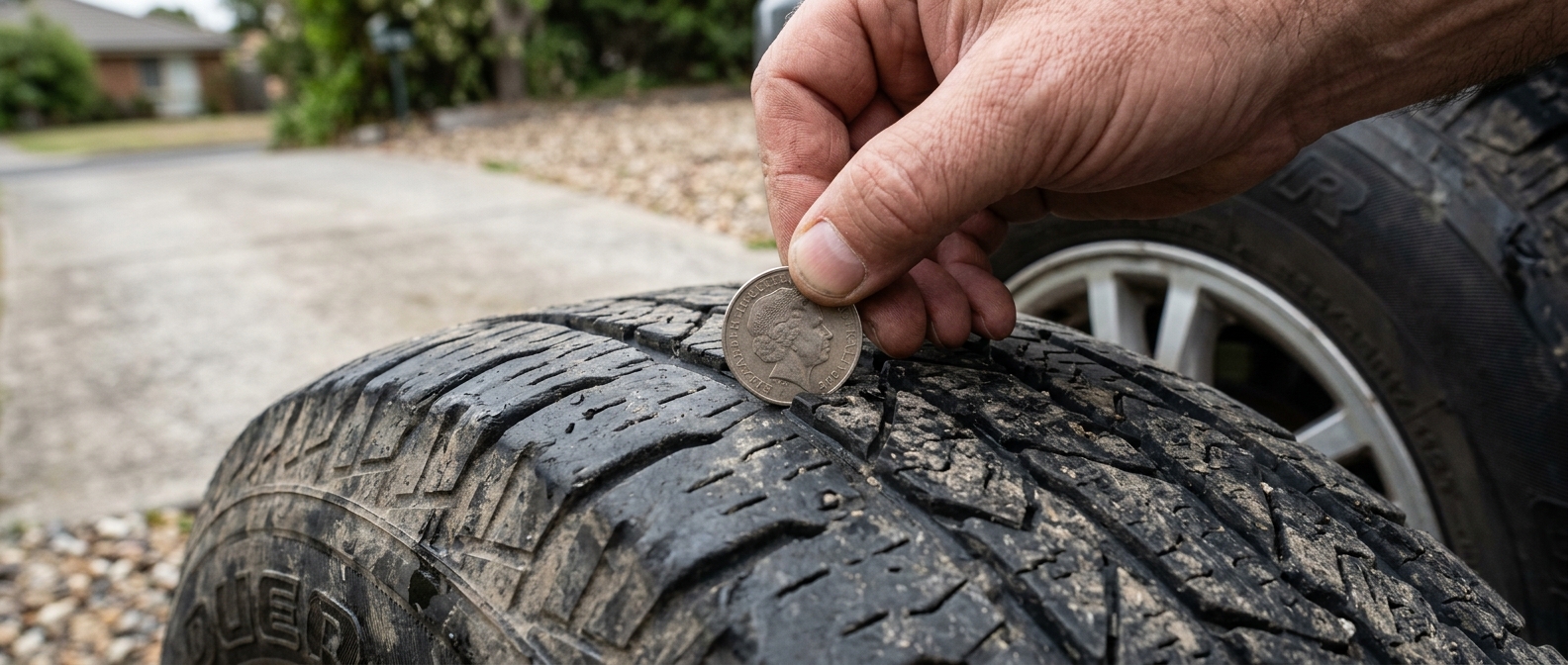
The ACT applies the national in-service tyre standard, so the tread minimum is 1.5 mm in the principal grooves — the same figure used in every other state and territory. It is not 1.6 mm; that’s a UK/European number that doesn’t apply here. When the tread wears down level with the moulded tread wear indicator bars in the grooves, the tyre is at its legal limit.
Check yours before an inspection using how to check your tread depth without a gauge and our guide to tyre wear indicators. For the national rule behind the figure, see the 1.5 mm tread depth rule explained.
| Tyre check | ACT pass condition (guide) |
|---|---|
| Tread depth | At least 1.5 mm in the principal grooves |
| Damage | No deep cuts, bulges, exposed cords or separation |
| Same-axle match | Matching tyre size/construction on each axle |
| Load & speed rating | Meets or exceeds the manufacturer’s spec |
| Fitment | Rolling diameter within standard tolerance; no fouling |
What tyre problems fail an ACT inspection?
Beyond tread depth, an examiner will reject tyres for deep cuts, bulges or blisters, exposed cords, and tread or carcass separation — the same structural defects that fail an inspection anywhere in Australia. A sidewall bulge is internal damage and can’t be repaired; see sidewall cracking: when it’s cosmetic and when it’s dangerous.
Fitment also matters. Tyres must carry a load rating meeting the manufacturer’s specification and a speed rating not below the original. If you’ve fitted larger wheels or plus-sized, an out-of-tolerance rolling diameter can fail — read rolling diameter and your legal tyre size and what happens if your tyres don’t meet the placard load rating. Big wheel changes may also need engineering sign-off — see do you need an engineer’s certificate for bigger wheels.
How the ACT compares to its neighbours
The ACT’s 6-year private-transfer rule is its distinctive feature. Surrounding NSW requires a pink slip for annual renewal of older vehicles, while the ACT ties the check to a private sale of an over-6-year-old car. The tyre standard itself is identical nationwide. Compare the triggers in our guides to the NSW pink slip, Tasmania and the Northern Territory.
Bottom line: In the ACT, expect an inspection when you privately buy or transfer a car over 6 years old, arrive from interstate, or clear a defect. Get the tyres above 1.5 mm, free of cuts, bulges and exposed cords, and matched to the manufacturer’s ratings before you present the vehicle.
Frequently asked questions
Does the ACT have an annual roadworthy for private cars?
No. There is no universal age-based annual inspection for ordinary private vehicles. Annual inspections apply to public and rideshare vehicles. Private cars are inspected at transfer of an over-6-year-old vehicle, interstate registration, defect clearance and similar events.
What is the minimum tyre tread depth in the ACT?
1.5 mm in the principal grooves — the national standard. The 1.6 mm figure is from the UK/Europe and does not apply in the ACT.
I’m buying a 3-year-old car privately in Canberra — do I need an inspection?
Generally no — the private-transfer inspection applies to vehicles over 6 years old. Confirm the current age threshold and your circumstances with Access Canberra.
Where do I get the inspection done?
Private and rideshare vehicles use authorised inspection stations. Public, heavy, modified, imported and left-hand-drive vehicles use the Access Canberra Motor Vehicle Inspection Station.
Will damaged tyres fail even with good tread?
Yes. Cuts, bulges, exposed cords and separation fail a tyre regardless of tread depth, as does a load or speed rating below the manufacturer’s spec.
This article is general information for Australian drivers, not legal advice. Confirm current requirements with Access Canberra or an authorised inspection station before relying on them.



0 Comments